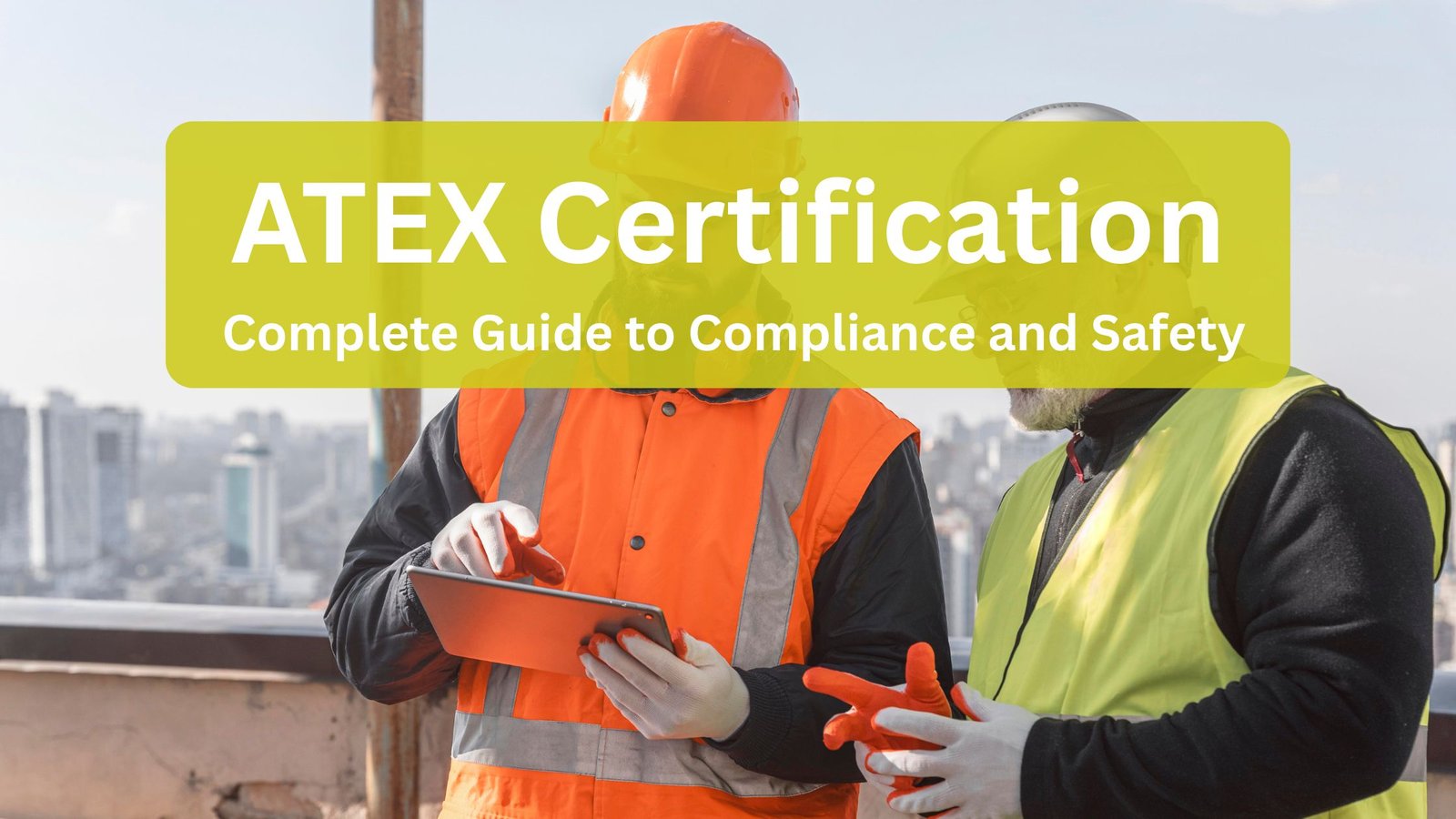
Working safely in environments where explosive gases, vapors, or dust may be present is critical for businesses across industries. ATEX Certification is a key compliance standard ensuring that equipment and systems operating in these hazardous areas meet stringent safety requirements. Understanding what ATEX Certification entails, the zones it applies to, its certification process, and how it protects workers and property can help your business navigate complex regulations while fostering safer workplaces.
Overview and Importance of ATEX Certification
ATEX, short for “ATmosphères EXplosibles,” refers to the European Union directive 2014/34/EU mandating safety standards for equipment and protective systems used in explosive atmospheres. These directives aim to reduce explosion risks from electrical and mechanical devices in hazardous locations like oil refineries, chemical plants, and grain storage areas.
Equipment that receives ATEX Certification undergoes evaluation to ensure it doesn’t ignite explosive mixtures. Non-compliance can lead to penalties, operational halts, and safety hazards. Businesses within hazardous zones are legally required to use ATEX-certified equipment for compliance with EU safety laws and industry standards. Consult the ATEX Certification Process Guide for stepwise insights into this process.
Understanding Explosive Atmospheres and Hazardous Zones
Hazardous atmospheres are categorized by the frequency and duration of explosive gas or dust presence:
- Zone 0: Continuous or long-term presence of explosive gas atmospheres.
- Zone 1: Likely presence of explosive atmospheres under normal operation.
- Zone 2: Explosive atmospheres unlikely, or short duration only.
For combustible dust, zones 20, 21, and 22 correspond similarly. Correct zone classification dictates the equipment safety category required to mitigate risks precisely. Learn more details at Hazardous EX Area Classification
.
Did You Know?
ATEX zones for gases and dust differ, helping manufacturers design equipment suitable for specific environments to minimize ignition risks.
Step-by-Step ATEX Certification Process
1. Hazardous Zone Determination and Equipment Categorization
A detailed classification of your worksite’s hazardous zones is conducted to determine the needed equipment category:
- Category 1: Highest protection, for Zone 0/20, suitable for continuous or frequent explosive atmospheres.
- Category 2: High protection, for Zone 1/21, likely but not constant presence.
- Category 3: Normal protection, for Zone 2/22, unlikely or short-term presence.
2. Conformity Assessment Procedure Selection
Depending on category:
- Category 1 requires Notified Body involvement for thorough testing and certification.
- Category 2 may require partial third-party evaluation.
- Category 3 often allows manufacturer self-certification.
Visit our ATEX Certification Services page for expert support navigating these pathways.
3. Preparation of Technical Documentation
Manufacturers develop comprehensive documentation including:
- Product design and schematics
- Risk assessments and protective measures
- Test reports and compliance proof
- Instruction manuals with safety measures
4. Product Testing and Evaluation
Independent testing for Categories 1 and 2 includes:
- Electric and mechanical ignition testing
- Thermal and vibration resistance
- Environmental durability
- Explosion containment and mitigation
Check out our Inspection Services for ongoing compliance monitoring.
5. Declaration of Conformity and CE/ATEX Marking
Upon successful certification:
- A Declaration of Conformity is issued.
- Equipment receives CE and ATEX certification marks specifying equipment group and category.
This marking assures customers and authorities of compliance and safety.
6. Ongoing Surveillance and Quality Assurance
Certified product manufacturers undergo audits and re-evaluations to maintain ATEX Certification validity throughout the equipment lifecycle.
Pro Tip
Engage a Notified Body early to align product design and documentation with ATEX standards, reducing delays and complications.
Types of Equipment Requiring ATEX Certification
ATEX applies to both electrical and mechanical devices exposed to explosive atmospheres:
- Electrical motors, control switches, lighting
- Junction boxes and protective enclosures
- Portable communication devices like
- ATEX-certified mobile phones
- and tablets
- Battery packs and power supplies
Review our Equipment Certification insights for full product categories.
Myth vs Fact
- Myth: Only electrical equipment needs ATEX Certification.
- Fact: Mechanical equipment and safety systems also fall under ATEX regulations.
Benefits of ATEX Certification
- Compliance with EU regulations and international standards
- Mitigation of explosion risk protecting personnel and assets
- Market access to EU and countries recognizing ATEX directives
- Enhanced corporate reputation with safety-first branding
Addressing Common Challenges
Companies face complexities in:
- Regulatory understanding and updates
- Testing durations and costs
- Fulfillment of mixed-zone site requirements
Our Training Programs and consultancy can simplify these challenges.
Frequently Asked Questions
What industries require ATEX Certification?
Primarily oil & gas, petrochemical, pharmaceutical, and grain sectors.
How are hazardous zones determined?
Through professional hazardous area classification by qualified engineers.
Is ATEX Certification valid worldwide?
While EU-mandated, many countries accept ATEX or equivalent IECEx certification for market access.
How often is equipment inspected?
Regular inspections depend on industry and zone, typically annually or as per local regulation.
Tips & Trivia
- Did You Know? ATEX certification aligns closely with IECEx but focuses on the EU market.
- Mini Q&A: Q: Can equipment lose ATEX Certification? A: Yes, if non-compliance or modifications occur without reassessment.
- Pro Tip: Conduct routine hazard re-classifications in changing industrial environments.
Conclusion
ATEX Certification is crucial to ensure the safety and regulatory compliance of equipment used in potentially explosive atmospheres. Correct zone classification, adherence to certification procedures, and maintenance of approved equipment empower companies to protect people and assets while accessing global markets. Leverage expert training and inspection services available Here to maintain compliance and safety excellence.