Introduction – IECEx Certification Process Take for Manufacturers
Manufacturers planning IECEx certification need realistic timelines for business planning. Sales teams promise delivery dates without understanding certification duration creating impossible commitments.
Finance departments budget for projects without knowing actual certification timelines. Understanding realistic durations prevents missed deadlines, budget overruns, and disappointed customers.
Clear timeline knowledge enables proper resource allocation and stakeholder management. Accurate planning ensures certification completes when needed for market entry.
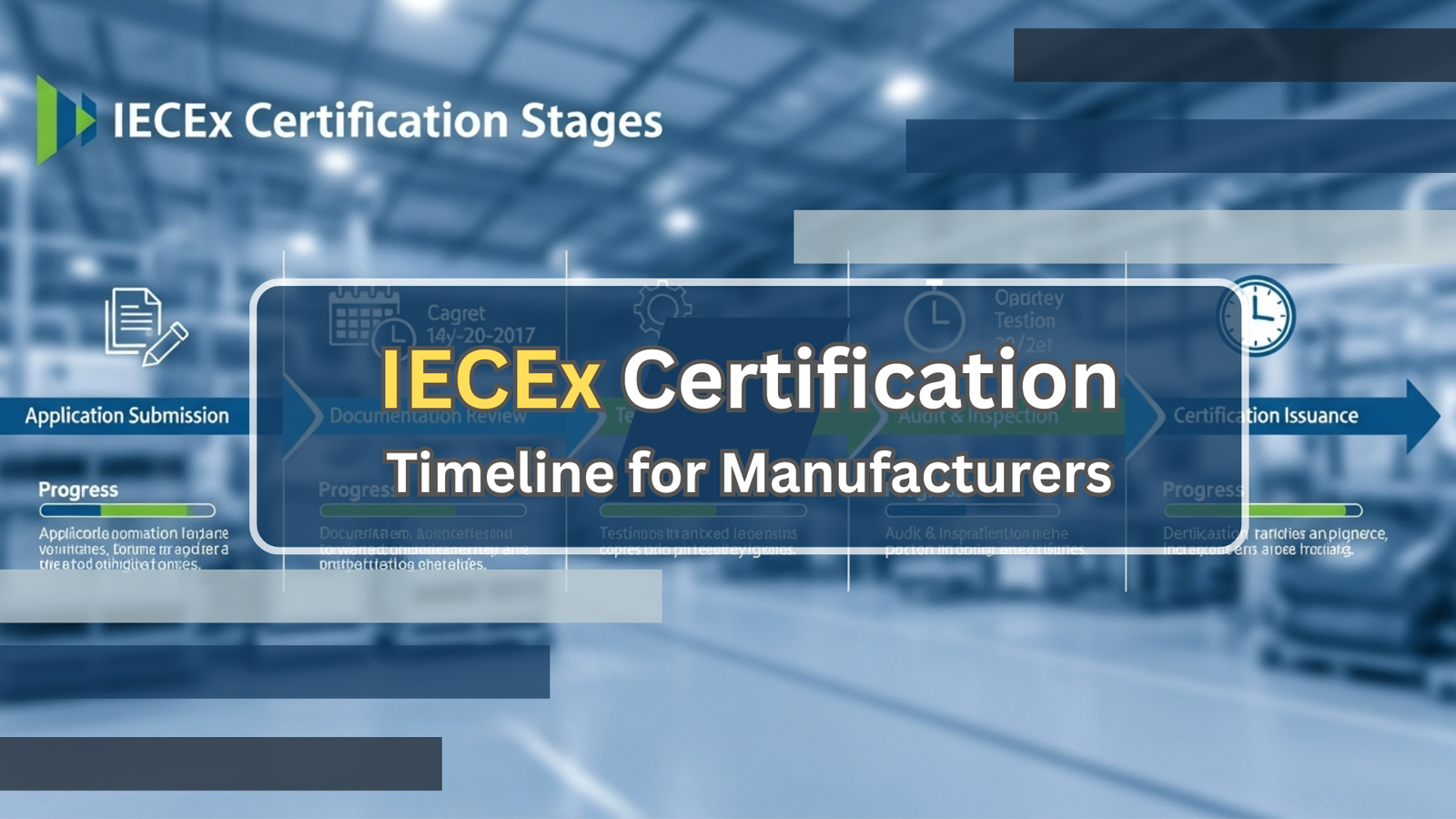
The complete IECEx certification process for manufacturers typically takes 6-12 months from initial application to certificate issuance. Simple equipment with straightforward protection concepts may certify in 6-8 months.
Complex devices requiring extensive testing or design modifications can extend beyond 12-18 months. Multiple factors including documentation quality, testing results, and audit findings significantly impact actual durations.
Well-prepared manufacturers with complete documentation and compliant designs consistently achieve faster certification. Poor preparation causes delays, failed testing, and timeline extensions.
What Are the Main Certification Stages?
Initial Preparation Phase (4-8 Weeks)
Documentation development represents the first major phase consuming 4-8 weeks for prepared manufacturers. Companies with organized technical records complete this faster than those starting from scratch.
Technical drawings, electrical schematics, and safety calculations require detailed preparation. Complete documentation prevents review delays and rejection cycles.
Gap analysis against IEC 60079 standards identifies design modifications needed. Early gap identification prevents discovering compliance issues during expensive testing phases.
Certification body selection and initial consultations establish project foundations. Early communication sets expectations and clarifies requirements preventing misunderstandings.
Internal team organization including assigning responsibilities and establishing timelines creates accountability. Dedicated project management accelerates all subsequent phases.
Application and Documentation Review (2-4 Weeks)
Formal application submission to certification bodies initiates official processes. Application fees typically accompany submissions along with preliminary documentation.
Certification bodies conduct initial documentation reviews assessing completeness and compliance. This preliminary review identifies obvious gaps or concerns requiring resolution.
Review timelines vary by certification body workload and project complexity. Simple applications receive faster reviews than complex multi-device certifications.
Manufacturers must respond promptly to review comments and questions. Quick turnaround on clarifications prevents extended review cycles adding weeks or months.
Some certification bodies conduct multiple review iterations if documentation quality is poor. Each cycle adds 2-4 weeks potentially extending this phase significantly.
Understanding IECEx certification requirements before documentation development prevents review delays and rejections.
Laboratory Testing Phase (8-16 Weeks)
Testing represents the longest single phase typically spanning 8-16 weeks. Simple devices complete faster while complex equipment requires extended testing.
Sample shipment to testing laboratories adds 1-2 weeks before testing begins. International shipping logistics including customs clearance create potential delays.
Laboratory scheduling availability impacts start dates significantly. Busy testing facilities may have 2-4 week backlogs before accepting new samples.
Actual testing duration depends on equipment type and protection concepts. Electrical testing, thermal testing, mechanical testing, and specialized protection testing occur sequentially or parallel.
Failed tests requiring sample modifications and retesting extend timelines substantially. Major design changes potentially add 8-12+ weeks for modifications and complete retesting.
Test report preparation after successful testing adds 1-2 weeks. Comprehensive reports document all testing procedures, results, and conclusions.
Quality System Audit Phase (4-8 Weeks)
Factory quality audits can occur parallel with testing or sequentially. Parallel scheduling optimizes timelines while sequential approaches extend total duration.
Audit scheduling depends on certification body and manufacturer availability. Coordinating calendars sometimes adds 2-4 weeks before audits occur.
Actual on-site audits last 1-3 days depending on facility size and complexity. Larger manufacturing operations with multiple production lines require longer audits.
Audit report preparation and non-conformity documentation takes 1-2 weeks after audits. Certification bodies must document findings and required corrective actions.
Responding to audit findings and implementing corrections adds 2-6 weeks depending on finding severity. Minor documentation updates complete quickly while systemic improvements take longer.
Follow-up verification of corrections may require additional visits or document reviews. Significant non-conformities potentially extend this phase by 4-8+ weeks.
Certificate Issuance Phase (2-4 Weeks)
Final certification body reviews compile all testing results, audit findings, and documentation approvals. Technical committees may review complex or novel applications extending this phase.
Certificate preparation including formatting, database registration, and quality checks requires administrative processing. Certification bodies generate official certificate documents and supporting materials.
Database registration makes certificates publicly verifiable through IECEx system. This registration step ensures worldwide recognition and accessibility.
Physical certificate production and delivery to manufacturers completes the process. International shipping of certificates adds several days to final delivery.
Some certification bodies provide electronic certificates immediately while physical documents follow. Digital certificates enable immediate marketing and sales activities.
What Factors Accelerate Certification Timelines?
Complete Documentation from Start
Comprehensive documentation prepared before application submission prevents review delays. Well-organized technical files answer reviewer questions proactively.
Professional technical writing that clearly explains designs and safety measures accelerates approvals. Ambiguous documentation creates questions requiring clarification cycles.
Pre-application consulting with certification bodies identifies documentation expectations. Early alignment on format and content requirements prevents rejections.
Internal document reviews before submission catch errors and gaps. Quality control on documentation submission saves weeks in review cycles.
Design Compliance from Beginning
Equipment designed for certification from initial concept phases requires minimal modifications. Retrofit certification onto existing non-compliant designs creates extensive delays.
Early protection concept selection appropriate to applications ensures testing success. Mismatched protection methods discovered during testing necessitate complete redesigns.
Conservative safety margins in temperature, electrical, and mechanical designs provide buffers. Marginal designs failing testing require modifications and retesting extending timelines.
Component selection considering certification requirements prevents availability issues. Specialized components with long lead times can delay sample preparation.
Proactive Communication
Regular communication with certification bodies prevents misunderstandings and delays. Responsive answers to questions keep projects moving forward.
Advance notice of potential issues allows collaborative problem-solving. Surprising certification bodies with problems during audits creates complications.
Clear expectation setting about timelines and deliverables aligns all parties. Mutual understanding of schedules facilitates efficient coordination.
Designated project contacts ensure consistent communication channels. Multiple contacts creating confusion slow decision-making and approvals.
Understanding IECEx certification training helps internal teams communicate effectively with certification bodies using proper terminology.
What Causes Certification Delays?
Documentation Deficiencies
Incomplete technical documentation creates review cycles extending timelines by 4-8+ weeks. Each review iteration adds time as manufacturers develop missing information.
Inconsistent information between drawings, calculations, and specifications raises reviewer concerns. Resolving inconsistencies requires extensive clarification and potential redesign.
Poor quality translations for multilingual documentation create communication barriers. Technical translation errors cause misunderstandings requiring re-translation and re-review.
Missing safety analysis or inadequate calculations fail to demonstrate compliance. Developing proper safety documentation after initial submission adds substantial delays.
Testing Failures
Equipment failing temperature, electrical, or mechanical testing requires design modifications. Identifying root causes, implementing corrections, and retesting adds 8-16+ weeks.
Multiple test failures on different aspects compound delays exponentially. Each failure cycle requires analysis, modification, sample preparation, and retesting.
Sample damage during shipping to laboratories necessitates replacement samples. Preparing and shipping new samples adds 3-6 weeks before testing resumes.
Laboratory equipment failures or calibration issues pause testing. While rare, technical problems at laboratories create delays outside manufacturer control.
Quality Audit Issues
Significant quality system non-conformities discovered during audits require systemic improvements. Implementing quality system changes takes weeks or months depending on scope.
Missing documentation like calibration records or training records discovered during audits needs development. Creating historical documentation proves time-consuming.
Inadequate manufacturing procedures requiring rewriting and implementation extend audit closure. Procedure development, training, and verification add weeks.
Follow-up audits verifying correction implementation add scheduling delays. Coordinating return visits extends timelines by 4-8 weeks.
External Factors
Certification body workload fluctuations affect review and approval timelines. Peak periods with high application volumes create processing backlogs.
Testing laboratory scheduling conflicts delay testing starts. Popular laboratories during busy seasons may have 4-8 week waiting periods.
Holiday periods and shutdown periods pause activities. Year-end holidays, summer vacations, and regional holidays create gaps in productivity.
Customs delays for international sample shipments add unpredictable timeline extensions. Import/export complications occasionally extend shipping from days to weeks.
How Do Different Equipment Types Affect Timelines?
Simple Mechanical Devices
Basic mechanical equipment like enclosures, cable glands, or junction boxes typically certify faster. Testing requirements remain straightforward with fewer variables.
Documentation for simple devices involves less complexity accelerating reviews. Mechanical-only devices avoid extensive electrical testing reducing laboratory time.
Quality system requirements for basic manufacturing prove less complex. Audits proceed efficiently when production processes are straightforward.
Total timelines for simple mechanical devices often fall to 6-8 months with good preparation. Well-managed projects sometimes complete in 5-6 months.
Electrical Equipment
Motors, lighting fixtures, and electrical control devices require comprehensive electrical testing. Temperature, insulation, and protection concept testing extend laboratory phases.
Protection concepts like increased safety or flameproof enclosures demand specialized testing. Each protection method adds testing procedures and duration.
Electrical equipment documentation includes detailed electrical analysis and calculations. Technical reviews examine electrical safety more rigorously extending review times.
Typical timelines for electrical equipment span 8-12 months depending on complexity. Multi-protection-concept devices trend toward longer durations.
Electronic and Programmable Devices
Sophisticated instrumentation, analyzers, and programmable devices represent most complex certification. Hardware, firmware, and software all require assessment.
Extensive testing covering all operating modes, fault scenarios, and software variations extends laboratory phases significantly. Testing can exceed 16-20 weeks.
Documentation for electronic devices includes software specifications, failure mode analysis, and system integration details. Reviews consume more certification body resources.
Complex manufacturing involving electronics assembly, software loading, and system testing requires thorough quality audits. Audit phases extend beyond simple devices.
Total timelines for complex electronic devices typically exceed 12-15 months. Novel designs or first-of-kind equipment can extend beyond 18 months.
Can Certification Timelines Be Shortened?
Expedited Service Options
Some certification bodies offer expedited processing for premium fees. Rush services prioritize applications over standard queue positions.
Expedited fees typically add 20-50% to standard certification costs. Time savings of 4-8 weeks may justify premium pricing for urgent projects.
Not all certification bodies provide expedited options. Availability depends on organizational policies and current workload levels.
Testing laboratories rarely offer rush testing due to technical time requirements. Testing physics cannot be accelerated beyond certain limits.
Parallel Processing Strategies
Conducting testing and quality audits simultaneously rather than sequentially saves 4-8 weeks. Parallel approaches require careful coordination but optimize timelines.
Developing documentation while awaiting testing results prevents idle time. Productive use of waiting periods maintains project momentum.
Early quality system preparation before formal audits enables faster audit completion. Pre-audit readiness reduces audit duration and follow-up requirements.
Pre-ordering long-lead components before certification completion enables faster production ramp-up. Strategic procurement reduces post-certification delays.
Strategic Planning Approaches
Starting certification processes before absolute business need provides timing buffers. Early initiation accommodates unexpected delays without missing market windows.
Engaging consultants for initial phases accelerates documentation and preparation. Professional expertise prevents common mistakes causing delays.
Building internal IECEx expertise through training reduces consultant dependencies over time. Knowledge investment improves efficiency across multiple certification projects.
Selecting experienced certification bodies and testing laboratories with track records improves timeline predictability. Proven partners deliver more consistent performance.
What Timeline Should You Communicate to Stakeholders?
Conservative Estimates
Plan for 12-month timelines when communicating to management and customers. Conservative estimates accommodate normal delays and unexpected issues.
First-time certifications typically take longer than subsequent projects. Learning curve factors justify extended timelines for initial certifications.
Complex equipment deserves longer timeline estimates than simple devices. Equipment-appropriate estimates demonstrate realistic planning.
Best-Case Scenarios
Well-prepared projects with compliant designs might achieve 6-8 month timelines. Communicate this as best-case requiring optimal conditions.
Highlight dependencies on testing results, audit findings, and review efficiency. External factors beyond manufacturer control affect actual durations.
Emphasize that acceleration requires premium pricing for expedited services. Faster timelines come with financial implications.
Risk Contingencies
Build 2-3 month contingency buffers into project plans. Contingencies accommodate inevitable delays without derailing overall schedules.
Identify critical path elements most vulnerable to delays. Testing phases and design modification cycles represent highest risk areas.
Develop mitigation strategies for identified risks. Backup plans minimize delay impacts when problems occur.
Key Takeaway
- Complete IECEx certification typically takes 6-12 months from application to certificate
- Testing phase represents longest stage at 8-16 weeks depending on equipment complexity
- Well-prepared documentation and compliant designs consistently achieve faster timelines
- Common delays include testing failures (8-16+ weeks), audit findings (4-8 weeks), and documentation issues (4-8 weeks)
- Simple mechanical devices certify fastest (6-8 months) while complex electronics exceed 12-15 months
- Conservative 12-month estimates with 2-3 month contingencies provide realistic stakeholder expectations
Need help accelerating your IECEx certification timeline? atex-iecex.com provides expert project management, documentation preparation, and strategic planning services that optimize certification processes, minimize delays, and achieve successful outcomes efficiently.