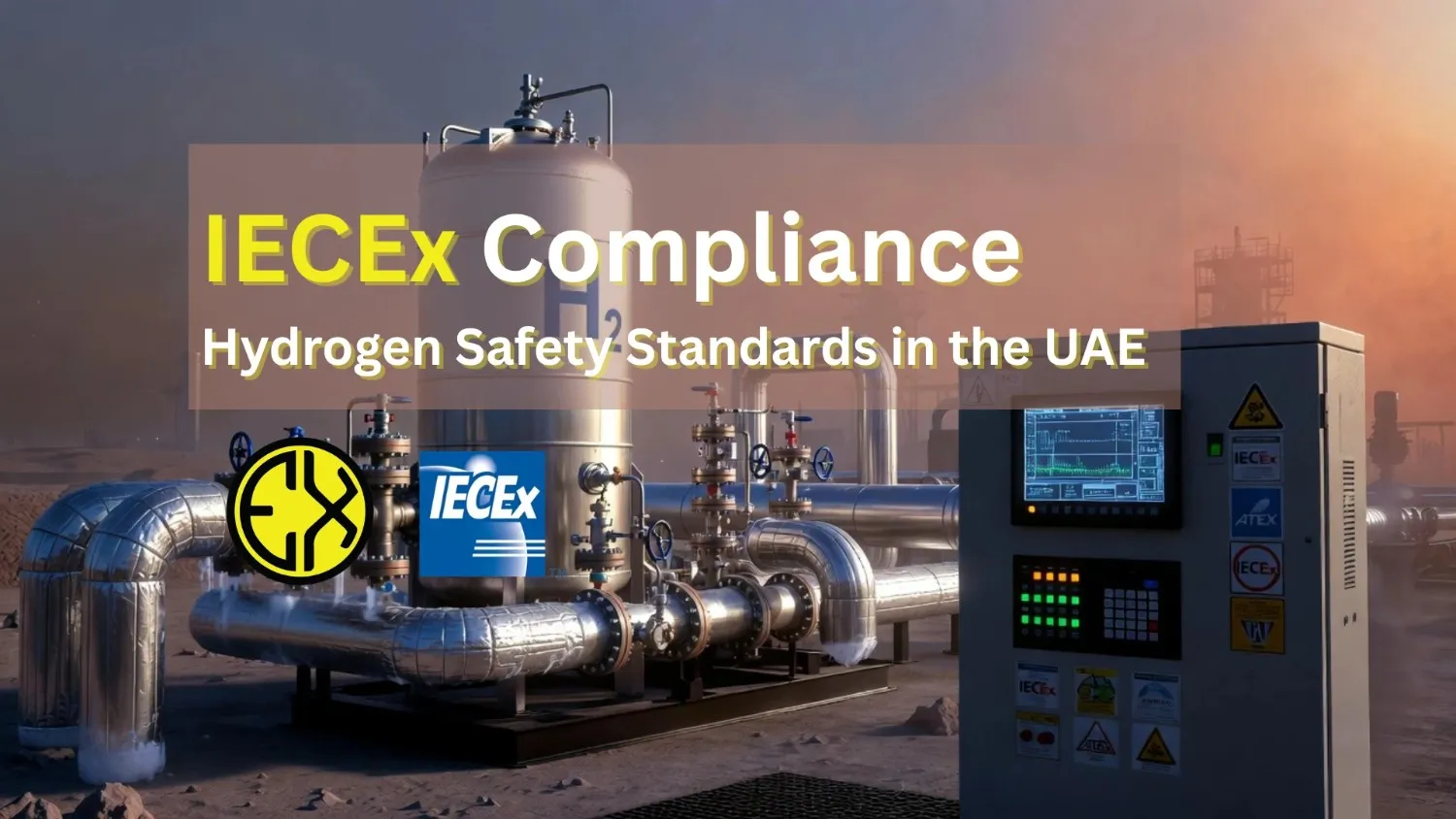
The United Arab Emirates is rapidly emerging as a hydrogen energy hub, with major investments in both blue and green hydrogen production. As these projects scale up, ensuring safety in potentially explosive atmospheres becomes paramount. IECEx certification provides the internationally recognized framework for managing hydrogen’s unique hazards.
Why Hydrogen Demands Specialized Certification
Hydrogen’s properties make it fundamentally different from traditional industrial gases. With a flammability range of 4-75% in air, ignition energy as low as 0.02 millijoules, and an invisible flame, hydrogen presents exceptional challenges. These characteristics require specialized knowledge, certified equipment, and competent personnel.
The IECEx certification system addresses these challenges through comprehensive standards for equipment design, testing, and personnel competence. For UAE hydrogen projects, this certification isn’t just recommended—it’s essential for operational safety and regulatory compliance.
Understanding the IECEx Framework for Hydrogen
IECEx operates under the International Electrotechnical Commission (IEC) and provides certification across two primary areas:
- Equipment Certification – Ensures electrical and mechanical equipment meets IEC 60079 explosion protection standards
- Personnel Certification – Validates that individuals possess the competence to work safely in explosive atmospheres
For hydrogen applications, both elements work together. Certified equipment provides engineered safeguards, while certified personnel ensure these safeguards are properly installed, maintained, and operated.
Selecting Protection Concepts for Hydrogen Environments
Different explosion protection techniques suit different hydrogen applications. Common methods include:
Intrinsic Safety (Ex i)
Limits electrical energy to levels incapable of igniting hydrogen. Ideal for instrumentation, sensors, and control systems in hydrogen facilities. This method remains effective even under fault conditions.
Flameproof Enclosures (Ex d)
Contains internal explosions within robust enclosures and cools escaping gases below ignition temperature. Suitable for higher-power equipment but requires careful maintenance of flame paths and fasteners.
Pressurization (Ex p)
Maintains positive pressure inside enclosures using clean air or inert gas, preventing hydrogen entry. Works well for larger equipment and control rooms in hydrogen areas.
Selection depends on zone classification, equipment type, operational requirements, and maintenance capabilities. Proper selection at the design stage prevents costly modifications later.
Personnel Competence: Critical for Hydrogen Safety
The IECEx Certificate of Personnel Competence (CoPC) ensures workers possess verified skills for their specific roles. IECEx training programs cover essential competencies including:
- Hazardous area classification specific to hydrogen properties
- Equipment selection based on zone requirements and hydrogen characteristics
- Installation practices that maintain explosion protection integrity
- Inspection techniques for verifying ongoing compliance
- Maintenance procedures that don’t compromise safety features
The modular CoPC system allows individuals to certify for their actual job functions—whether design, installation, inspection, or maintenance—without pursuing irrelevant qualifications.
Common Challenges in Hydrogen Certification
Organizations pursuing IECEx certification for hydrogen projects often face obstacles like inadequate area classification (hydrogen’s properties require different approaches than heavier hydrocarbons), documentation deficiencies, unsuitable equipment selection, and deploying workers without appropriate CompEx or IECEx certification.
The Certification Process Timeline
Equipment certification typically requires 3-6 months depending on design complexity and testing requirements. The process includes design review, type testing, quality system assessment, and initial factory inspection.
Personnel certification can be completed more quickly—typically 2-4 weeks for theory and practical assessment combined. However, candidates must meet prerequisite education and experience requirements before assessment.
UAE Hydrogen Projects and IECEx Requirements
Major UAE hydrogen initiatives increasingly mandate IECEx certification for contractors and suppliers. This trend reflects recognition that proper certification reduces project risk, ensures regulatory compliance, and demonstrates commitment to international safety standards.
Organizations entering the UAE hydrogen sector should integrate IECEx requirements into project planning from the earliest stages. Retrofitting certification after design or installation creates delays and cost overruns.
Moving Forward with Confidence
The UAE’s hydrogen future depends on maintaining exemplary safety standards. IECEx certification for hydrogen applications provides the framework for achieving this goal.
Whether developing new hydrogen production facilities, storage infrastructure, or distribution systems, investing in proper certification protects people, assets, and the environment while positioning organizations for success in the emerging hydrogen economy.