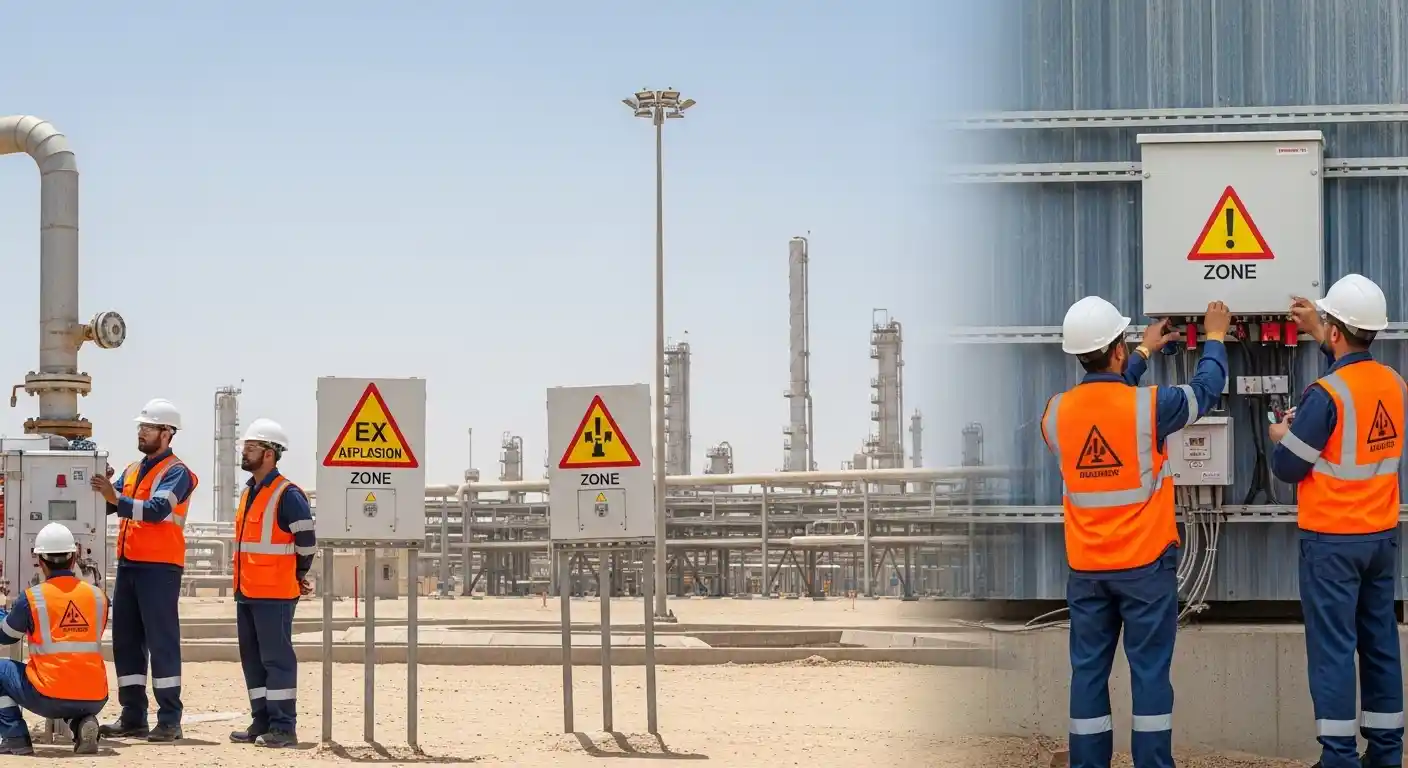
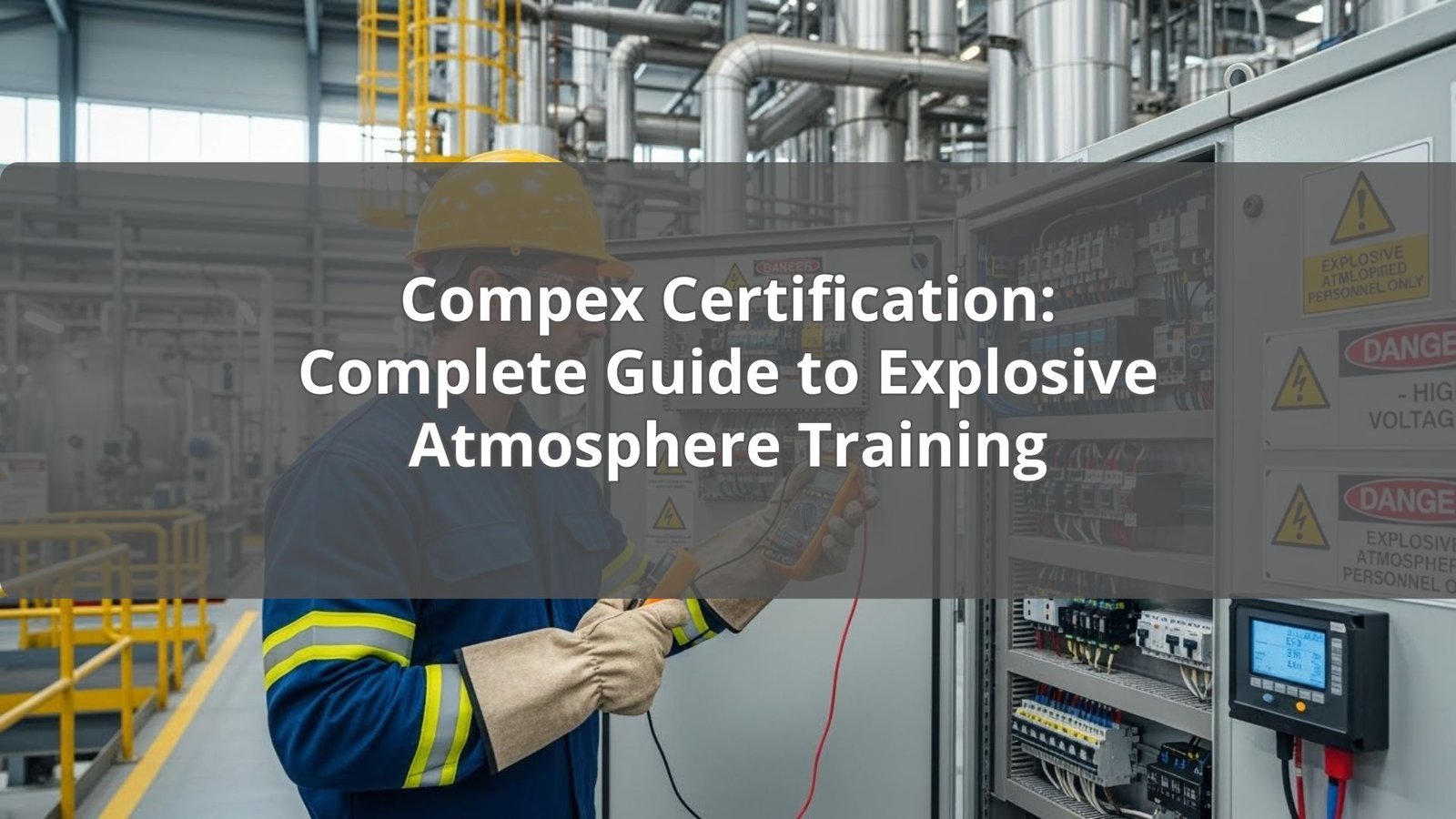
Compex certification has become the gold standard for professionals working in explosive and hazardous environments across the oil, gas, petrochemical, and manufacturing industries. Whether you’re seeking Compex certification in UAE or exploring Compex training in Qatar, understanding this internationally recognized qualification is essential for advancing your career in high-risk industrial settings. This comprehensive guide explores everything you need to know about Compex certification, from training requirements and course structures to costs and career benefits, ensuring you make informed decisions about your professional development in explosive atmosphere safety.
The demand for Compex-certified professionals continues to grow exponentially in the Middle East, particularly in UAE and Qatar, where massive industrial projects require skilled personnel who can safely work with electrical equipment in potentially explosive atmospheres. With Compex electrical expertise becoming increasingly valuable, professionals equipped with this certification command higher salaries and better job security in competitive markets. Understanding the Compex cost and training pathways available in your region helps you plan your certification journey effectively while maximizing your return on investment in this critical safety qualification.
What is Compex Certification and Why Does It Matter?
Compex certification represents an internationally recognized scheme that validates an individual’s competence to work safely with electrical equipment and installations in potentially explosive atmospheres. Developed by the European Explosive Atmospheres Certification Body, Compex addresses the critical need for standardized training in hazardous area safety. Industries such as oil and gas, petrochemical refineries, pharmaceutical manufacturing, and offshore operations rely heavily on Compex-certified personnel to maintain safety standards and regulatory compliance.
The certification framework covers essential knowledge areas including area classification, equipment selection, installation practices, inspection procedures, and maintenance protocols specific to explosive atmospheres. Professionals holding Compex certification demonstrate their ability to identify hazards, select appropriate equipment, and implement safe working practices in zones where flammable gases, vapors, mists, or combustible dusts may be present. This expertise directly translates to reduced workplace incidents, improved operational safety, and enhanced career prospects.
💡 Pro Tip: Before pursuing Compex certification, assess which specific units align with your job role. The modular structure allows you to start with core units and progressively add specialized modules as your career advances, making it a cost-effective approach to professional development.
Compex Training: Structure and Course Components
The Compex course structure follows a modular format designed to accommodate various job roles and experience levels within hazardous area operations. The certification scheme divides into distinct units, each focusing on specific aspects of explosive atmosphere work. Core units typically include Ex 01 (Appreciation of Hazards), Ex 02 (General Requirements), and Ex 03 (Dangerous Substance Awareness), which establish foundational knowledge for all candidates regardless of their specific work functions.
Specialized units target specific job roles, with options for design engineers, installation technicians, inspection personnel, and maintenance professionals. For instance, Compex electrical units such as Ex 05 (Installation) and Ex 06 (Maintenance) cater to technicians directly handling equipment, while Ex 07 (Inspection and Testing) serves quality assurance professionals. The Compex training methodology combines theoretical classroom instruction with practical demonstrations, ensuring participants grasp both conceptual frameworks and hands-on application skills.
Training duration varies based on selected units and prior experience. Entry-level courses typically span three to five days for core units, while comprehensive packages covering multiple specialized units may extend to two weeks. Compex training in UAE and Qatar follows standardized curricula approved by international certification bodies, ensuring consistency in quality and recognition across global markets. Reputable Compex training centres employ experienced instructors with extensive field experience in hazardous area operations.
📚 Did You Know? The Compex scheme originated in the United Kingdom but has gained worldwide acceptance, with certification centers now operating in over 50 countries. The UAE and Qatar host multiple accredited centers, making access to quality training more convenient than ever for Middle East professionals.
Compex Certification in UAE: Opportunities and Requirements
Compex certification in UAE has witnessed remarkable growth as the nation’s industrial sector expands across emirates. Major hubs including Abu Dhabi, Dubai, and Sharjah host numerous Compex certification centers offering comprehensive training programs tailored to regional industry needs. The UAE’s strategic position as a global energy and manufacturing hub creates consistent demand for certified professionals capable of maintaining safety in explosive atmospheres.
Prerequisites for Compex certification in UAE typically include basic electrical knowledge, relevant work experience in industrial settings, and proficiency in English for understanding technical documentation and examination materials. Some training centers offer preparatory courses for candidates lacking foundational electrical knowledge. The Abu Dhabi Compex certification center and other accredited facilities maintain high standards aligned with international best practices, ensuring UAE-issued certificates receive global recognition.
Career opportunities for Compex-certified professionals in UAE span diverse sectors including oil and gas extraction, refining operations, chemical processing plants, power generation facilities, and pharmaceutical manufacturing. Major employers such as ADNOC, Dubai Petroleum, and various international contractors actively seek candidates with valid Compex credentials. The certification significantly enhances employability and often serves as a mandatory requirement for specific job roles involving hazardous area electrical work.
Compex Training in Qatar: The Gulf’s Industrial Safety Standard
Qatar’s massive investments in liquefied natural gas production, petrochemical complexes, and infrastructure development have positioned Compex training in Qatar as a critical component of workforce development. The nation’s commitment to world-class safety standards aligns perfectly with Compex certification requirements, making it essential for professionals working in Qatar’s industrial landscape. Compex training centers in Qatar offer internationally accredited programs meeting the specific needs of local industries.
Doha and Ras Laffan Industrial City host premier training facilities equipped with modern teaching aids, practical demonstration equipment, and experienced instructors familiar with Qatar’s regulatory framework. The Doha Compex training center provides comprehensive course options ranging from basic awareness to advanced specialist certifications. These facilities maintain close relationships with major industrial operators, ensuring training content remains relevant to current industry practices and technological developments.
Qatar’s stringent safety regulations mandate appropriate certifications for personnel working in hazardous areas, making Compex a virtual requirement for electrical professionals in the energy sector. The GCC-wide recognition of Compex certifications further enhances their value, enabling professionals to pursue opportunities across Gulf nations with minimal additional certification requirements. This regional mobility significantly increases career flexibility and earning potential for certified individuals.
👨🏫 Expert Quote: “In my 20 years managing hazardous area operations across the Middle East, I’ve witnessed the transformative impact of Compex certification on workplace safety. Companies with higher percentages of Compex-certified personnel consistently demonstrate lower incident rates and more robust safety cultures.” – Ahmed Al-Mansouri, HSE Director, Petrochemical Operations
Understanding Compex Cost: Investment in Your Career
The Compex cost varies significantly based on several factors including geographic location, training center reputation, number of units pursued, and whether candidates opt for standard or fast-track programs. In UAE and Qatar, Compex training cost typically ranges from $800 to $3,000 for comprehensive packages covering core and specialized units. Individual unit costs generally fall between $200 and $500, allowing candidates to pursue modular certification aligned with budget constraints.
Cost components include training fees, examination charges, certification issuance, and study materials. Some training centers offer all-inclusive packages covering these elements, while others price components separately. Additional costs may arise from travel, accommodation, and time away from work, particularly for professionals pursuing certification while employed. However, many employers recognize the value of Compex certification and sponsor qualified employees, covering full or partial training expenses.
When evaluating Compex training cost, consider the investment’s return. Certified professionals typically command salary premiums of 15-30% compared to non-certified counterparts in similar roles. The certification also opens doors to specialized positions, international assignments, and career advancement opportunities that might otherwise remain inaccessible. Many professionals recoup their certification investment within 6-12 months through improved employment prospects and compensation packages.
| Cost Component | Typical Range (USD) | Notes |
|---|---|---|
| Core Units Training | $600 – $1,200 | Ex 01, 02, 03 foundation modules |
| Specialized Units | $400 – $1,000 each | Installation, maintenance, inspection units |
| Examination Fees | $150 – $300 | Per unit examination |
| Certification Issuance | $100 – $200 | Initial certification card and documentation |
Compex vs IECEx: Understanding Key Differences
Professionals researching explosive atmosphere certifications often encounter both Compex and IECEx schemes, leading to questions about their differences and relative merits. While both address hazardous area competency, they originate from different frameworks and serve complementary purposes. Understanding Compex versus IECEx helps candidates select the most appropriate certification path for their career objectives and geographic focus.
Compex primarily focuses on personnel competency certification, validating individuals’ ability to perform specific job functions safely in explosive atmospheres. The scheme emphasizes practical knowledge application and job-specific skills. Conversely, IECEx operates as a broader international certification system covering equipment certification, service facility certification, and personnel competency. The IECEx certification system aligns closely with international standards and enjoys particularly strong recognition in Asia-Pacific markets.
Many professionals pursue both certifications to maximize their career flexibility and market appeal. Some regions and employers prefer Compex due to its established presence in European and Middle Eastern markets, while others favor IECEx for its comprehensive framework and growing global adoption. The training content for both certifications shares significant overlap, making dual certification relatively straightforward for motivated professionals.
Preparing for Compex Examination Success
Success in Compex examinations requires thorough preparation combining theoretical understanding with practical application knowledge. Examinations typically incorporate multiple-choice questions, practical assessments, and sometimes scenario-based evaluations depending on the specific units being attempted. Candidates must demonstrate comprehensive understanding of hazardous area principles, equipment standards, installation requirements, and safety protocols relevant to their chosen specialization.
Effective preparation strategies include attending all scheduled training sessions, actively participating in practical demonstrations, reviewing provided study materials multiple times, and seeking clarification on complex topics from instructors. Many successful candidates form study groups with peers, facilitating knowledge exchange and collaborative learning. The official Compex resources provide valuable supplementary materials including technical guidance documents and practice questions.
Examination pass rates vary by unit complexity and candidate preparation levels. Core units typically show higher pass rates compared to specialized technical units requiring detailed equipment knowledge. Candidates who combine formal training with relevant work experience generally perform better than those pursuing certification without practical exposure. Retake opportunities exist for unsuccessful candidates, though additional fees apply, emphasizing the importance of thorough initial preparation.
💡 Pro Tip: Schedule your Compex examination within 2-3 weeks of completing training while information remains fresh. Use the interim period for focused revision rather than extended delays that increase the risk of knowledge degradation and examination anxiety.
Career Advancement Through Compex Certification
Compex certification serves as a powerful catalyst for career advancement in industrial safety and hazardous area operations. Certified professionals gain access to specialized roles including hazardous area inspection, explosive atmosphere design consultancy, safety auditing, and senior technical positions requiring demonstrated competency in explosive environment management. The certification’s international recognition enables career mobility across borders, particularly valuable in today’s globalized industrial landscape.
Salary implications of Compex certification prove substantial. Entry-level certified technicians in UAE and Qatar typically earn 20-40% more than non-certified peers performing general electrical work. Senior positions requiring Compex certification, such as hazardous area engineers or safety specialists, command premium compensation packages often exceeding $80,000-120,000 annually depending on experience and responsibility levels. The certification also provides leverage during salary negotiations and performance reviews.
Beyond immediate financial benefits, Compex certification builds long-term career resilience. As industries increasingly prioritize safety and regulatory compliance, demand for certified professionals continues growing. The certification demonstrates commitment to professional development, technical competency, and safety consciousness—qualities highly valued by employers across industrial sectors. Many professionals leverage initial Compex certification as a stepping stone toward advanced qualifications and leadership roles in health, safety, and environmental management.
Maintaining and Renewing Your Compex Certification
Compex certifications remain valid for specific periods, typically three years from issuance date, after which renewal becomes necessary to maintain credential validity. The renewal process ensures certified professionals stay current with evolving standards, technologies, and best practices in hazardous area operations. Renewal requirements generally include evidence of continued professional activity in relevant fields, completion of refresher training, and successful re-examination on updated standards and practices.
Maintaining certification validity requires proactive planning. Professionals should track their certification expiry dates, budget for renewal costs, and schedule refresher training well before credentials lapse. Working in roles that regularly apply Compex knowledge facilitates renewal preparation, as practical experience reinforces theoretical concepts covered in examinations. Many employers support certification renewal as part of professional development programs, recognizing the mutual benefits of maintaining workforce competency.
Some training centers offer streamlined renewal packages combining condensed refresher courses with examination scheduling, simplifying the renewal process for busy professionals. Staying engaged with industry developments through professional networks, technical publications, and continuing education opportunities helps maintain and enhance competency between formal renewal cycles. The official Compex store provides updated training materials and resources supporting ongoing professional development.
Selecting the Right Compex Training Provider
Choosing an appropriate training provider significantly impacts certification success and overall learning experience. Key selection criteria include official accreditation status, instructor qualifications and experience, training facility quality, course scheduling flexibility, examination support services, and alumni success rates. Accredited centers listed on the official Compex website meet established quality standards ensuring training reliability and certification validity.
Investigate training providers’ industry connections and employer recognition. Centers maintaining close relationships with major industrial operators often incorporate real-world scenarios and current industry practices into their curricula, enhancing training relevance. Instructor credentials warrant careful evaluation—experienced practitioners who actively work in hazardous environments bring invaluable insights beyond textbook knowledge. The comprehensive training guide offered by reputable providers demonstrates their commitment to student success.
Practical considerations including location convenience, course scheduling options, group versus individual training preferences, and post-training support services also influence provider selection. Some candidates prioritize intensive fast-track programs minimizing time away from work, while others prefer extended schedules allowing better knowledge absorption. Reading reviews from previous students, requesting information sessions, and comparing offerings from multiple providers enables informed decision-making aligned with individual learning styles and career objectives.
📚 Did You Know? The most successful Compex candidates typically combine formal training with self-study using official reference materials, workplace application of learned concepts, and peer discussion groups. This multi-faceted approach reinforces learning through varied modalities and practical reinforcement.
Key Takeaways
- Compex certification represents the international standard for explosive atmosphere competency, essential for electrical professionals in oil, gas, petrochemical, and manufacturing industries
- The modular certification structure allows tailored career paths with core units establishing foundational knowledge and specialized units addressing specific job functions
- Training availability in UAE and Qatar through accredited centers provides accessible pathways for Middle East professionals seeking internationally recognized credentials
- Investment in Compex certification typically ranges from $800-3,000 for comprehensive programs, with ROI realized through enhanced employment prospects and 15-30% salary premiums
- Certification validity periods of three years require proactive renewal planning including refresher training and re-examination to maintain credential currency
- Selecting accredited training providers with experienced instructors and strong industry connections maximizes certification success and practical knowledge application
- Compex certification complements IECEx and other safety credentials, with many professionals pursuing multiple certifications to enhance market competitiveness
- Career advancement opportunities for certified professionals span specialized technical roles, consulting positions, and senior safety management functions with substantial compensation potential
Frequently Asked Questions
What is the validity period of Compex certification?
Compex certifications remain valid for three years from the date of issuance. Professionals must complete renewal procedures including refresher training and re-examination before certification expiry to maintain credential validity. Planning for renewal 6-12 months before expiration ensures adequate time for scheduling training and examinations without credential lapse.
Can I pursue Compex certification without electrical background?
While basic electrical knowledge significantly benefits Compex candidates, some training providers offer foundation courses preparing individuals without formal electrical education. However, most specialized Compex units assume fundamental electrical understanding. Consider pursuing basic electrical training before attempting advanced Compex certifications to ensure comprehension of technical concepts and examination success.
How does Compex certification differ between countries?
Compex certification maintains consistent international standards regardless of the country where training occurs. Accredited centers worldwide follow identical curricula and examination protocols, ensuring certificates issued in UAE, Qatar, or elsewhere receive equal recognition globally. Regional variations may exist in training delivery methods or local regulatory emphasis, but core competency requirements remain uniform.
What career opportunities require Compex certification?
Numerous industrial roles mandate or strongly prefer Compex certification including hazardous area electricians, instrument technicians, maintenance engineers, inspection specialists, safety officers, and design consultants working with explosive atmospheres. Oil and gas operations, petrochemical facilities, pharmaceutical manufacturing plants, and chemical processing industries frequently require Compex credentials for personnel working in classified hazardous zones.
How long does Compex training typically take?
Training duration depends on the number and type of units pursued. Core foundation units typically require 3-5 training days, while comprehensive programs covering multiple specialized units may extend to 10-15 days. Some providers offer intensive fast-track formats compressing training into shorter periods, while others provide extended schedules accommodating part-time attendance around work commitments.
Is employer sponsorship available for Compex certification?
Many industrial employers recognize Compex certification’s value and sponsor qualified employees through full or partial training cost coverage. Sponsorship availability varies by company policy, job role criticality, and individual performance. Employees should discuss certification opportunities with supervisors or human resources departments, presenting clear benefits the organization would gain from investing in their professional development through Compex training.
Glossary of Compex Terms
- ATEX
- European directive governing equipment and protective systems for use in potentially explosive atmospheres, establishing essential safety requirements and conformity assessment procedures
- Explosive Atmosphere
- Mixture of air with flammable gases, vapors, mists, or combustible dusts in atmospheric conditions where combustion can spread throughout the entire unburned mixture after ignition
- Zone Classification
- Systematic method of categorizing areas based on the frequency and duration of explosive atmosphere presence, ranging from Zone 0 (continuous) to Zone 2 (infrequent and short duration)
- Ex Equipment
- Electrical equipment specifically designed, manufactured, and certified for safe operation in explosive atmospheres through various protection techniques preventing ignition sources
- Intrinsic Safety
- Protection technique limiting electrical energy in circuits to levels incapable of causing ignition through sparking or heating effects under normal and specified fault conditions
- Competent Person
- Individual possessing adequate training, experience, and knowledge to perform assigned tasks safely and identify potential hazards in explosive atmosphere operations
- Area Classification Drawing
- Technical document depicting hazardous area extent and zone classifications within a facility, guiding appropriate equipment selection and installation practices
- Temperature Class
- Classification system indicating maximum surface temperature electrical equipment may reach during operation, ensuring it remains below ignition temperature of surrounding flammable substances
Conclusion
Compex certification stands as an indispensable credential for professionals navigating careers in explosive atmosphere operations across UAE, Qatar, and global industrial markets. The comprehensive training framework equips individuals with critical knowledge and practical skills ensuring safe, compliant work in high-risk environments where errors carry severe consequences. From understanding fundamental hazardous area principles through core units to mastering specialized installation, maintenance, and inspection techniques, Compex certification builds competency systematically aligned with real-world job requirements.
The investment in Compex training and certification delivers substantial returns through enhanced employability, salary premiums, career advancement opportunities, and professional credibility. As Middle Eastern nations continue expanding industrial infrastructure and international operators maintain stringent safety standards, demand for Compex-certified professionals remains robust and growing. Whether launching a career in hazardous area operations or advancing from general electrical work into specialized explosive atmosphere roles, Compex certification provides the recognized credential employers seek and regulatory frameworks increasingly mandate.