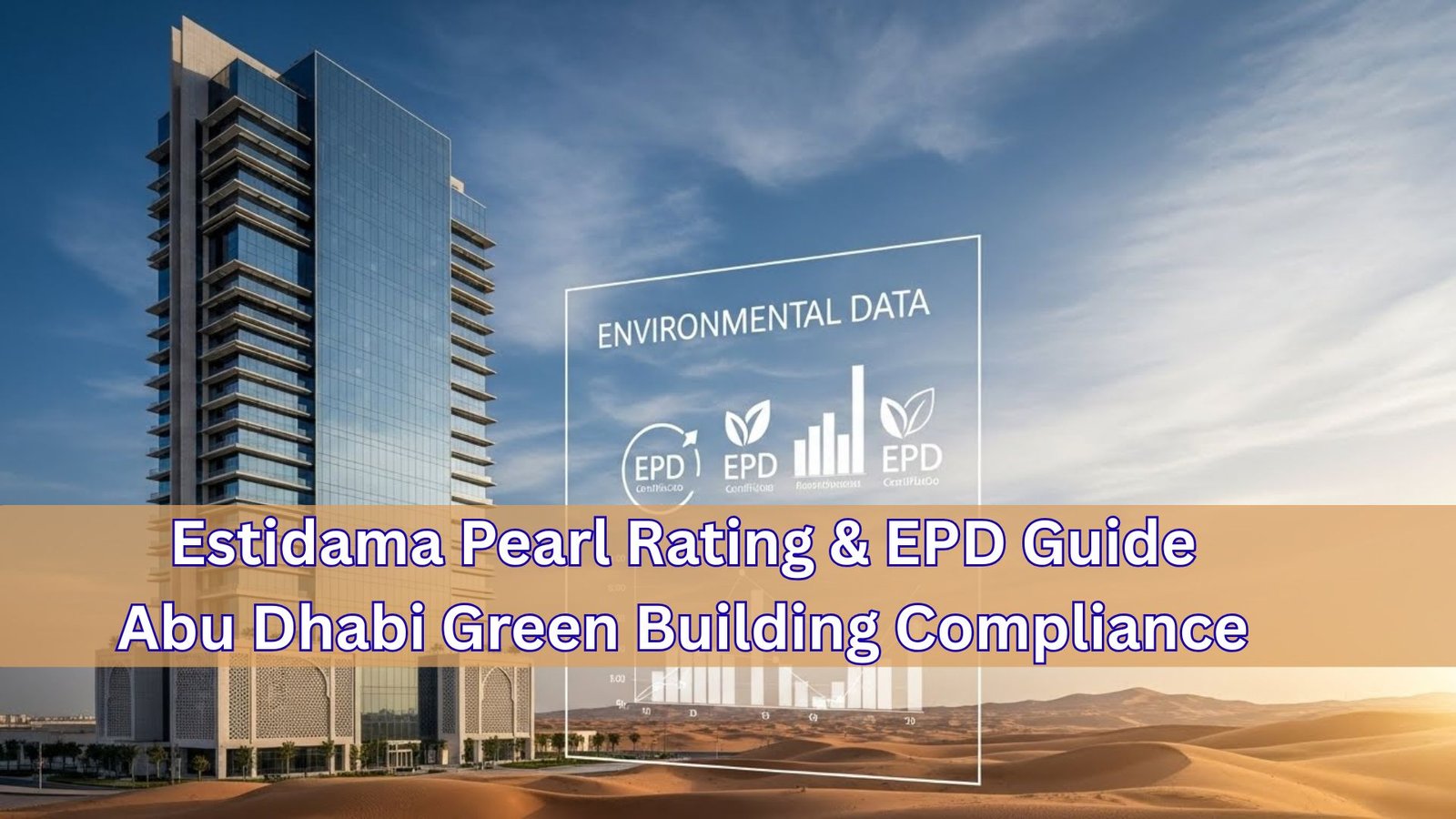
Abu Dhabi is transforming its urban landscape with one clear mission: building a sustainable future. At the heart of this transformation lies the Estidama Pearl Rating System, a green building certification framework that’s reshaping how developers, architects, and manufacturers approach construction in the emirate. But here’s what many don’t know—Environmental Product Declarations (EPDs) have quietly become one of the most powerful tools for achieving higher Pearl Ratings, especially as the system evolves to prioritize measurable environmental impact over checkboxes.
If you’re a developer working on a project in Abu Dhabi, a manufacturer supplying building materials to the UAE, or a sustainability consultant navigating the complexities of green certifications, understanding how EPDs integrate with Estidama isn’t optional anymore—it’s essential. This guide breaks down everything you need to know about using EPDs to maximize your Pearl Rating, comply with Abu Dhabi’s green building regulations, and position your project or product as a leader in sustainable construction across the GCC.
Key Takeaways
- Estidama Pearl Rating System evaluates buildings across seven categories, with Materials & Waste and Innovation offering significant EPD-related credit opportunities
- EPDs provide third-party verified environmental data that directly supports multiple Estidama credits, particularly in material selection and embodied carbon reduction
- Projects targeting 3 Pearl or higher ratings increasingly need EPDs to demonstrate quantifiable environmental performance
- Abu Dhabi’s Vision 2030 sustainability goals are driving stricter enforcement of Estidama requirements, making EPDs more valuable for future compliance
- Understanding Product Category Rules (PCR) and ensuring your EPDs align with ISO 14025 and EN 15804+A2 standards is critical for Estidama acceptance
What is the Estidama Pearl Rating System?
Estidama, which means “sustainability” in Arabic, is Abu Dhabi’s comprehensive framework for sustainable design, construction, and operation. Launched by the Abu Dhabi Urban Planning Council (now integrated into the Department of Municipalities and Transport), the Pearl Rating System evaluates buildings across seven critical categories: Integrated Development Process, Natural Systems, Livable Buildings, Precious Water, Resourceful Energy, Stewarding Materials, and Innovating Practice.
The system awards ratings from 1 Pearl (minimum compliance) to 5 Pearls (world-class sustainability leadership). What sets Estidama apart from other green building certifications like LEED or BREEAM is its specific adaptation to the Middle Eastern climate, cultural context, and environmental challenges unique to the Arabian Gulf region.
Did You Know? All government-funded buildings in Abu Dhabi must achieve at least a 2 Pearl Rating, while many private developers voluntarily pursue 3 Pearl or higher ratings to attract international tenants and investors who prioritize ESG performance.
How Estidama Differs from Other GCC Green Building Standards
While Dubai has its own green building regulations and Saudi Arabia is implementing its Saudi Green Building Code aligned with Vision 2030, Estidama remains one of the most comprehensive and strictly enforced systems in the region. The Pearl Rating System goes beyond energy efficiency to evaluate the entire life cycle impact of materials, water conservation strategies specific to arid climates, and innovation in sustainable practices.
Why EPDs Matter for Estidama Compliance
Environmental Product Declarations are standardized, third-party verified documents that communicate the environmental impact of a product throughout its life cycle. Think of an EPD as a nutrition label for building materials—instead of calories and vitamins, it reports Global Warming Potential (GWP), embodied carbon, water usage, and other environmental indicators based on a comprehensive Life Cycle Assessment (LCA).
Here’s why EPDs have become indispensable for Estidama projects:
1. Quantifiable Environmental Data
Estidama credits increasingly require measurable proof of environmental performance rather than qualitative claims. EPDs provide independently verified data that assessors can validate, eliminating greenwashing concerns and streamlining the approval process.
2. Materials & Waste Category Alignment
The Stewarding Materials section of Estidama specifically rewards projects that demonstrate reduced environmental impact through material selection. EPDs directly support credits related to:
- Selecting materials with lower embodied carbon
- Demonstrating responsible sourcing and manufacturing processes
- Providing transparency in material composition and environmental footprint
- Supporting circular economy principles through end-of-life considerations
3. Innovation Credits
Projects pursuing additional Innovation credits can leverage EPDs to demonstrate cutting-edge approaches to material transparency and environmental optimization. Using digital EPDs integrated into BIM models, for example, showcases technological leadership in sustainable construction.
4. Future-Proofing Compliance
As Abu Dhabi moves toward net-zero construction targets aligned with UAE Net Zero by 2050 initiative, Estidama requirements will likely become more stringent. Having EPDs for your materials positions your project ahead of regulatory curves and demonstrates commitment to long-term sustainability goals.
Expert Insight: “We’re seeing a clear trend in Abu Dhabi where projects aiming for 3 Pearl ratings or higher are proactively requesting EPDs from their material suppliers. It’s no longer just about checking boxes—it’s about demonstrating measurable environmental leadership,” says a leading sustainability consultant working on major Estidama projects across the emirate.
Understanding Estidama’s Materials & Waste Credits
The Stewarding Materials section represents a significant portion of achievable Estidama credits, making it a strategic focus area for projects pursuing higher Pearl Ratings. Let’s break down how EPDs support specific credits within this category:
Material Reuse and Recycled Content
Credits are awarded for incorporating materials with recycled content or reusing materials from previous structures. EPDs that follow ISO 14025 standards clearly document the percentage of recycled content, post-consumer vs. pre-consumer materials, and circular economy indicators. This transparency makes verification straightforward during Estidama assessments.
Regional Materials
Estidama encourages the use of materials manufactured or extracted within a certain radius to reduce transportation emissions. EPDs that document the manufacturing location and transportation distances provide the exact data assessors need to award these credits. For UAE-based manufacturers, this creates a competitive advantage when pursuing EPD certification.
Low-Emission Materials
This credit focuses on reducing embodied carbon and other environmental impacts. EPDs are essentially the gold standard for demonstrating low-emission material selection because they:
- Report Global Warming Potential (GWP) in standardized units
- Compare products within the same category using Product Category Rules (PCR)
- Provide cradle-to-gate or cradle-to-grave data depending on scope
- Enable architects and specifiers to make informed material optimization decisions
Material Transparency
Increasingly, Estidama assessors value transparency in material composition and supply chain practices. While Health Product Declarations (HPDs) focus on chemical content and human health impacts, EPDs complement this by revealing environmental impacts. Together, these documents provide comprehensive material transparency that supports multiple Estidama credits.
Myth vs. Fact:
- Myth: Only major structural materials like concrete and steel need EPDs for Estidama.
- Fact: Interior finishes, flooring, insulation, MEP components, and facade materials increasingly require EPDs as Estidama assessors scrutinize the entire building’s material palette for environmental impact.
Step-by-Step: Using EPDs to Maximize Your Pearl Rating
Achieving a higher Pearl Rating through strategic EPD use requires planning from the earliest design phases. Here’s how to integrate EPDs effectively into your Estidama project:
Step 1: Early Material Planning (Design Development Phase)
Begin identifying critical materials that will significantly impact your project’s environmental footprint. Focus on high-volume materials first—structural concrete, steel, facade systems, and major MEP components. Create a material transparency requirement in your specifications that prioritizes products with verified EPDs.
Step 2: Supplier Engagement and EPD Collection
Reach out to potential suppliers and request EPDs that comply with ISO 14025 and EN 15804+A2 standards. For regional manufacturers in the UAE, Saudi Arabia, or broader GCC who don’t yet have EPDs, consider partnering with EPD certification consultants who can guide them through the process. This proactive approach often results in better pricing and dedicated product support.
Step 3: EPD Verification and PCR Compliance
Not all EPDs are created equal. Ensure that the EPDs you collect:
- Are verified by accredited third-party organizations
- Follow relevant Product Category Rules (PCR) for accurate comparison
- Are current and not expired (typically valid for 5 years)
- Cover the appropriate life cycle stages for your project scope
- Report environmental indicators relevant to Estidama criteria
Step 4: BIM Integration and Documentation
For innovative practice credits, integrate EPD data directly into your Building Information Modeling (BIM) system. Digital EPDs enable automated environmental impact calculations, making it easier to compare design alternatives and optimize material selection throughout the design process.
Step 5: Credit Calculation and Submission
Work with your Estidama assessor to map specific EPD data points to applicable credits. Prepare clear documentation showing:
- Which materials have EPDs
- How these materials reduce environmental impact compared to conventional alternatives
- Calculations demonstrating embodied carbon reduction
- Evidence of regional sourcing and responsible manufacturing
Step 6: Third-Party Verification Support
During the Estidama assessment, be prepared to provide additional context on your EPD selections. Having relationships with EPD verification bodies or consultants can expedite any questions or clarifications the assessor requires.
Step 7: Post-Occupancy Monitoring
For operations and maintenance credits, maintain updated EPD records for replacement materials. This demonstrates ongoing commitment to environmental performance and supports Estidama recertification if pursued.
Did You Know? Projects that systematically incorporate EPDs from the design phase report up to 30% faster Estidama assessment times because they eliminate back-and-forth documentation requests and provide clear evidence of environmental performance upfront.
EPD Requirements: What Abu Dhabi Regulators Look For
Understanding what Estidama assessors evaluate when reviewing EPDs helps ensure your documentation meets requirements on the first submission. Here’s what regulators prioritize:
Accredited Program Operator Verification
EPDs must be verified through recognized Program Operators like The International EPD System, UL Environment, or other ISO 14025-compliant programs. Self-declared environmental claims, even if based on LCA data, don’t carry the same weight as third-party verified EPDs in Estidama assessments.
Appropriate PCR Selection
Product Category Rules ensure that environmental impacts are calculated and reported consistently across similar products. Estidama assessors verify that the PCR used for an EPD is appropriate for the product category and that all required environmental indicators are reported according to that PCR’s specifications.
Regional Relevance
While international EPDs are accepted, those that account for regional manufacturing processes, energy grids, and transportation scenarios relevant to the GCC provide more accurate environmental impact data. This is particularly important for materials manufactured in the UAE or Saudi Arabia, where energy sources and manufacturing processes may differ significantly from European or North American contexts.
Completeness of Life Cycle Stages
Depending on the specific Estidama credit being pursued, assessors may require cradle-to-gate (raw material extraction through factory gate), cradle-to-grave (including installation, use phase, and end-of-life), or specific module reporting per EN 15804+A2 standards. Ensure your EPDs cover the appropriate scope.
Currency and Validity
EPDs typically expire after five years, requiring reverification to ensure data reflects current manufacturing processes and environmental performance. Estidama assessors reject expired EPDs, so maintain a tracking system for your project’s EPD portfolio.
The Cost-Benefit Analysis: Investing in EPDs for Estidama Projects
One of the most common questions developers ask is whether the investment in EPDs justifies the potential Pearl Rating improvement. Let’s break down the economics:
Direct Costs
- EPD Development: For manufacturers, developing an initial EPD typically ranges from $5,000 to $25,000 depending on product complexity, LCA scope, and whether existing LCA data is available
- Third-Party Verification: Adds approximately $3,000 to $8,000 to the total cost
- Annual Registration: Program Operator fees for maintaining active EPDs range from $500 to $2,000 annually
Indirect Costs
- Staff time for data collection and coordination
- Potential process improvements identified during LCA that require implementation
- Documentation and integration into project specifications
Quantifiable Benefits
- Higher Pearl Ratings: Moving from 2 Pearl to 3 Pearl can increase property values by 5-10% in Abu Dhabi’s commercial real estate market
- Faster Approvals: Complete EPD documentation reduces assessment time, potentially saving months in project timelines
- Competitive Advantage: Projects with comprehensive EPD portfolios attract premium tenants and investors focused on ESG performance
- Future Compliance: Avoiding costly retrofits or material substitutions as regulations tighten
Intangible Benefits
- Enhanced brand reputation as a sustainability leader
- Stronger relationships with environmentally conscious clients
- Market differentiation in increasingly competitive GCC construction sector
- Alignment with corporate sustainability commitments and reporting
For large-scale projects pursuing 3 Pearl ratings or higher, the investment in EPDs typically represents less than 0.1% of total project costs while contributing significantly to achieving the target rating and associated property value premium.
Common Pitfalls: EPD Mistakes That Cost Estidama Credits
Even experienced teams can encounter challenges when incorporating EPDs into Estidama projects. Avoid these common mistakes:
1. Using Generic Industry EPDs Instead of Product-Specific EPDs
While industry-average EPDs provide useful benchmarks, Estidama assessors increasingly require product-specific EPDs that reflect the actual environmental performance of the specified materials. Generic EPDs may not provide sufficient credit documentation, particularly for materials where significant performance variation exists within the product category.
2. Ignoring PCR Compatibility
Attempting to compare EPDs developed under different Product Category Rules is like comparing apples to oranges. Ensure that when making material comparisons to demonstrate environmental improvements, all EPDs follow the same PCR or are otherwise comparable through normalized indicators.
3. Overlooking Regional Manufacturing Context
An EPD developed for a product manufactured in Europe may not accurately represent the environmental impact of the same product manufactured in the UAE if energy sources, transportation distances, and manufacturing processes differ significantly. For Estidama projects, prioritize EPDs that reflect regional manufacturing realities.
4. Failing to Verify Current Certification Status
EPD registries are publicly accessible, but some manufacturers provide expired or withdrawn EPDs in their marketing materials. Always verify EPD status directly through the Program Operator’s registry before relying on it for credit documentation.
5. Insufficient Documentation of Credit Pathway
Simply having EPDs isn’t enough—you must clearly document how the EPD data supports specific Estidama credits. Create a credit matrix that maps each EPD to applicable credits with supporting calculations and explanations.
6. Neglecting Installation and Use Phase Impacts
Some Estidama credits require consideration of environmental impacts beyond manufacturing. Ensure your EPDs cover appropriate life cycle stages for the credits you’re pursuing, including installation, maintenance, and end-of-life scenarios where relevant.
Expert Insight: “The most successful Estidama submissions we see incorporate EPDs from the specification phase, not as an afterthought during documentation. This proactive approach ensures that material selections genuinely optimize environmental performance rather than just collecting documentation for products already specified,” notes a veteran Estidama Qualified Professional (EQP).
The Future of EPDs in Abu Dhabi’s Green Building Landscape
Abu Dhabi’s commitment to sustainability is accelerating, with several trends suggesting EPDs will become even more critical for construction projects:
Stricter Estidama Enforcement
Recent policy signals indicate that minimum Pearl Rating requirements may increase for certain project types, with government buildings potentially required to achieve 3 Pearl or higher. This shift makes EPDs transition from optional optimization tools to practical necessity.
Integration with Carbon Accounting
As the UAE progresses toward its Net Zero by 2050 commitment, expect Estidama to incorporate more explicit embodied carbon requirements. EPDs provide the standardized data infrastructure needed for accurate carbon accounting across entire buildings or development portfolios.
Digital Transformation
The adoption of digital EPDs that integrate seamlessly with BIM platforms will accelerate. This technological evolution makes it easier for design teams to incorporate environmental impact as a real-time design variable, fundamentally changing how material selection decisions are made.
Supply Chain Pressure
As EPDs become standard for major projects, manufacturers without verified EPDs will find themselves excluded from specifications. This creates market pressure throughout the supply chain, driving even small and medium-sized manufacturers to pursue certification.
Regional EPD Programs
There’s growing discussion about establishing GCC-specific EPD programs or regional adaptations of existing international programs to better reflect local manufacturing contexts, energy grids, and environmental priorities. Such developments could further streamline EPD adoption across the Gulf region.
Practical Resources: Getting Started with EPDs for Estidama
For Developers and Architects:
Start by creating EPD requirements in your master specifications. Reference ISO 14025 and EN 15804+A2 compliance, specify acceptable Program Operators, and require product-specific rather than generic EPDs where environmental performance varies significantly within product categories.
For Manufacturers:
If you supply materials to UAE projects and don’t yet have an EPD, begin with a Life Cycle Assessment to understand your product’s environmental profile. Partner with experienced EPD consultants who understand GCC market requirements to navigate the certification process efficiently.
For Sustainability Consultants:
Develop EPD evaluation frameworks that help project teams assess which materials offer the greatest credit opportunities relative to environmental impact and cost. Create standardized templates for documenting EPD-based credits to streamline Estidama submissions.
Key Organizations and Resources:
- Estidama Program (Department of Municipalities and Transport, Abu Dhabi)
- International EPD System – leading global EPD program operator
- ISO 14025 Standard – foundation for EPD methodology
- UAE Ministry of Energy & Infrastructure – green building policy guidance
Integrating EPDs with Other Estidama Strategies
EPDs work most effectively when integrated into a comprehensive Estidama compliance strategy:
Energy Modeling Synergy
Combine EPD data on embodied carbon with operational energy modeling to understand total life cycle carbon emissions. This holistic view helps optimize the balance between upfront embodied impacts and long-term operational performance.
Water Conservation Credits
While EPDs primarily address materials and carbon, some EPDs report water consumption during manufacturing. This data can support water conservation credits, particularly for materials with significant water requirements in their production processes.
Indoor Environmental Quality
Pair EPDs with Health Product Declarations (HPDs) to address both environmental impact and human health considerations. This comprehensive approach to material transparency supports multiple Estidama credit categories simultaneously.
Waste Management Planning
EPDs that include end-of-life scenarios and recyclability data inform construction waste management plans and support credits related to waste diversion and circular economy principles.
Key Takeaways: Your Estidama EPD Action Plan
Successfully leveraging EPDs for Estidama Pearl Rating optimization requires strategic planning, supplier collaboration, and systematic documentation. Here’s your action plan:
- Start Early: Incorporate EPD requirements into design development specifications, not construction documentation
- Prioritize Strategically: Focus on high-impact materials first—those with large quantities, significant embodied carbon, or multiple credit opportunities
- Verify Thoroughly: Confirm EPD currency, PCR compliance, and third-party verification status before relying on documentation
- Document Clearly: Create explicit credit pathways showing how EPD data supports specific Estidama requirements
- Think Long-Term: Build relationships with suppliers who commit to maintaining current EPDs and continuous environmental improvement
- Embrace Innovation: Explore digital EPDs and BIM integration to streamline future projects and demonstrate technical leadership
The Estidama Pearl Rating System represents Abu Dhabi’s vision for sustainable urban development, and EPDs have emerged as essential tools for achieving that vision. Whether you’re a developer pursuing a 3 Pearl rating to attract international tenants, a manufacturer positioning products for the premium GCC market, or a consultant guiding clients through increasingly complex green building requirements, understanding how to effectively use EPDs within the Estidama framework is a competitive advantage you can’t afford to overlook.
As Abu Dhabi continues to raise the bar for sustainable construction, those who proactively embrace material transparency and environmental accountability will lead the next generation of iconic, environmentally responsible buildings in the Arabian Gulf.
Final Thoughts
The intersection of EPDs and Estidama represents more than just compliance—it’s about fundamentally rethinking how we design, build, and operate the built environment in one of the world’s most challenging climates. Abu Dhabi’s leadership in green building standards through Estidama demonstrates that environmental stewardship and economic development aren’t competing priorities but complementary paths toward a more resilient future.
As you embark on your next project in the UAE, consider this: every material specification is an opportunity to reduce environmental impact, support innovative manufacturers, and contribute to the broader vision of sustainable development in the Gulf region. EPDs transform these opportunities from abstract intentions into measurable, verifiable achievements that benefit your project, your stakeholders, and the environment.
What role will EPDs play in your next Estidama project? The answer might just determine whether you achieve good compliance—or exceptional leadership in sustainable construction.
Frequently Asked Questions (FAQs)
1. Does every material in an Estidama project need an EPD?
No, but EPDs for major materials—especially those with high embodied carbon like concrete, steel, aluminum, and glass—provide the most value. Focus on materials representing the largest environmental impact or those specified in large quantities.
2. How long does it take to get an EPD for a building material in the UAE?
The complete EPD process typically takes 4-6 months, including LCA development, third-party verification, and Program Operator registration. This timeline assumes manufacturing data is readily available and organized.
3. Can I use international EPDs for Abu Dhabi projects, or do they need to be regional?
International EPDs are acceptable if they follow ISO 14025 and appropriate EN 15804+A2 standards. However, EPDs reflecting regional manufacturing contexts provide more accurate environmental data for Estidama assessments.
4. What’s the difference between an EPD and a simple environmental claim on product literature?
EPDs are third-party verified documents based on comprehensive Life Cycle Assessment following international standards. Marketing claims lack independent verification and standardized methodology, making them unsuitable for Estidama credit documentation.
5. How much can EPDs improve my Pearl Rating?
EPDs can contribute to multiple credits across the Stewarding Materials and Innovating Practice categories. The exact credit value depends on your project’s specific material selections and how EPDs are strategically leveraged, but projects often gain 2-4 additional credits through comprehensive EPD documentation.
6. Are EPDs expensive to develop for small manufacturers in the GCC?
Initial EPD development costs $8,000-$25,000 depending on complexity, but this investment opens access to premium projects requiring environmental transparency. Many manufacturers find EPDs pay for themselves through increased sales and market access within 1-2 years.
7. Do EPDs expire, and what happens if mine expires during a project? EPDs are typically valid for 5 years. If an EPD expires during your project, coordinate with the manufacturer for reverification. For Estidama submissions, EPDs must be current at the time of assessment, so track expiration dates carefully.
Glossary: Essential EPD and Estidama Terms
- Cradle-to-Gate: LCA scope covering environmental impacts from raw material extraction through the manufacturing facility gate, excluding transportation, installation, use, and disposal phases
- Embodied Carbon: Total greenhouse gas emissions associated with materials throughout their life cycle, typically measured in kg CO2 equivalent per functional unit
- EPD (Environmental Product Declaration): Standardized, third-party verified document communicating the environmental impact of a product based on Life Cycle Assessment following ISO 14025
- Global Warming Potential (GWP): Measure of how much heat a greenhouse gas traps in the atmosphere compared to carbon dioxide over a specific time period, typically reported in CO2 equivalents
- Life Cycle Assessment (LCA): Comprehensive analysis of environmental impacts throughout a product’s entire life cycle, from raw material extraction through disposal or recycling
- PCR (Product Category Rules): Specific rules, requirements, and guidelines for developing EPDs for products within a specific category, ensuring consistency and comparability
- Pearl Rating: Estidama’s scoring system ranging from 1 Pearl (minimum compliance) to 5 Pearls (exceptional sustainability leadership), awarded based on performance across seven evaluation categories
- Program Operator: Organization that develops, maintains, and administers EPD programs according to ISO 14025, such as The International EPD System or UL Environment
- Third-Party Verification: Independent review and validation of EPD data by qualified verifiers ensuring accuracy, completeness, and compliance with applicable standards and PCRs
- Stewarding Materials: Estidama’s credit category evaluating environmental impact of material selection, waste management, and resource efficiency throughout the building life cycle