Introduction
Electrical equipment manufacturers in UAE targeting hazardous area markets need IECEx certification but don’t know where to start. Importers bringing equipment into UAE struggle to understand certification requirements.
Local engineering companies designing equipment for explosive atmospheres face confusion about certification pathways. Companies waste time pursuing incorrect certification approaches delaying market entry.
Understanding how to get IECEx certification for electrical equipment in UAE ensures efficient compliance. Clear process knowledge prevents costly mistakes and unnecessary delays.
Getting IECEx certification for electrical equipment in UAE involves engaging an accredited certification body, preparing technical documentation, conducting testing at approved laboratories, completing quality audits, and receiving certificates. The process typically takes 6-12 months.
UAE-based manufacturers follow identical processes as international manufacturers. Location doesn’t change certification requirements since IECEx maintains consistent global standards.
However, UAE manufacturers benefit from regional service providers and testing facilities. Local support reduces logistics complexity and accelerates timelines.
What Electrical Equipment Needs IECEx Certification?
Electrical equipment intended for use in explosive atmospheres requires IECEx certification. This includes motors, switchgear, control panels, instrumentation, and lighting fixtures installed in hazardous areas.
Equipment classifications depend on the explosive atmosphere type. Gas and vapor atmospheres differ from combustible dust environments requiring different protection approaches.
Zone ratings determine certification requirements. Zone 0 (continuous hazard) demands highest protection levels while Zone 2 (abnormal occurrence) allows simpler protection concepts.
Temperature classifications ensure equipment surfaces don’t exceed ignition temperatures of surrounding materials. Equipment must be certified for specific temperature classes matching application requirements.
Understanding IECEx certification zones and protection concepts helps manufacturers design equipment appropriately. Proper design from the beginning prevents costly redesigns later.
Common electrical equipment types requiring certification include explosion-proof motors, intrinsically safe instruments, pressurized control rooms, and increased safety junction boxes. Each type uses different protection methods.
Which Protection Concepts Apply to Electrical Equipment?
Flameproof enclosures (Ex d) contain explosions within housings preventing external ignition. Heavy-duty construction withstands internal explosion pressures.
Intrinsic safety (Ex i) limits electrical energy to levels incapable of ignition. This protection suits instrumentation and control circuits.
Increased safety (Ex e) prevents sparking and excessive temperatures through enhanced construction. Motors and junction boxes commonly use this protection.
Pressurization (Ex p) maintains positive pressure inside enclosures preventing explosive atmosphere entry. Control rooms and analyzer houses often employ pressurization.
Encapsulation (Ex m) embeds electrical parts in compound preventing ignition sources. Small electronic devices frequently use this protection.
Oil immersion (Ex o) submerges electrical contacts in oil preventing explosive atmosphere contact. Switchgear sometimes employs this traditional method.
Each protection concept requires specific testing protocols and design requirements. Equipment may combine multiple protection methods for comprehensive safety.
How Do You Select a Certification Body?
Research IECEx accredited Certification Bodies (ExCB) serving the Middle East region. Several international organizations maintain UAE presence through local representatives.
Evaluate certification bodies based on experience with your equipment type. Bodies specializing in electrical equipment understand relevant testing requirements better.
Consider geographic proximity and local support availability. Bodies with UAE representatives facilitate communication and coordinate activities more efficiently.
Compare fee structures and typical project timelines. Obtain quotes from multiple certification bodies ensuring comparable scope coverage.
Review certification body reputation through industry references. Previous clients provide insights into service quality and responsiveness.
Verify that selected bodies maintain current IECEx accreditation. Check official IECEx database confirming active accreditation status.
Some bodies offer integrated services coordinating testing and certification through established laboratory relationships. This integration often streamlines processes.
Understanding IECEx Certification in UAE helps manufacturers navigate local certification landscape. Regional knowledge improves certification body selection.
What Documentation Must You Prepare?
Technical documentation forms the foundation of your certification application. Comprehensive documentation demonstrates compliance with IEC 60079 standards.
Design drawings must show complete equipment construction including all components, materials, and assembly details. Electrical schematics indicate all circuits, connections, and protective devices.
Bill of materials lists every component with specifications, ratings, and manufacturers. This traceability ensures consistent production quality.
Safety calculations demonstrate that temperatures, electrical parameters, and mechanical strengths remain within safe limits. Calculations must address normal operation and foreseeable faults.
Quality management documentation proves manufacturing capability. Include quality manuals, manufacturing procedures, inspection protocols, and testing procedures.
Installation and maintenance instructions provide users with proper equipment handling guidance. These documents become part of the certified package.
Prepare documentation in English following IECEx format requirements. Clear, complete documentation accelerates review processes significantly.
Where Does Testing Occur?
Testing must occur at IECEx accredited Testing Laboratories (ExTL). Few facilities in UAE currently hold this accreditation for electrical equipment.
Most UAE manufacturers ship samples to international testing laboratories in Europe, Asia, or other regions. Major testing facilities exist in Germany, UK, China, and other countries.
Shipping logistics require careful planning including export documentation, customs clearance, and insurance. Damaged samples during shipping delay projects significantly.
Some UAE-based laboratories maintain partnerships with accredited facilities abroad. These arrangements provide local coordination with testing conducted at partner locations.
Testing duration varies based on equipment complexity typically requiring 8-16 weeks. Simple devices complete faster while complex multi-function equipment takes longer.
Laboratory selection affects both cost and timeline. European laboratories often charge higher fees but may offer faster turnaround than Asian facilities.
Coordinate sample shipment timing with laboratory scheduling. Advance communication ensures testing capacity availability upon sample arrival.
What Testing Does Electrical Equipment Undergo?
Electrical safety testing verifies insulation resistance, dielectric strength, and leakage currents. Tests ensure electrical integrity under normal and fault conditions.
Temperature testing measures surface temperatures and internal component temperatures during normal operation and overload scenarios. Results must stay below certified temperature classifications.
Mechanical testing assesses enclosure strength, impact resistance, and environmental durability. Equipment must withstand specified mechanical stresses without compromising protection.
Protection-specific testing varies by concept. Flameproof equipment undergoes explosion pressure testing and flame path verification. Intrinsic safety circuits face fault simulation testing.
Environmental testing subjects equipment to temperature extremes, humidity, and sometimes corrosive atmospheres. Equipment must maintain protection integrity under environmental stress.
Aging and endurance testing for some equipment types verifies long-term reliability. Extended operation demonstrates that protection doesn’t degrade over time.
Failed tests require design modifications and retesting. Early engagement with testing laboratories helps identify potential issues before formal testing begins.
How Long Does the Quality Audit Take?
Factory quality audits typically occur while testing progresses. Certification bodies assess manufacturing facilities’ quality management systems.
Initial audits usually last 1-3 days depending on facility size and product complexity. Auditors examine production processes, quality controls, and documentation systems.
UAE manufacturers should prepare facilities before audits ensuring documentation accessibility and personnel availability. Well-organized facilities demonstrate professionalism and competence.
Auditors review manufacturing procedures, inspection records, calibration systems, and traceability processes. They observe actual production operations when possible.
Common audit findings include documentation gaps, calibration lapses, or procedural inconsistencies. Addressing findings promptly prevents certification delays.
Subsequent surveillance audits maintain certification validity occurring annually or biennially. These shorter audits verify continued quality system operation.
Quality audit costs typically range AED 15,000-40,000 for initial assessments including auditor travel and accommodation. Surveillance audits cost less at AED 8,000-20,000.
What Are the Total Costs?
Certification body application and management fees typically range AED 8,000-25,000 depending on equipment complexity. These cover administrative processing and project coordination.
Testing laboratory fees represent the largest expense ranging AED 30,000-200,000+ based on equipment type and testing requirements. Complex equipment demands extensive testing.
Quality audit costs add AED 15,000-40,000 for initial factory assessments. Geographic location affects travel expenses factored into audit pricing.
Consultant fees if used can range AED 20,000-150,000 depending on support scope. Full-service consulting costs more than limited documentation assistance.
Sample preparation and shipping to international laboratories adds AED 5,000-20,000 including packaging, freight, insurance, and customs.
Total project costs for electrical equipment certification typically range AED 100,000-400,000+ including all expenses. Simple equipment falls toward lower range while complex products exceed upper estimates.
Ongoing costs include annual surveillance audits (AED 10,000-30,000) and certificate renewals every 3-5 years (AED 50,000-100,000).
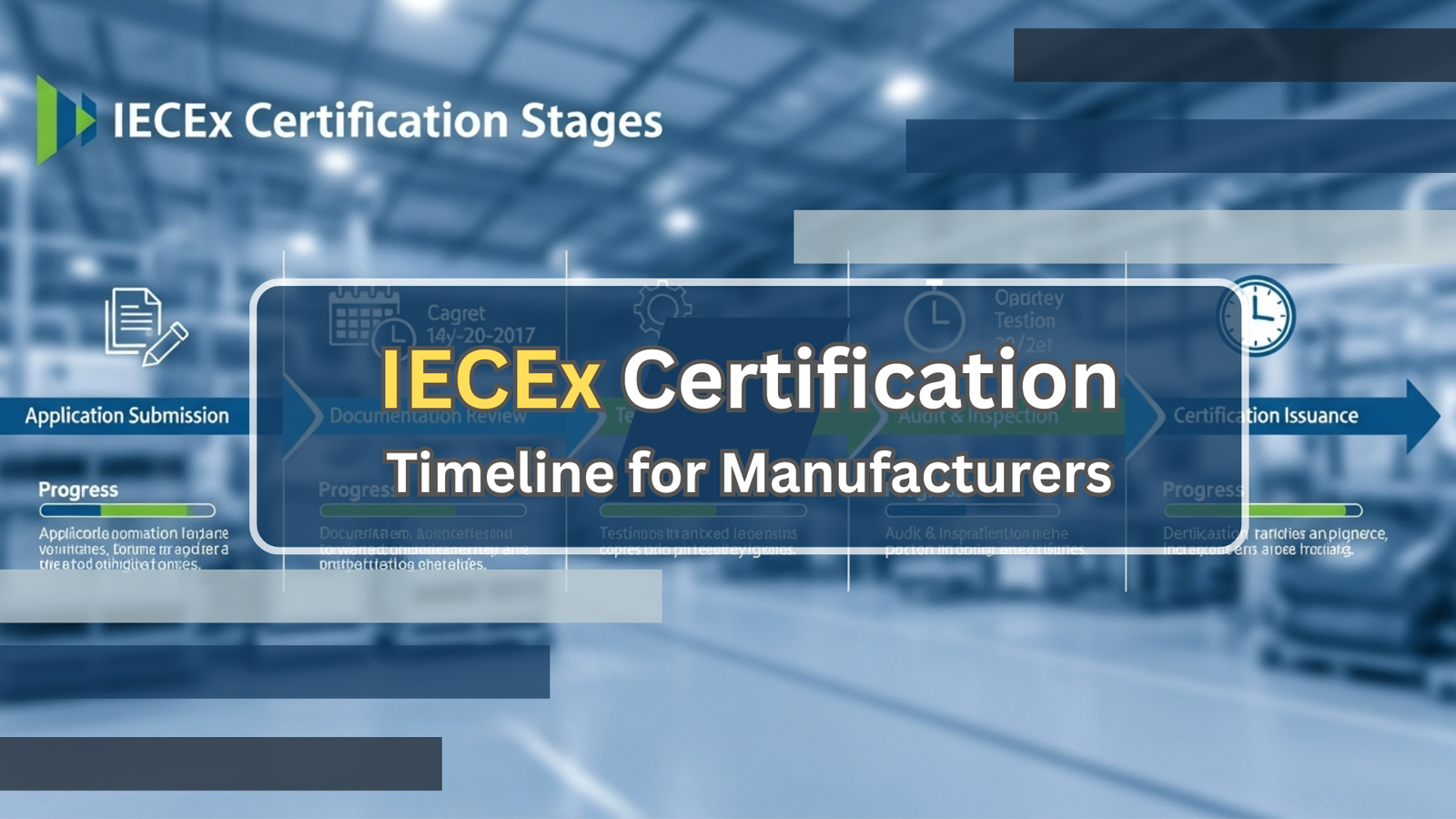
How Long Does the Complete Process Take?
Documentation preparation typically requires 4-8 weeks for manufacturers with organized technical records. Starting from scratch may take 8-12 weeks.
Certification body initial review adds 2-4 weeks identifying documentation gaps. Addressing review comments might require additional 2-4 weeks.
Laboratory testing timelines span 8-16 weeks depending on equipment complexity and laboratory schedules. Booking testing slots in advance prevents scheduling delays.
Quality audit scheduling and execution adds 2-4 weeks including preparation, audit conduct, and finding resolution.
Certificate issuance following successful testing and audits takes 2-4 weeks for final documentation processing and database registration.
Total timeline typically spans 6-12 months from initial application to certificate receipt. Well-prepared projects complete in 6-8 months while complex equipment or poorly prepared documentation extends beyond 12 months.
Factors causing delays include incomplete documentation, failed testing requiring redesign, quality audit findings, and laboratory scheduling conflicts. Thorough preparation minimizes these risks.
What Happens After Certification?
Manufacturers can mark certified equipment with IECEx symbols, certificate numbers, and protection markings. Proper marking ensures customers recognize certified status.
Market equipment in IECEx accepting countries confident in compliance. The certification opens doors to major projects specifying IECEx requirements.
Maintain quality systems meeting certification body standards. Surveillance audits verify continued compliance requiring ongoing attention.
Report any design modifications to certification bodies before implementation. Unauthorized changes invalidate certificates creating serious compliance problems.
Prepare for annual or biennial surveillance audits. Budget time and resources for these ongoing requirements.
Plan certificate renewals 6-12 months before expiry. Early renewal initiation prevents certificate lapses affecting market access.
Understanding IECEx certification ongoing requirements helps manufacturers maintain valid certification throughout product lifecycles. Continuous compliance proves essential for sustained market access.
Key Takeaway
- IECEx certification for UAE electrical equipment follows identical global processes
- Process includes certification body engagement, documentation, testing, and quality audits
- Total costs typically range AED 100,000-400,000+ for complete certification
- Timeline spans 6-12 months from application to certificate issuance
- Testing occurs at international accredited laboratories requiring sample shipment
- Ongoing surveillance audits and renewals maintain certificate validity
Ready to certify your electrical equipment for explosive atmosphere applications? atex-iecex.com provides comprehensive certification support including documentation preparation, testing coordination, and audit readiness, ensuring successful IECEx certification for UAE manufacturers.