
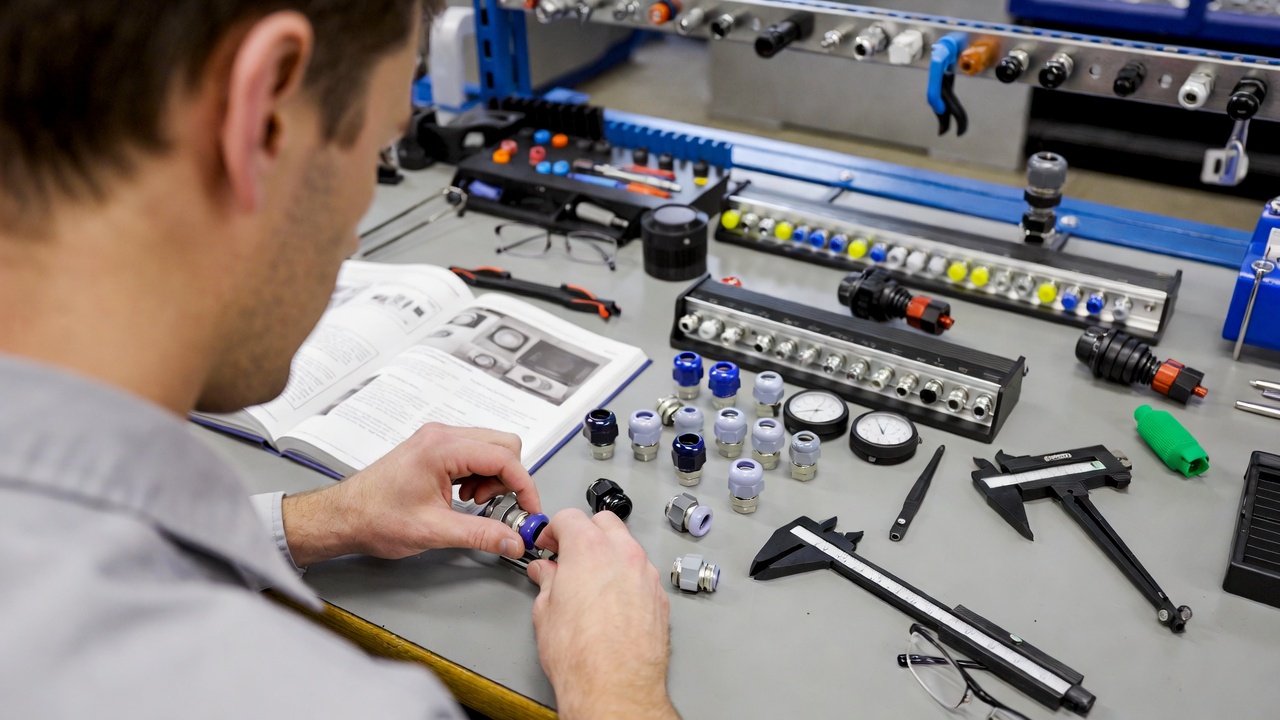
Passing IECEx assessments requires more than memorizing theory—you must demonstrate practical competence under observation by qualified assessors. Many candidates fail not from lack of knowledge but from inadequate hands-on practice with real equipment. Understanding what assessors evaluate, which skills require the most attention, and how to avoid common mistakes dramatically improves your success rate and reduces the time needed to achieve certification.
The assessment process combines written examinations testing theoretical knowledge with practical demonstrations where you perform real tasks on actual hazardous area equipment. Assessors watch how you handle tools, follow procedures, identify hazards, and apply standards-based knowledge to solve problems. Preparation strategies that address both components while emphasizing practical skills produce the fastest results and highest pass rates.
What to Practice: Core Physical Skills
Cable gland installation forms the foundation of most IECEx practical assessments. You must demonstrate proper selection, installation, and sealing of various gland types including single-seal, double-seal, armored cable glands, and entries for intrinsically safe circuits. Practice until you can install glands correctly without hesitating or checking references repeatedly.
Focus on achieving proper torque values, ensuring correct cable preparation with armor termination, and verifying seal integrity. Assessors specifically evaluate whether you understand why each step matters for maintaining explosion protection, not just mechanical ability to complete tasks. Practice explaining your actions while working—this demonstrates comprehension beyond rote procedure following.
Equipment inspection skills require detailed attention to specific components. Practice measuring flameproof joint gaps with feeler gauges to verify they remain within specification. Learn to identify equipment markings including temperature class, equipment protection level, and applicable zones. Check bolt tightness systematically and recognize signs of mechanical damage that compromise protection integrity.
Understanding protection concepts practically means knowing how to verify different protection methods remain effective. For flameproof enclosures, practice checking joint surfaces for damage and proper engagement. For increased safety equipment, verify terminal clearances and creepage distances. For intrinsically safe installations, practice checking earth connections and identifying circuit documentation requirements.
How to Study IEC Standards Effectively
IEC 60079 series standards form the theoretical foundation for IECEx assessments. Rather than attempting to memorize entire documents, focus on sections directly relevant to your target certification unit. IECEx certification training emphasizes practical application, so study standards through the lens of real work scenarios.
Create a reference system organizing key requirements by topic: installation rules, inspection criteria, maintenance procedures, and equipment markings. Use sticky notes, highlights, or digital bookmarks to locate critical sections quickly. During assessments, you typically have access to standards but must find information efficiently.
Practice translating standard requirements into physical actions. When the standard specifies maximum gap dimensions for flameproof joints, physically measure these with feeler gauges on training equipment. When standards describe cable entry requirements, install cables meeting those specifications. This practical application embeds knowledge far more effectively than passive reading.
Focus particularly on IEC 60079-14 (installations), IEC 60079-17 (inspections), and IEC 60079-19 (repairs and modifications). These standards directly address the hands-on work most certification units assess. Understanding the logic behind requirements helps you apply knowledge to novel scenarios assessors might present.
Common Failure Points and How to Avoid Them
Many candidates fail practical assessments by rushing through tasks without demonstrating systematic approaches. Assessors evaluate your methodology as much as final results. Work methodically, explain your reasoning, and show proper risk assessment before touching equipment. This deliberate pace actually impresses assessors more than rushing through tasks with mistakes.
Cable gland installation failures often result from incomplete cable preparation—improper armor termination, inadequate insulation stripping, or incorrect seal positioning. Practice on various cable types until you can properly prepare each without reference guides. Take time during assessments to verify each preparation step before proceeding.
Equipment inspection failures frequently occur when candidates miss key checks or perform them superficially. Develop systematic inspection checklists covering all critical aspects: visual examination, mechanical integrity, marking verification, and protection method specific checks. Practice until your routine becomes automatic and comprehensive.
Understanding equipment markings represents a surprisingly common failure point. Candidates must interpret marking plates rapidly and correctly identify temperature class, equipment group, equipment protection level, zone suitability, and any special conditions. Beginners particularly struggle with this aspect, so create flashcards with various marking examples and practice interpretation until immediate recognition develops.
Documentation and procedure following also trips up candidates. Assessors evaluate whether you reference correct standards, follow specified procedures, and maintain proper records. During practice, simulate complete work cycles including documentation rather than just performing physical tasks. This builds habits that transfer naturally to assessment conditions.
Preparation Timeline for Different Experience Levels
Experienced electricians or technicians with hazardous area exposure need 2-4 weeks of focused preparation. Spend this time on hands-on practice with equipment types you rarely encounter, refreshing standard knowledge, and reviewing protection methods outside your usual work scope.
Candidates with general electrical experience but limited hazardous area exposure should allow 4-8 weeks. This timeline provides adequate hands-on practice developing physical skills and building confidence with specialized equipment. Dedicate at least 60% of preparation time to practical exercises rather than just reading standards.
Complete beginners new to both electrical work and hazardous areas require 8-12 weeks minimum. Consider formal training courses providing structured equipment access and instructor guidance. Self-study alone rarely suffices for candidates lacking foundational knowledge—the learning curve proves too steep without expert mentoring.
Practical Exercises to Complete Before Assessment
Install at least 20 cable glands of various types on different cable sizes and enclosure entries. Practice both metric and imperial sizes if your region uses both. Work until installations meet specification without needing to remake attempts—assessors typically allow limited time for each task.
Perform complete equipment inspections on 5-10 different pieces of hazardous area equipment following IEC 60079-17 guidelines. Document findings formally as you would during actual work. This practice builds systematic approaches and familiarity with documentation requirements.
Identify equipment markings on 30+ different equipment plates without reference materials. Explain what each marking component means and determine appropriate application zones. Speed and accuracy both matter during assessments when time pressure increases.
Practice fault-finding scenarios where someone has incorrectly installed or maintained equipment. Identify problems, explain why they’re hazardous, and demonstrate proper corrections. Assessors often present such scenarios to evaluate your judgment and comprehension beyond rote procedure following.
Mental Preparation and Assessment Day Strategy
Assessment anxiety undermines performance even for well-prepared candidates. Familiarize yourself with assessment formats by reviewing IECEx CoPC certification guides explaining what to expect. Understanding evaluation criteria reduces uncertainty that fuels nervousness.
Arrive early with all required tools, safety equipment, and documentation. Rushing into assessments while stressed increases error probability. Take time to organize your workspace, review instructions carefully, and mentally rehearse your systematic approach.
During practical demonstrations, think aloud explaining your reasoning for each action. Assessors evaluate understanding, not just mechanical task completion. Verbalizing your thought process demonstrates competence even if you make minor technical errors. Silence during practical work leaves assessors uncertain about your knowledge level.
If you make a mistake, acknowledge it professionally and explain the correct approach. Assessors appreciate honesty and understanding of proper methods over perfect execution under pressure. Attempting to hide errors or proceeding despite knowing something is wrong raises serious concerns about your workplace behavior.
Using Training Resources Effectively
Quality training courses provide invaluable equipment access and expert feedback difficult to replicate independently. Invest in accredited programs offering substantial hands-on time rather than lecture-heavy courses. The physical practice opportunity justifies higher costs for equipment-focused training.
Study groups with other candidates preparing for assessments create peer learning opportunities. Practice assessing each other’s practical work using the actual evaluation criteria assessors apply. This develops the critical eye needed to self-evaluate during actual assessments.
Video resources showing proper techniques for cable gland installation, equipment inspection, and other practical tasks supplement physical practice. Watch repeatedly, pausing to analyze specific techniques. Then immediately apply what you observe to actual equipment practice.
Online forums and professional networks connect you with recently certified individuals who can share current assessment experiences and specific challenging areas. Their insights help focus preparation time on aspects most likely to appear in assessments.
Post-Assessment: Learning from Attempts
If you don’t pass on first attempt, carefully review assessor feedback identifying specific gaps. Most certification bodies provide detailed failure explanations. Use this information to target remedial practice precisely rather than repeating generic preparation.
Schedule reassessment only after addressing identified weaknesses thoroughly. Rushing into repeat attempts before genuine competence develops wastes money and damages confidence. Take time required to master deficient areas even if this delays certification.
Successful certification doesn’t mean learning ends. Continue developing practical skills and expanding knowledge into additional IECEx units. IECEx certification provides foundation for career-long professional development in hazardous area work.
Key Takeaway:
Pass IECEx assessments faster by prioritizing hands-on practice with cable glands, equipment inspections, and hazardous area procedures over passive standard reading. Avoid common failures through systematic approaches, proper cable preparation, and thorough equipment checks while demonstrating your reasoning to assessors throughout practical demonstrations.
Glossary
Feeler Gauge: Precision measurement tool consisting of thin metal blades of known thickness used to verify gap dimensions in flameproof joints meet specification requirements.
Cable Armor Termination: Process of properly securing and electrically connecting the protective metal layer on armored cables, critical for maintaining earth continuity and explosion protection in hazardous areas.
Equipment Protection Level (EPL): Classification system (Ga, Gb, Gc for gases; Da, Db, Dc for dust) indicating the reliability level of explosion protection an equipment provides in different zone classifications.
Creepage Distance: Shortest path along surface of insulating material between conductive parts, must meet minimum values to prevent surface tracking that could create ignition sources.
Intrinsically Safe Circuit: Electrical circuit designed to limit energy under normal and fault conditions to levels incapable of causing ignition, requiring special installation and documentation practices.
FAQs
How many attempts do most people need to pass IECEx?
With proper preparation, 70-80% pass on first attempt. Candidates who prioritize hands-on practice over theory-only study show significantly higher first-attempt pass rates than those who just read standards.
Can I pass without attending formal training courses?
Experienced professionals with equipment access can self-prepare, but most candidates benefit enormously from structured training providing supervised practice and expert feedback that accelerates skill development.
What’s the most common reason candidates fail practical assessments?
Inadequate cable gland installation skills cause the most failures—specifically improper cable preparation, incorrect seal positioning, and inability to explain why each step matters for explosion protection integrity.
How long should I spend on practical practice versus theory study?
Allocate at least 60-70% of preparation time to hands-on equipment practice. Theory knowledge proves worthless if you cannot demonstrate physical competence during practical assessment components.
Should I memorize IEC standards or just understand key concepts?
Focus on understanding and applying key concepts rather than memorization. Assessments typically allow standard access, but you must locate information quickly and apply it correctly to practical scenarios.