Introduction
If you’re manufacturing equipment for hazardous environments, you’ve probably heard colleagues mention IECEx certification during project meetings. But here’s what many don’t realize: without proper IECEx credentials, your products might face rejection at Gulf Cooperation Council (GCC) project sites—even if they meet other safety standards. I’ve witnessed engineering teams scrambling to retrofit equipment because they underestimated this certification’s importance, and those delays cost millions.
In 2026, IECEx certification has become non-negotiable for manufacturers supplying explosion-proof equipment to oil and gas, petrochemical, and pharmaceutical facilities across the Middle East. This guide breaks down everything you need to know about securing IECEx certification, specifically tailored for manufacturers operating in or exporting to UAE and KSA markets.
What is IECEx Certification?
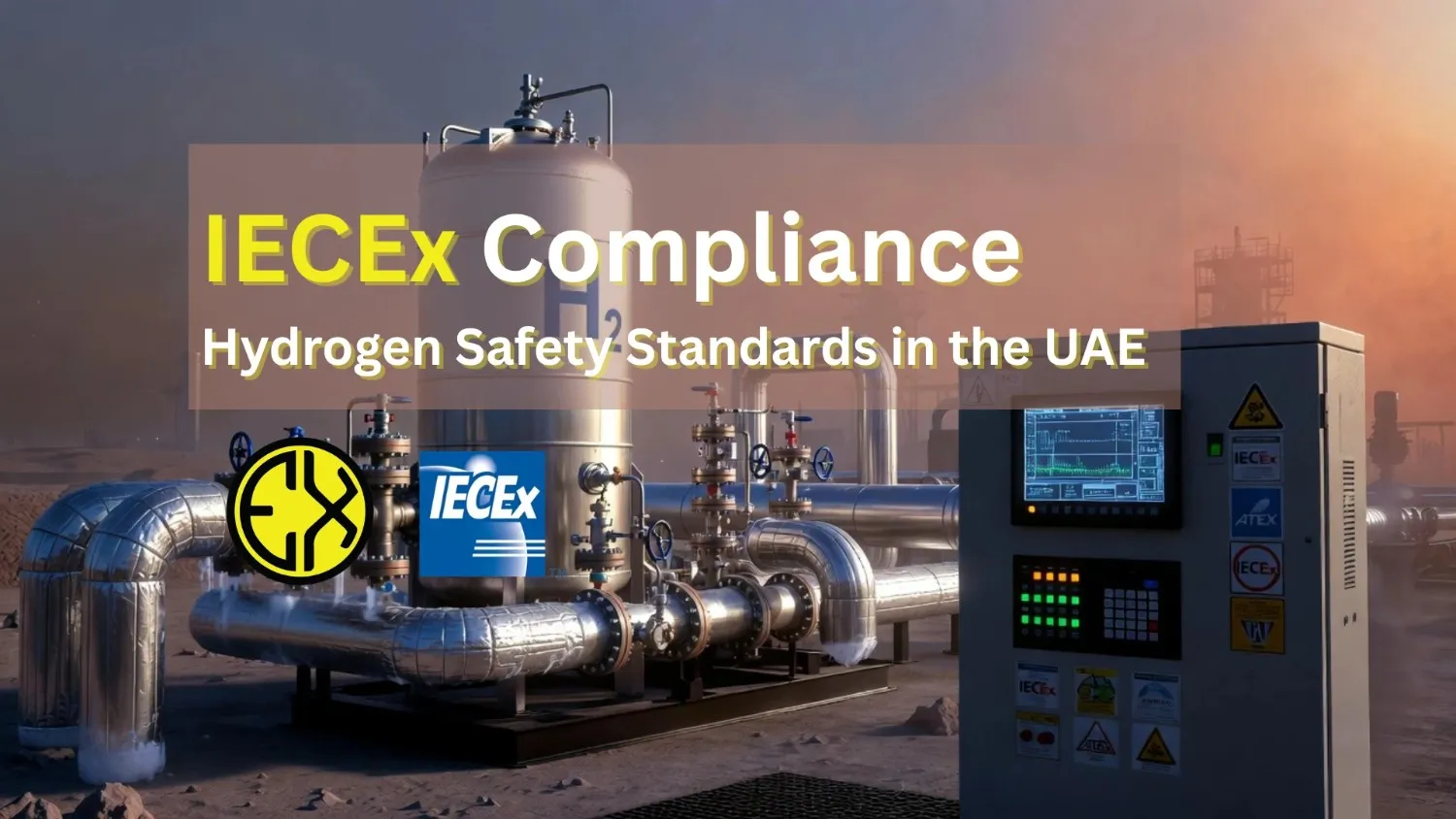
IECEx stands for International Electrotechnical Commission System for Certification to Standards Relating to Equipment for Use in Explosive Atmospheres. That’s quite a mouthful, isn’t it? Essentially, it’s a globally recognized certification scheme that proves your electrical equipment won’t ignite flammable gases, vapors, or dust in hazardous locations.
Unlike regional schemes that only work within specific territories, IECEx operates in over 35 countries. Think of it as a passport for your equipment—one certification opens doors to multiple markets simultaneously. The system includes several components: equipment certification (ExCB), quality assessment (ExQA), and personnel competence (ExPC).
For manufacturers, the ExCB certificate matters most. It demonstrates that your product design meets international safety standards like IEC 60079 series. The ExQA certificate then verifies your manufacturing facility maintains consistent quality control. Together, they create a comprehensive safety assurance system that procurement teams in hazardous area projects actively seek.
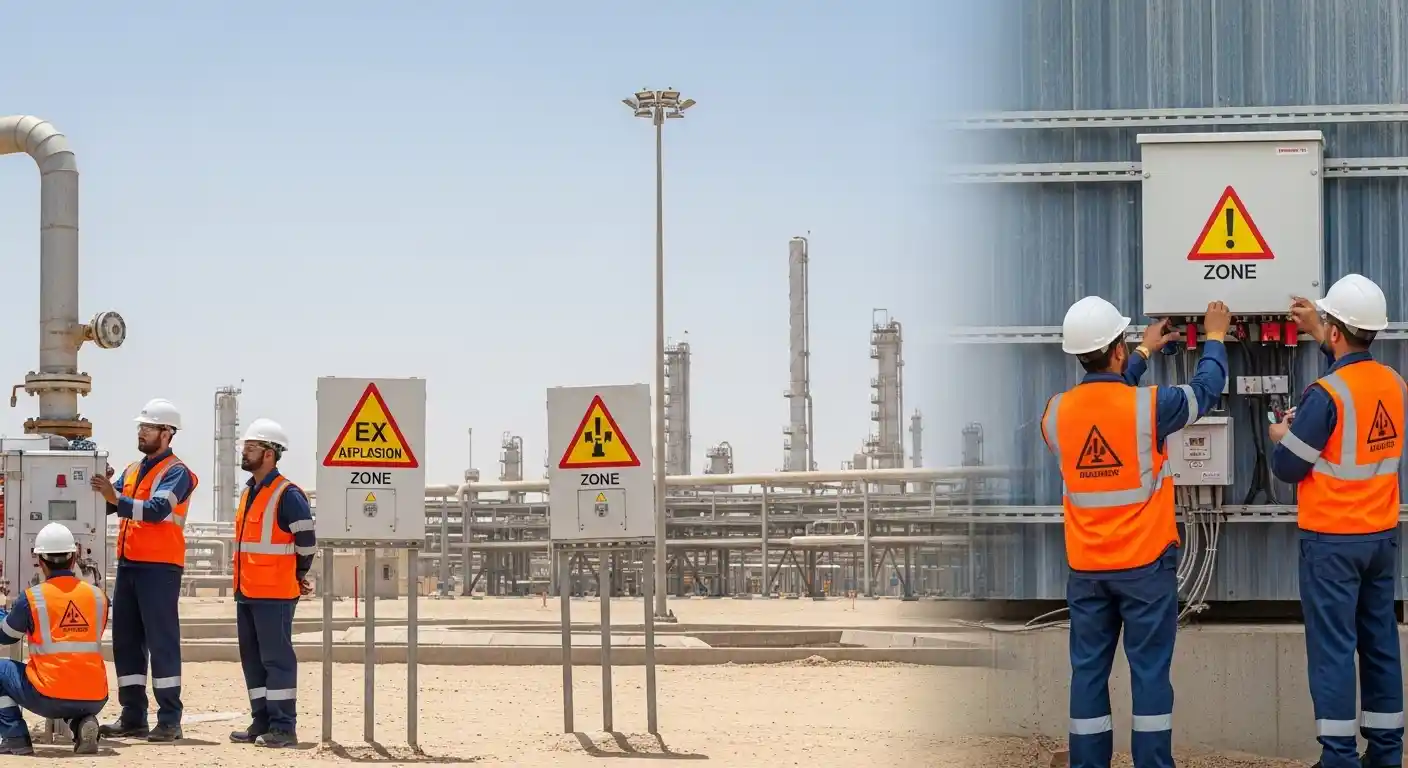
What makes IECEx particularly relevant in 2026? The scheme has evolved beyond simple certification. It now includes digital documentation, streamlined mutual recognition agreements, and enhanced traceability features that EPCs (Engineering, Procurement, and Construction companies) use to verify compliance during inspections. Understanding IECEx zones and protection concepts is crucial for selecting the right certification path for your equipment.
Why IECEx Matters for Ex Equipment Manufacturers
Let me share something I learned from a Dubai-based manufacturing director last year. His company lost a SR 45 million contract in Saudi Arabia because their equipment only carried ATEX certification. The project specifications explicitly required IECEx, and no amount of negotiation could change that requirement. That’s the reality manufacturers face today. Many companies now seek proper IECEx certification in UAE to avoid such costly rejections.
In UAE and KSA markets, IECEx has become the de facto standard for several reasons. First, major energy companies like Saudi Aramco and ADNOC increasingly specify IECEx in their tender documents. They’ve seen how this certification reduces equipment failures and improves workplace safety across their facilities.
Second, regulatory pressure continues mounting. The UAE’s Civil Defense requirements and Saudi Arabia’s SASO (Saudi Standards, Metrology and Quality Organization) increasingly reference IECEx standards in their compliance frameworks. While you might still find projects accepting alternative certifications, that window is closing fast. If you’re wondering about IECEx vs ATEX and which certification you need, the Middle Eastern market trends clearly favor IECEx.
Third, there’s the commercial advantage. Manufacturers with IECEx certification access global tenders without needing multiple regional certifications. You’re not just competing in Middle Eastern markets—you’re positioning yourself for projects in Asia, Africa, and emerging economies where IECEx adoption is accelerating.
Finally, insurance and liability considerations can’t be ignored. When accidents occur in hazardous areas, investigators scrutinize equipment certifications. IECEx provides clear evidence that you followed internationally recognized safety protocols, which matters considerably in legal proceedings.
Step-by-Step Certification Process
Getting IECEx certified isn’t as straightforward as submitting paperwork and waiting. The process demands careful preparation, technical documentation, and coordination with certified bodies. Here’s how it actually works.
You’ll start by selecting an IECEx Certification Body (ExCB) authorized to issue certificates. In the Middle East region, bodies like TÜV SÜD, DEKRA, and SGS maintain active operations. Your choice should consider their expertise in your equipment type and their responsiveness—some bodies complete assessments faster than others.
Next comes documentation preparation. You’ll need comprehensive technical files including design drawings, material specifications, circuit diagrams, calculations proving intrinsic safety, and manufacturing procedures. This is where many manufacturers stumble. Incomplete or unclear documentation causes delays, so invest time getting this right initially.
The certification body then conducts a detailed design assessment. Engineers review your documentation against applicable IEC standards, checking every detail from enclosure strength to temperature classifications. They’ll identify any non-conformities that need addressing before proceeding.
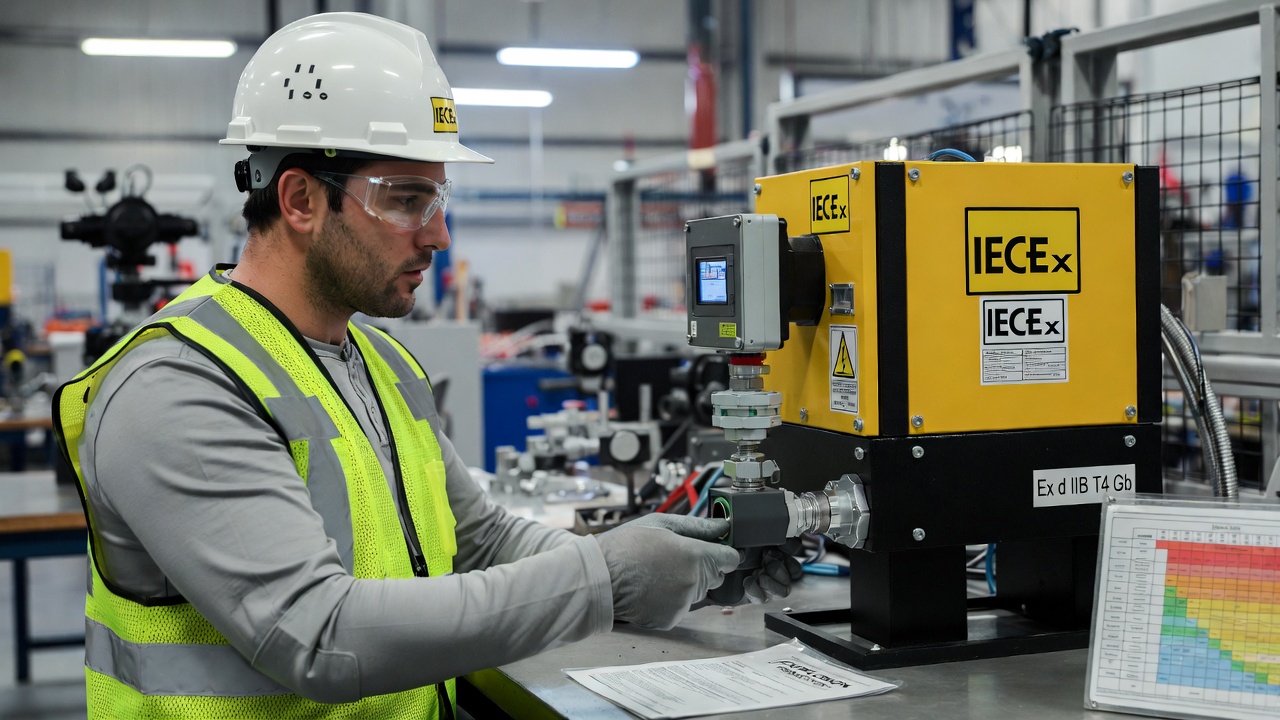
After documentation approval, physical testing begins. Your equipment undergoes rigorous tests at accredited laboratories—impact tests, thermal cycling, ingress protection verification, and specific tests based on your protection type (Ex d, Ex e, Ex i, etc.). Testing can be intensive, but it’s essential for proving real-world safety performance.
Once testing succeeds, the certification body issues your IECEx Certificate of Conformity. But you’re not done yet. Most manufacturers also pursue the IECEx Quality Assessment (ExQA) certificate, which demonstrates ongoing manufacturing quality. This involves facility audits and surveillance visits to ensure consistency.
Costs and Timelines
Let’s talk numbers, because budgeting for IECEx certification requires realistic expectations. Initial certification typically costs between $15,000 and $50,000, depending on equipment complexity and the number of variants you’re certifying. Simple enclosures cost less; complex electronic systems cost more. For comprehensive guidance on IECEx certification processes and requirements, many manufacturers engage specialized consultants.
In UAE and KSA, some manufacturers report slightly higher costs due to travel expenses for auditors and potential language translation requirements for documentation. Factor in approximately 20-30% above baseline estimates for regional considerations.
Timeline-wise, plan for 6-12 months from application to certificate issuance. This assumes you submit complete documentation initially. I’ve seen manufacturers achieve 4-month turnarounds when they worked closely with certification bodies and had documentation perfectly prepared. Conversely, incomplete submissions can stretch timelines to 18+ months.
Don’t forget annual maintenance costs. ExQA surveillance audits typically run $3,000-$8,000 annually, plus any costs for addressing non-conformities discovered during audits. Budget for certificate renewals every 5 years, which involve partial re-assessment.
Common Mistakes to Avoid
After reviewing dozens of certification applications, certain mistakes appear repeatedly. The most critical? Underestimating documentation requirements. Many manufacturers submit initial applications with missing calculations or incomplete assembly drawings, then wonder why certification stalls.
Another common error is selecting the wrong protection type for your application. Ex d (flameproof enclosures) might seem appropriate, but if your equipment operates in dusty environments, you might need Ex t (dust protection) instead. Choosing incorrectly means starting over.
Some manufacturers also neglect component traceability. Every component in your certified design must be documented and consistently sourced. Substituting a cheaper relay without notification voids your certification—yet this happens more often than you’d expect.
Finally, there’s the mistake of treating certification as a one-time event. IECEx requires ongoing compliance. Manufacturing process changes, component substitutions, even seemingly minor design modifications must be communicated to your certification body. Failure to do so can result in certificate suspension during surveillance audits.
Frequently Asked Questions
Who needs IECEx certification?
Any manufacturer producing electrical or electronic equipment intended for hazardous areas should pursue IECEx certification. This includes motors, control panels, lighting fixtures, sensors, analyzers, and communication equipment. If your products will be installed in classified Zone 0, 1, or 2 (gas) or Zone 20, 21, or 22 (dust) environments, certification is essential. Even manufacturers of components like cable glands and connectors benefit from certification when supplying to certified equipment manufacturers.
How long does IECEx certification take in UAE/KSA?
For manufacturers based in UAE or KSA, or those targeting these markets, expect 6-12 months for initial certification. This timeline assumes complete documentation submission and successful first-time testing. Regional factors can influence timing—Ramadan periods may slow administrative processes, while summer heat can impact testing schedules at some laboratories. Working with certification bodies that have regional offices in Dubai or Riyadh can streamline communication and reduce delays. Some manufacturers expedite the process to 4-6 months by engaging certification consultants who understand regional requirements and can prepare documentation to exact specifications from the start. Professional IECEx certification training also helps internal teams understand requirements better, reducing back-and-forth revisions.
Conclusion
IECEx certification represents more than regulatory compliance—it’s your entry ticket to global hazardous area markets, particularly the lucrative UAE and KSA sectors. While the process demands investment in time, documentation, and testing, manufacturers who achieve certification gain competitive advantages that far outweigh initial costs. The key is approaching certification strategically: prepare documentation thoroughly, select experienced certification bodies, and treat compliance as an ongoing commitment rather than a checkbox exercise.
Ready to start your IECEx certification journey? Begin by conducting a gap analysis between your current manufacturing processes and IECEx requirements. Consider professional training to build internal expertise—understanding the comparison between IECEx vs CompEx certification in UAE, Saudi Arabia, and Qatar will help you make informed decisions. Your investment in proper certification today prevents expensive project rejections tomorrow.