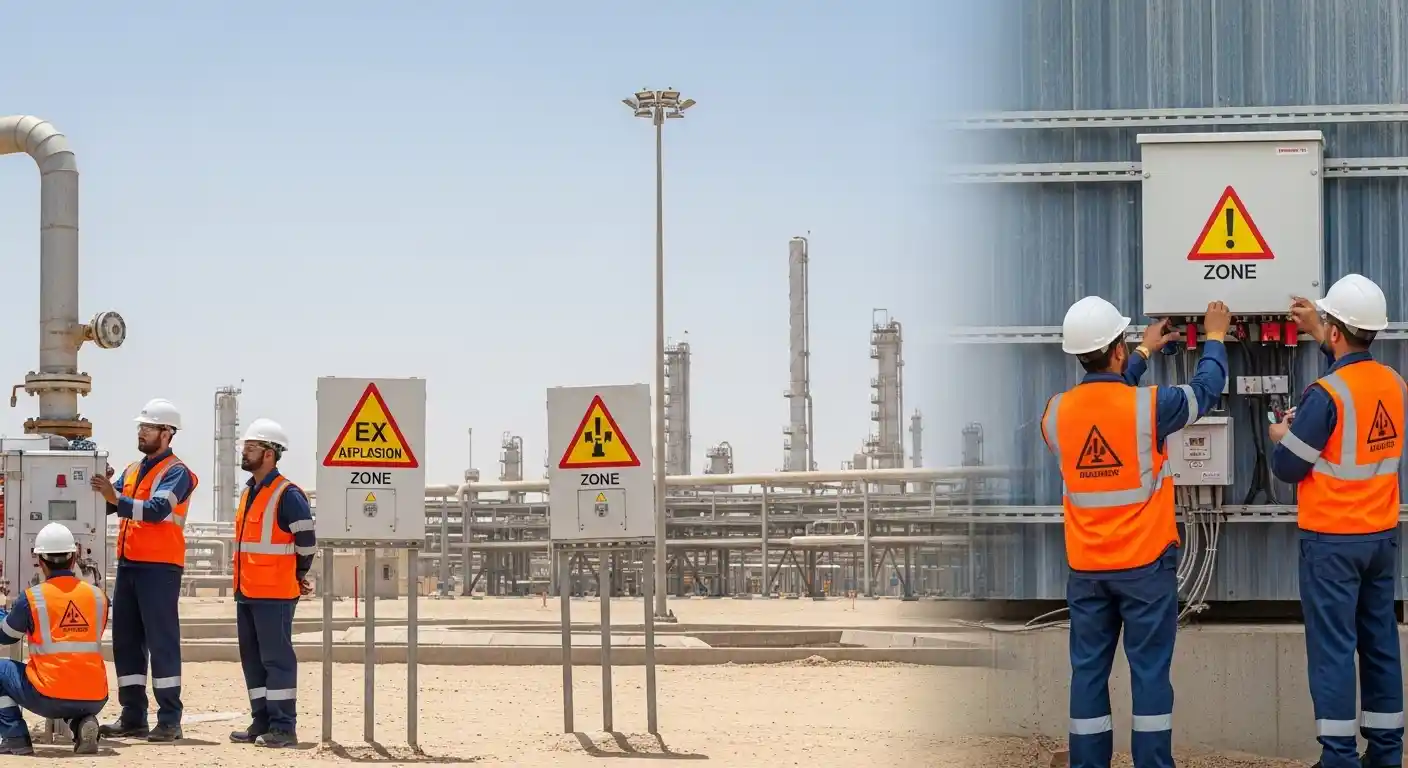

Saudi Arabia’s oil and gas sector demands the highest safety standards, and IECEx certification has become mandatory for contractors working in hazardous areas. Whether you’re heading to Saudi Aramco facilities, Sabic plants, or NEOM projects, your IECEx Certificate of Personnel Competence determines whether you clear mobilization or face site rejection. The Kingdom’s strict HSE protocols mean no exceptions—without proper certification, you’re heading home before starting work.
Contractors often underestimate Saudi Arabia’s documentation requirements until they arrive at the gate. KSA projects operate under zero-tolerance policies for unqualified personnel in explosive atmospheres. Understanding what employers expect, which job roles need certification, and how to prepare before mobilization saves costly delays and protects your professional reputation in the Middle East market.
What IECEx Means for Saudi Arabia Contractors
IECEx certification proves you can safely install, maintain, and inspect electrical equipment in areas where flammable gases, vapors, or combustible dust create explosion risks. Saudi Arabia follows international IEC standards strictly, making this credential essential for anyone touching electrical systems in classified zones at refineries, petrochemical plants, gas processing facilities, and offshore platforms.
The certification system assesses both theoretical knowledge and practical skills. You must demonstrate competence in cable termination, equipment inspection, understanding protection concepts, and following IEC 60079 standards that govern explosive atmosphere safety.
Typical Job Roles Requiring IECEx CoPC in KSA
Electrical technicians, instrumentation engineers, maintenance supervisors, and inspection personnel all need valid IECEx certification for Saudi projects. If your work involves hazardous area equipment—installing cable glands, testing Ex-rated motors, maintaining control panels in Zone 1 areas, or inspecting flameproof enclosures—contractors won’t mobilize you without proof of competence.
Commissioning engineers, QA/QC inspectors, and HSE coordinators working with electrical systems in classified locations also fall under this requirement. Even if you’re supervising rather than performing hands-on work, IECEx certification in Saudi Arabia demonstrates you understand the risks and can manage teams safely.
Project-specific requirements vary slightly. Saudi Aramco typically mandates Ex 01, Ex 02, or Ex 03 units depending on your role. Sabic and other operators follow similar standards. Always verify exact requirements in your contract scope of work.
What to Prepare Before Mobilization to KSA
Start certification at least two months before your planned mobilization date. Saudi visa processing, document attestation, and certification verification all take time. Your employer will need your IECEx CoPC number for inclusion in mobilization paperwork submitted to clients and Saudi authorities.
Ensure your certificate hasn’t expired—KSA projects reject personnel with certifications expiring within three months of arrival. Get photocopies attested and carry both digital and physical copies. Some sites require the original certificate for gate entry verification.
Complete any medical examinations, secure NOC letters if required, and gather all educational certificates. Saudi Arabia’s document verification process is thorough. Missing one piece of paperwork means mobilization delays that cost you and your employer money.
How IECEx Compares to CompEx in Saudi Market
Saudi projects increasingly prefer IECEx over CompEx because it aligns with international IEC standards used throughout the Kingdom. While some British contractors still accept CompEx, the trend moves strongly toward IECEx for consistency across multinational projects. Understanding IECEx vs CompEx certification in Saudi Arabia helps you make the right investment.
If you hold CompEx, check whether your specific project accepts it. For long-term career prospects in KSA, IECEx certification offers broader acceptance and recognition across more operators and contractors.
Avoiding Site Rejection at Saudi Facilities
Site rejection happens more often than contractors expect, usually for preventable reasons. The most common causes include expired certificates, wrong certification units for the assigned role, and failure to provide proper attestation. Saudi Aramco and major operators maintain strict gate control—if your documents don’t match exactly what’s registered in their system, you’re denied entry.
Verify your IECEx unit matches your job description. Installing equipment requires Ex 01, maintenance work needs Ex 02, and detailed inspection demands Ex 03. Showing up with Ex 00 (basic awareness) when your contract specifies Ex 02 results in immediate rejection and return to your home country at your employer’s expense.
Double-check that your name on the certificate matches your passport exactly, including middle names and spelling. Saudi systems flag even minor discrepancies. Get document attestation completed through proper channels—some sites require Ministry of Foreign Affairs stamps on international certificates.
What Saudi Employers Ask for Beyond IECEx
While IECEx forms the core requirement, Saudi contractors often request additional documentation. They want to see your training records, evidence of recent practical experience, and sometimes refresher course completion if your certificate is over two years old even though it’s technically still valid.
Prepare a portfolio showing your work history in hazardous areas—photos of previous projects, equipment you’ve worked on, and reference letters from supervisors. This supports your certification and demonstrates real-world application of IECEx principles.
Pre-Mobilization Checklist for KSA Projects
Confirm your IECEx certificate validity extends at least six months beyond your contract period. Obtain attested copies from your training center. Verify your employer has submitted your CoPC number to the client for system registration. Ensure all other safety certifications like BOSIET, H2S, and confined space are current.
Arrange proper document legalization through Saudi Embassy or authorized agencies. Pack physical copies separately from luggage—carry originals in hand baggage. Download digital copies to multiple devices and cloud storage. Some contractors get turned back at airports for missing one critical document.
Understand your project’s specific site induction requirements. Some facilities require additional local safety training upon arrival before gate access approval. Budget extra days in your schedule for these processes.
Career Impact of IECEx in Saudi Market
Saudi Arabia offers some of the highest-paying contractor positions in the global oil and gas industry. IECEx certification directly impacts your earning potential and project selection opportunities. Contractors with proper credentials command premium rates and get preference for long-term assignments.
The Kingdom’s Vision 2030 initiatives mean continued massive investments in energy, petrochemicals, and industrial cities. Projects like NEOM, Jafurah gas field, and Aramco expansions all require thousands of IECEx-certified technicians. Positioning yourself now with proper certification ensures access to this lucrative market for years ahead.
Key Takeaway:
Saudi Arabia contractors must hold valid IECEx certification matching their job role, prepare documentation thoroughly before mobilization, and ensure certificates won’t expire during contract periods. Site rejection for certification issues costs time, money, and professional reputation—proper preparation prevents these problems entirely.
Glossary
Saudi Aramco: The world’s largest oil company and primary operator of petroleum facilities in Saudi Arabia, setting stringent safety and certification requirements that influence industry standards across the Kingdom.
Mobilization: Process of deploying contractor personnel to project sites, including visa processing, document verification, travel arrangements, and site induction before work commencement.
NOC (No Objection Certificate): Document from previous or current employers confirming you’re free to work for another company, required by Saudi labor regulations for certain visa categories.
Document Attestation: Official verification process where certificates and documents receive stamps from issuing authorities, Ministry of Foreign Affairs, and Saudi Embassy confirming authenticity for use in the Kingdom.
Gate Control: Security and document verification process at facility entrances where personnel credentials, certifications, and authorizations are checked before granting site access.
FAQs
Q1: Can I work in Saudi Arabia with expired IECEx certification?
No, Saudi facilities strictly enforce valid certification requirements. Sites reject personnel with expired or soon-to-expire certificates, resulting in immediate demobilization regardless of experience level.
Q2: Which IECEx unit do I need for instrumentation work in KSA?
Instrumentation technicians typically need Ex 02 (maintenance) or Ex 01 (installation) depending on whether you’re maintaining existing systems or installing new equipment. Verify exact requirements in your contract.
Q3: Does Saudi Aramco accept CompEx instead of IECEx?
Saudi Aramco increasingly prefers IECEx for international standard consistency. Some legacy contracts accept CompEx, but new projects specify IECEx. Check your specific project requirements early.
Q4: How long does document attestation take for Saudi projects?
Document attestation through proper channels takes 2-4 weeks depending on your country. Plan ahead and start the process immediately after receiving your IECEx certificate to avoid mobilization delays.
Q5: What happens if I’m rejected at the Saudi facility gate?
Gate rejection typically results in immediate return to your home country at the contractor’s expense. This affects your professional reputation and future job prospects. Ensure all documentation is perfect before traveling.