Managers constantly balance safety investments against operational budgets, but IECEx certification delivers measurable returns that justify every dollar spent. Certified teams working in hazardous areas prevent costly incidents, maintain continuous operations, and pass audits without expensive corrective actions. The business case extends beyond compliance—it’s about protecting assets, preserving production schedules, and building organizational capability that directly impacts the bottom line.
Companies operating refineries, chemical plants, offshore platforms, and gas processing facilities face catastrophic risks from explosive atmospheres. One incident can cost millions in equipment damage, production losses, regulatory penalties, and reputation harm. IECEx-certified personnel understand how to work safely in these environments, dramatically reducing incident probability while improving operational efficiency through proper maintenance practices and equipment handling.
The Incident Prevention Logic Behind IECEx
Incidents in hazardous areas rarely result from random chance—they stem from human error and knowledge gaps. Improperly installed cable glands allow ignition sources into classified zones. Poorly maintained equipment loses its explosion protection integrity. Inadequate inspections miss deteriorating conditions until failure occurs. Each mistake represents a competence gap that certification addresses directly.
IECEx certification verifies personnel understand ignition sources, protection methods, and equipment limitations. Certified technicians recognize when flameproof joint gaps exceed safe tolerances, when intrinsically safe circuits risk compromise, and when equipment temperature classifications don’t match area requirements. This knowledge prevents the errors that cause explosions, fires, and fatalities.
Consider the cost structure of a single incident. Equipment replacement alone can reach hundreds of thousands of dollars for specialized hazardous area gear. Production downtime costs many refineries $50,000 to $200,000 per hour. Regulatory investigations and potential fines add substantial expenses. Legal liability from injuries or fatalities can devastate companies financially. Against these potential costs, certification investment becomes insignificant.
Quantifying Downtime Reduction from Competent Teams
Unplanned shutdowns destroy operational efficiency and profitability. When maintenance teams lack proper competence, simple tasks take longer, require multiple attempts, and sometimes fail completely. Equipment improperly maintained operates less reliably, increasing failure rates that force emergency shutdowns.
IECEx-certified maintenance engineers work faster and more accurately. They understand equipment construction, know proper procedures, and recognize potential problems before they cause failures. This competence translates directly to reduced maintenance duration and extended equipment reliability between interventions.
IECEx certification for maintenance engineers ensures they can troubleshoot problems efficiently rather than using trial-and-error approaches that extend downtime. When a motor trips or a control system faults, certified personnel systematically diagnose issues and implement proper repairs the first time.
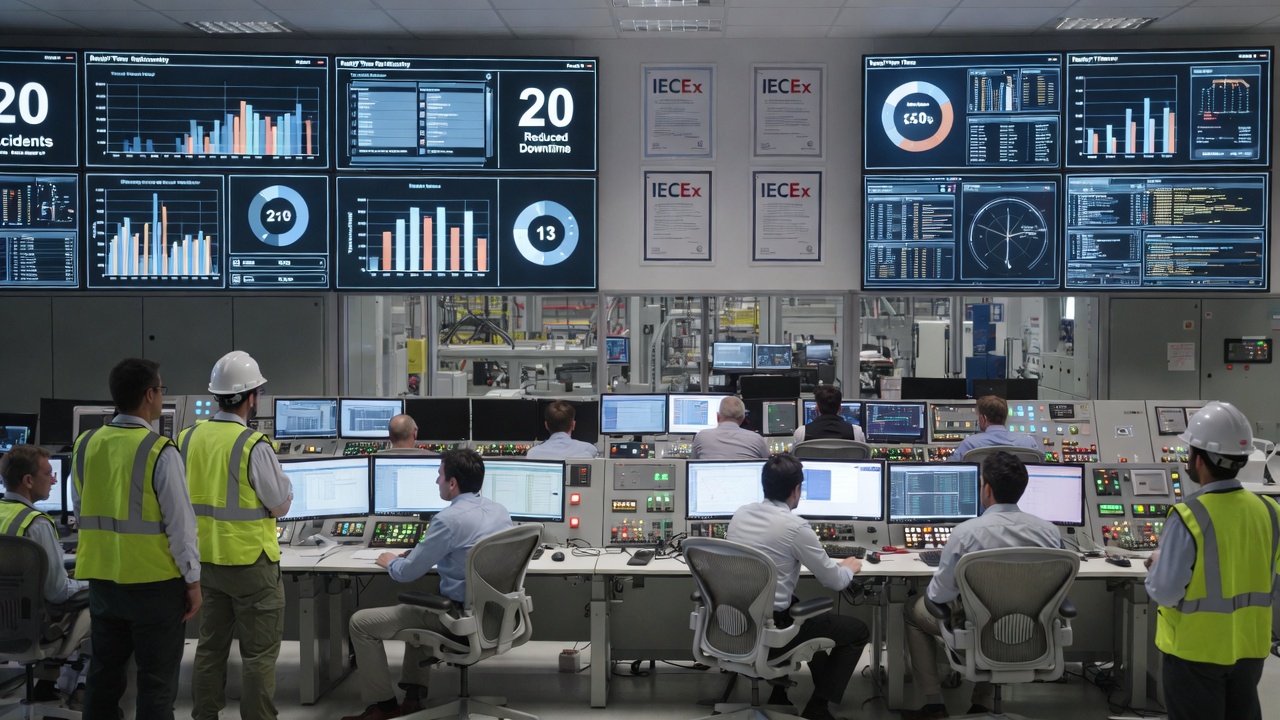
The difference shows clearly in key performance indicators. Facilities with fully certified teams report higher equipment availability, lower mean time to repair, and fewer repeat failures requiring additional maintenance visits. These improvements compound over time, delivering substantial ROI through increased production capacity and reduced emergency maintenance costs.
Audit Readiness Benefits That Prevent Costly Findings
Regulatory inspections and client audits create significant pressure on organizations. Findings from these audits often require expensive corrective actions, modification projects, and sometimes operational restrictions until issues resolve. Auditors increasingly scrutinize personnel competence as a critical control for managing hazardous area risks.
When auditors review your operations, they verify that personnel working on hazardous area equipment hold appropriate certifications. Missing credentials result in findings that require immediate remediation. Organizations then face rushed certification programs, contractor hiring to cover gaps, or even work stoppages until competence is demonstrated.
Maintaining IECEx-certified teams prevents these audit findings entirely. Documentation proving personnel competence satisfies regulatory requirements and client specifications. Auditors appreciate the international recognition and standardized assessment that IECEx provides—it removes ambiguity about whether training was adequate.
The ROI calculation here is straightforward. Compare certification costs against the expense of audit findings requiring corrective action. A typical finding might require: hiring external consultants for gap analysis ($10,000-$30,000), emergency training programs ($5,000-$15,000 per person), potential production restrictions during remediation, and reputation damage affecting future contract opportunities. Proactive certification avoids all these costs.
ROI Narrative for Convincing Senior Management
Presenting the business case to executives requires translating safety benefits into financial language. Start with direct cost avoidance—incidents, downtime, and audit findings all carry quantifiable price tags. Calculate your facility’s hourly production value, estimate downtime probability reduction from competent teams, and multiply across a typical year.
For example: If your facility generates $100,000 per hour in production value, and competent maintenance reduces unplanned downtime by just 20 hours annually, the value delivered is $2 million. If certification for your team costs $50,000, the ROI exceeds 4,000% even before considering incident prevention and audit readiness benefits.
Indirect benefits strengthen the case further. Certified teams require less supervision, make better decisions independently, and need fewer external consultants for specialized work. These efficiency gains reduce overhead costs and free managers for strategic priorities rather than constant technical problem-solving.
Employee retention improves when companies invest in certification. Technicians appreciate professional development opportunities and the career mobility IECEx provides. Reduced turnover saves recruitment and training costs while preserving organizational knowledge. The certification becomes a talent attraction tool helping you hire better candidates in competitive markets.
Building Long-Term Organizational Capability
IECEx certification creates lasting value beyond immediate projects. Unlike contractor services purchased repeatedly, internal competence becomes an organizational asset generating returns indefinitely. Certified personnel mentor new employees, continuously improve procedures, and identify optimization opportunities that external consultants miss.
This capability enables strategic advantages competitors cannot easily match. Companies with strong internal hazardous area competence can pursue aggressive maintenance strategies that improve reliability. They can undertake modification projects without expensive consultant oversight. They respond faster to production issues because qualified personnel are immediately available rather than awaiting contractor mobilization.
IECEx CoPC certification also future-proofs organizations against tightening regulations and evolving client requirements. As industry standards advance and safety expectations increase, certified teams adapt more readily than organizations dependent on external resources. Your investment compounds as the competitive landscape rewards companies demonstrating robust safety management systems.
Risk Transfer and Insurance Implications
Insurance carriers increasingly recognize that competence certifications reduce risk profiles. Some insurers offer premium reductions for facilities maintaining certified personnel for hazardous area work. Even without explicit discounts, demonstrated competence strengthens your position during policy negotiations and claims processes.
After an incident, insurance investigations scrutinize whether proper procedures were followed and if personnel possessed adequate qualifications. IECEx certification provides clear evidence of due diligence in ensuring worker competence. This documentation can significantly impact liability determinations and claim outcomes.
Risk management extends beyond insurance to contractual relationships. Many operators now require contractors to demonstrate personnel certification before awarding maintenance contracts or site access. Without certified teams, you lose bidding opportunities on lucrative projects. The certification becomes a market access requirement rather than optional enhancement.
Implementation Strategy for Maximum ROI
Achieving maximum return requires strategic certification planning rather than ad-hoc training purchases. Start by assessing which roles genuinely need certification based on job responsibilities. Not every employee requires IECEx—target those directly working with hazardous area equipment.
Prioritize critical positions first—senior technicians, maintenance supervisors, and inspection personnel who work independently. Their competence delivers immediate risk reduction. Then expand to junior personnel who work under supervision but will eventually assume greater responsibility.
Schedule certifications during planned facility shutdowns when personnel absence doesn’t impact operations. This timing minimizes productivity disruption while ensuring teams are ready when facilities restart. Group training sessions when possible to reduce costs and create peer learning opportunities.
Track performance metrics before and after certification to demonstrate value. Monitor incident rates, maintenance duration, equipment reliability, and audit findings. These measurements quantify the ROI and justify continued investment to stakeholders who question safety spending.
Communicating Value Throughout the Organization
Different stakeholders care about different aspects of the business case. Operations managers focus on downtime reduction and reliability improvements. Finance teams want clear ROI calculations with specific cost avoidance figures. HR departments appreciate retention and recruitment advantages. Safety professionals value incident prevention and regulatory compliance.
Tailor your communication to each audience. For operations, emphasize how certified technicians complete maintenance faster with better quality results. For finance, prepare spreadsheets showing production value protected and costs avoided. For HR, highlight certification as a professional development benefit that attracts and retains talent.
Use concrete examples from your organization or similar facilities. Case studies showing specific incidents prevented or downtime avoided resonate more powerfully than abstract statistics. When certified technicians identify equipment issues before failure, document these interventions and their value.
Key Takeaway: IECEx certification delivers measurable ROI through incident prevention, downtime reduction, and audit readiness. The investment in certified teams pays for itself many times over by protecting production value, avoiding costly findings, and building organizational capability that generates returns for years.
Glossary
Mean Time to Repair (MTTR): Average time required to repair failed equipment and return it to operational status, a key performance indicator that certified personnel reduce through efficient troubleshooting and proper procedures.
Production Downtime: Period when facilities cannot operate due to equipment failure, maintenance, or safety concerns, costing companies significant revenue based on hourly production value.
Audit Finding: Documented observation during regulatory or client audits identifying non-compliance or gaps requiring corrective action, often carrying financial and operational consequences.
Due Diligence: Legal concept requiring organizations to take reasonable precautions to prevent harm, demonstrated through personnel certification, procedures, and documentation reviewed during incident investigations.
Unplanned Shutdown: Unexpected cessation of operations due to equipment failure or safety concerns, typically more costly than scheduled maintenance shutdowns because of lost production and emergency response costs.
FAQs
Q1: How quickly does IECEx certification deliver ROI?
Most organizations see returns within 6-12 months through prevented incidents and reduced downtime. The first major incident avoided or audit finding prevented typically exceeds total certification investment.
Q2: Should we certify all maintenance staff or just supervisors?
Prioritize personnel working independently on hazardous area equipment first. Supervisors and senior technicians deliver immediate risk reduction, then expand to junior staff as budget allows.
Q3: Can IECEx certification reduce our insurance premiums?
Some insurers offer discounts for certified teams. Even without explicit reductions, certification strengthens your risk profile during policy negotiations and provides valuable documentation during claim investigations.
Q4: What performance metrics prove IECEx ROI to management?
Track incident rates, maintenance duration, equipment availability, audit findings, and emergency shutdown frequency. Comparing these metrics before and after certification demonstrates concrete value delivered.
Q5: Is certification cost-effective compared to hiring contractors?
Internal certified teams deliver far better long-term value than repeatedly hiring contractors. After initial certification investment, you gain permanent capability without ongoing service fees for every maintenance activity.