Introduction: Safety and Compliance – The Backbone of the Oil and Gas Industry
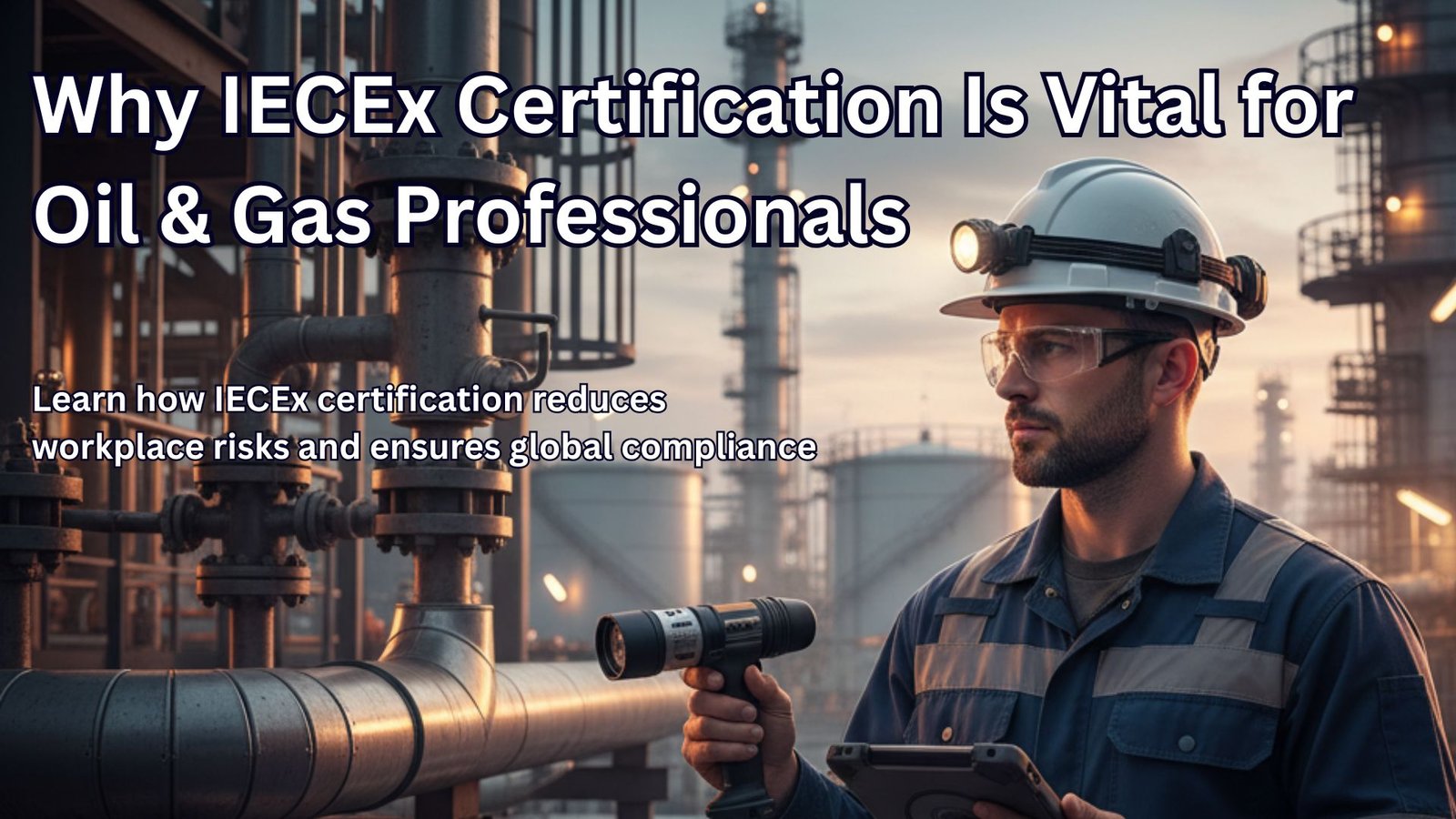
In the oil and gas sector, safety is not optional — it’s essential. Explosive atmospheres, high temperatures, and volatile gases make compliance with international standards a lifeline for every facility and equipment manufacturer.
That’s where IECEx certification comes in — a globally recognized system ensuring that electrical and non-electrical equipment used in explosive atmospheres meet strict safety standards.
Whether you’re manufacturing Ex equipment, operating a refinery, or supplying parts to GCC-based energy projects, IECEx certification ensures your products are safe, approved, and globally accepted.
💡 Pro Tip: IECEx certification is not just a legal requirement — it’s a competitive advantage that builds customer trust and global market access.
1. Importance of IECEx Certification for Oil & Gas Facilities
Why IECEx Certification Matters
IECEx certification is an international scheme governed by the International Electrotechnical Commission (IEC). It focuses on equipment, services, and personnel working in explosive (Ex) atmospheres.
For oil & gas facilities, it ensures:
- Explosion-proof assurance for electrical and mechanical devices
- Consistent global safety standards recognized in GCC and beyond
- Reduced risk of ignition or failure in hazardous environments
- Faster international trade since IECEx certificates are globally accepted
Who Needs It
- Oil and gas plant operators
- Equipment manufacturers and suppliers (IECEx Certification Guide)
- Maintenance and inspection service providers (IECEx Training and Certification)
- Hazardous area engineers and contractors (Enhancing Safety in Hazardous Areas)
⚙️ Did you know? In GCC countries like the UAE and Saudi Arabia, many oil and gas projects now require IECEx or ATEX certification as part of their vendor qualification process.
2. Certification Steps for Manufacturers
Obtaining IECEx certification may seem complex, but the process is structured and transparent.
Step 1: Understand the Product Scope
Identify whether your equipment falls under:
- Electrical Ex equipment (motors, junction boxes, lighting systems)
- Non-electrical Ex equipment (mechanical parts that could cause ignition)
- Associated apparatus (devices connected to Ex circuits)
Step 2: Choose an Approved Certification Body
Work with an IECEx-approved body such as:
- Testing laboratories in the UAE, Saudi Arabia, or Qatar (IECEx Certification in Dubai)
- Internationally recognized organizations accredited under IECEx 02 Scheme
Step 3: Product Testing and Quality Assessment
Testing includes:
- Explosion-proof design verification
- Temperature rise and ignition testing
- Ingress protection (IP) rating checks
- Documentation review
The manufacturer must also have a Quality Management System (QMS) in line with IECEx 9001 standards (IECEx Certification for Repair Facilities).
Step 4: Audit and Certification
An IECEx Quality Assessment Report (QAR) is issued after successful testing. Then, the Certificate of Conformity (CoC) is published on the IECEx online database.
Step 5: Surveillance and Renewal
Regular audits ensure continued compliance. Manufacturers must renew the certification periodically (usually every 3 years).
📝 Note: Partnering with experienced compliance consultants like ATEX-IECEx can help streamline the entire certification journey — from testing to documentation.
3. Cost, Audit, and Renewal Best Practices
IECEx certification costs depend on:
- Equipment type and complexity
- Testing requirements
- Location of the testing body
- Documentation and audit scope
Typical Cost Range
- Small Ex component: $3,000 – $5,000
- Complex assemblies: $8,000 – $15,000+
- Full facility audit (optional): $10,000 – $25,000
Renewal & Maintenance
To maintain your certification:
- Conduct internal audits annually
- Update documentation for any design changes
- Work with IECEx-recognized audit teams (IECEx Certification in UAE)
💡 Pro Tip: Always plan your re-certification at least 3 months before expiry to prevent product delays and supply chain issues.
4. What Is IECEx Certification and How Does It Work?
IECEx certification ensures that products and personnel meet strict safety requirements for use in explosive atmospheres. It’s built around the IEC 60079 series of standards.
How It Works
- Products are tested under explosion-risk conditions
- Manufacturers are audited for quality consistency
- A certificate is issued and listed publicly on the IECEx website
5. How to Get IECEx Certification for Explosion-Proof Equipment
- Identify product category and applicable standards
- Prepare technical documentation
- Contact an IECEx-approved testing body (IECEx Training and Certification)
- Submit for testing and QAR audit
- Obtain certificate and listing
6. Key Differences Between IECEx and ATEX Standards
| Criteria | IECEx | ATEX |
| Governing Body | International Electrotechnical Commission | European Union Directive 2014/34/EU |
| Recognition | Global | Europe (EU & EEA) |
| Database | Public IECEx online register | Not centralized |
| Marking | Ex code + certificate number | CE + Ex mark |
| Primary Use | International trade | EU regulatory compliance |
🧩 Note: Many manufacturers in the GCC region seek both ATEX and IECEx to ensure global market access.
7. Difference Between CompEx and IECEx Personnel Certification
| Criteria | CompEx | IECEx CoPC |
| Type | Training-based certification | Competence-based certification |
| Recognition | UK & GCC | Global IEC system |
| Certification Body | JTLimited (UK) | IECEx Recognized Bodies |
| Validity | 5 years | Renewable based on competence |
✅ Check: For technicians and engineers working in explosive atmospheres, obtaining IECEx CoPC or CompEx ensures personal safety and regulatory compliance.
8. Importance of Hazardous Area Classification
Before selecting or certifying equipment, every oil & gas facility must perform a hazardous area classification study. Zones include:
- Zone 0: Continuous explosive atmosphere
- Zone 1: Likely during normal operation
- Zone 2: Unlikely but possible
🔍 Did You Know? Incorrect zoning or equipment selection is one of the top causes of industrial explosions worldwide. IECEx classification ensures the right Ex protection type (Ex d, Ex e, Ex i, etc.) is used.
9. Benefits of IECEx Certification for Oil and Gas Industry
- Enhances workplace safety
- Improves equipment reliability
- Facilitates GCC and global market entry
- Reduces downtime from accidents
- Boosts brand credibility and customer confidence
10. Checklist for IECEx Certification Success
✅ Identify applicable IECEx standards
✅ Choose an approved certification body
✅ Prepare QMS and technical documentation
✅ Complete product testing and QAR audit
✅ Maintain ongoing compliance
Conclusion: Building Safer Energy Systems
IECEx certification is more than a regulatory checkbox — it’s a commitment to safety, reliability, and excellence. For oil and gas equipment manufacturers in the GCC, it opens doors to global acceptance, reduced risk, and long-term compliance.
Actionable Advice: Begin with a compliance gap assessment and partner with an experienced consultant like ATEX-IECEx to guide you through the certification process smoothly.
Frequently Asked Questions (FAQs)
- What is IECEx certification?
Global system for equipment/personnel safety in explosive atmospheres. - Why is it important for oil and gas?
Prevents explosions, ensures safety, and meets GCC standards. - How long does certification take?
Usually 3–6 months. - Difference between ATEX and IECEx?
ATEX = EU, IECEx = Global. - Who can issue IECEx certificates?
Only IECEx-approved bodies. - Can existing equipment be certified?
Yes, if it passes testing and audit.