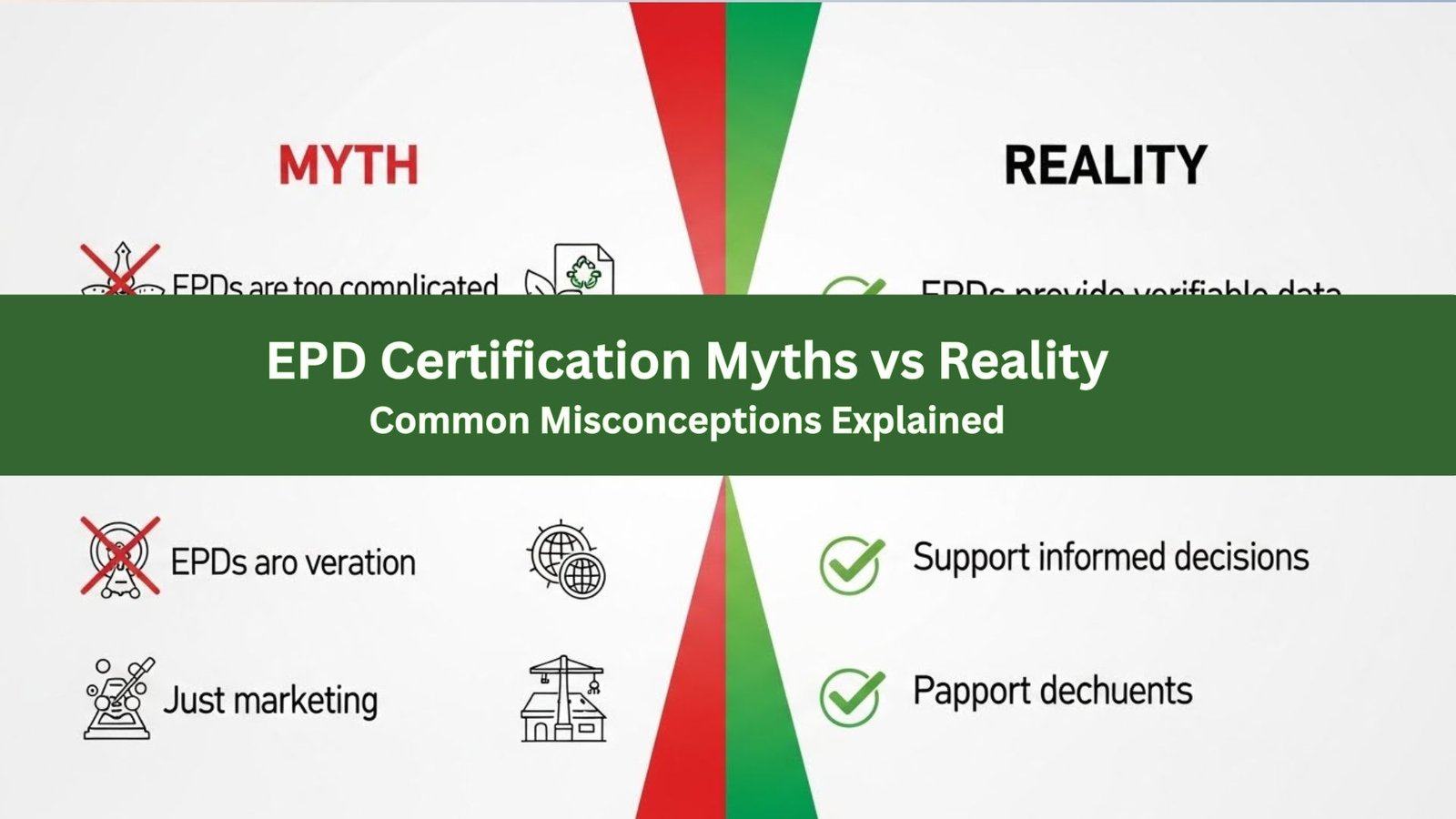
Environmental Product Declarations have gained significant traction in construction and manufacturing industries, yet numerous misconceptions persist about what they are, how they work, and who benefits from them. These misunderstandings often prevent manufacturers from pursuing EPD certification or lead to unrealistic expectations about the process. Clearing up these myths helps companies make informed decisions about EPD investments and implementation strategies.
Myth 1: EPDs Are Only for Large Corporations
Perhaps the most pervasive myth suggests that EPD certification remains accessible only to large manufacturers with extensive sustainability departments and substantial budgets. This misconception discourages small and medium enterprises from exploring EPD opportunities, despite growing market demands for environmental transparency across all supplier sizes.
Reality challenges this assumption. While large corporations may have dedicated resources for sustainability initiatives, EPD certification is designed to be scalable and accessible to manufacturers of all sizes. Understanding the importance of Environmental Product Declarations helps smaller companies recognize that market access benefits often justify investment regardless of organization size.
Small manufacturers can optimize EPD costs through strategic approaches such as starting with single high-priority products, utilizing industry-wide generic EPDs where appropriate, and phasing certification across product lines as returns materialize. Many successful EPD programs began with modest implementations that expanded as companies gained experience and realized benefits.
Myth 2: EPDs Guarantee Products Are Environmentally Friendly
Another common misunderstanding treats EPDs as eco-labels or certifications that verify products meet specific environmental standards. This confusion leads to disappointment when companies discover that EPD verification focuses on data accuracy rather than environmental performance thresholds.
EPDs are fundamentally transparency tools, not rating systems. They provide standardized documentation of environmental impacts across product lifecycles without declaring whether those impacts are good or bad. A product with significant environmental footprint can have a perfectly valid EPD that accurately documents those impacts. The value lies in enabling informed comparisons between products and providing data for decision-making rather than certifying environmental excellence.
The distinction between EPD and LCA becomes relevant here. Lifecycle assessments analyze environmental performance and identify improvement opportunities, while EPDs communicate that performance in standardized formats. Both serve important but different purposes in environmental management strategies.
Myth 3: The EPD Process Takes Years to Complete
Manufacturers often overestimate EPD development timelines, imagining multi-year processes that drain resources and delay market opportunities. This exaggerated timeline perception creates hesitation about beginning EPD programs, particularly when competitive pressures demand quick responses to evolving market requirements.
Typical EPD development timelines span several months rather than years when approached systematically. The process of EPD development and verification involves distinct phases including data collection, lifecycle assessment, verification, and publication. While each phase requires careful attention, experienced teams can navigate these steps efficiently.
Timeline variations depend primarily on data availability and organizational responsiveness. Manufacturers with existing environmental management systems and production data typically progress faster than those building documentation from scratch. Understanding how to get an Environmental Product Declaration in the UAE or other specific markets helps set realistic expectations aligned with regional program operator timelines and verification requirements.
Myth 4: EPDs Only Matter for LEED Projects
Many manufacturers view EPDs exclusively through the lens of LEED certification, assuming that EPD value exists only for products specified in LEED projects. This narrow perspective underestimates the broader market drivers creating EPD demand across diverse construction segments and geographic markets.
While the connection between Environmental Product Declarations and LEED certification certainly represents an important use case, EPD applications extend far beyond LEED. Government procurement policies increasingly require environmental documentation. Private developers pursue sustainability goals independent of formal certifications. International building codes are beginning to reference lifecycle assessment data that EPDs provide.
The implementation of EPD requirements in UAE green building standards demonstrates how regional regulations create EPD demand outside LEED contexts. Similarly, developments in Environmental Product Declaration requirements in Saudi Arabia reflect independent regulatory frameworks that value EPD transparency regardless of specific green building certification systems.
Myth 5: All EPDs Are Created Equal
Some assume that any document labeled as an EPD provides equivalent value and credibility. This misconception ignores important variations in EPD quality, verification rigor, and program operator standards that significantly affect how buyers and regulators perceive EPD documentation.
EPD quality depends on several factors including the robustness of underlying lifecycle assessment data, the rigor of third-party verification, the credibility of program operators managing EPD publication, and adherence to international standards. High-quality EPDs follow ISO 14025 and EN 15804 standards, undergo comprehensive third-party verification, and are published through recognized program operators with transparent governance.
Creating a comprehensive EPD strategy for businesses requires understanding these quality distinctions. Manufacturers should prioritize EPD programs recognized in their target markets and ensure verification processes meet stakeholder expectations. Shortcuts that compromise EPD quality may satisfy minimal compliance requirements while failing to deliver competitive advantages that high-quality EPDs provide.
Myth 6: EPDs Reveal Proprietary Manufacturing Information
Manufacturers sometimes worry that EPD development exposes confidential manufacturing processes or proprietary formulations to competitors. This concern about intellectual property disclosure creates reluctance to pursue EPD certification, particularly in competitive market segments where process innovations provide strategic advantages.
EPD frameworks specifically protect confidential business information while ensuring transparency about environmental impacts. Published EPDs present aggregated data and normalized results rather than detailed process descriptions or formulation specifics. Lifecycle assessment practitioners are bound by confidentiality agreements, and program operators have protocols preventing disclosure of sensitive information.
The rapid evolution of Environmental Product Declarations across the GCC has occurred without systematic intellectual property compromises. Manufacturers routinely complete EPD certification while maintaining competitive advantages derived from proprietary processes. The key lies in working with experienced EPD consultants who understand how to balance transparency with confidentiality protection.
Myth 7: EPD Requirements Are Static
Some manufacturers view EPD certification as one-time compliance exercises that remain valid indefinitely once completed. This static perspective fails to recognize that EPD frameworks evolve continuously in response to advancing science, changing standards, and market expectations for increasing transparency.
EPD programs typically require periodic updates, commonly every five years, to ensure documented information reflects current production processes and incorporates updated lifecycle assessment methodologies. Product changes, facility modifications, or supply chain adjustments may trigger earlier updates. Additionally, EPD standards themselves evolve, sometimes requiring existing EPDs to be revised to maintain market acceptance.
This dynamic nature means EPD investment should be viewed as ongoing commitment rather than isolated project. However, update costs typically represent fractions of initial development expenses, and the knowledge gained during first EPD development streamlines subsequent updates. Organizations that embrace continuous improvement mindsets find EPD update cycles align naturally with broader quality and sustainability management systems.
Understanding Real EPD Benefits
Dispelling these myths creates space for realistic understanding of what EPDs actually deliver. They provide standardized environmental transparency that enables informed decision-making by buyers, specifiers, and regulators. They create competitive differentiation in markets increasingly prioritizing sustainability. They often reveal operational improvement opportunities through the detailed analysis EPD development requires.
EPDs serve manufacturers across size scales, from small regional producers to multinational corporations. They apply across building product categories, from structural systems to finishes like specialized flooring products requiring EPD certification. They deliver value in multiple green building rating systems and regulatory contexts beyond LEED alone.
Setting Realistic Expectations
Successful EPD programs begin with clear-eyed assessments of investments required, timelines involved, and benefits anticipated. Manufacturers should expect meaningful resource commitments for data collection and documentation. They should plan for several months between project initiation and EPD publication. They should recognize that EPDs represent ongoing commitments rather than one-time accomplishments.
These realistic expectations should be balanced against equally realistic benefit projections. EPDs demonstrably expand market access, accelerate sales cycles, and strengthen competitive positioning in markets prioritizing sustainability. They increasingly represent baseline requirements rather than optional enhancements as regulations and market demands evolve.
Making Informed Decisions
Clearing away myths allows manufacturers to make EPD decisions based on facts rather than misconceptions. Organizations can evaluate whether EPD certification aligns with business strategies, target markets, and competitive positioning goals. They can assess resource availability and timeline constraints realistically. They can develop implementation strategies that balance investment levels with expected returns.
The decision to pursue EPD certification should rest on understanding actual requirements, realistic timelines, genuine benefits, and true limitations rather than mythical barriers or exaggerated expectations. Manufacturers who approach EPD programs with accurate information consistently make better strategic decisions about whether, when, and how to implement EPD certification.
Frequently Asked Questions
Do I need an EPD if my product already has other environmental certifications?
Yes, EPDs serve different purposes than most environmental certifications. Eco-labels like Energy Star or Green Seal verify that products meet specific performance thresholds, while EPDs provide comprehensive lifecycle impact data without pass/fail criteria. Many projects require both types of documentation. EPDs complement rather than replace other environmental certifications, and products with multiple credentials often have competitive advantages over those with single certifications.
Will my competitors see my EPD data and copy my processes?
No, EPDs protect proprietary information while providing environmental transparency. Published EPDs contain aggregated impact data and normalized results rather than detailed process descriptions or formulations. The lifecycle assessment process involves confidentiality agreements, and you control what specific information gets disclosed. Thousands of manufacturers maintain competitive advantages while having public EPDs. The transparency EPDs provide focuses on environmental outcomes rather than proprietary manufacturing methods.
Can I create an EPD myself without hiring consultants?
While technically possible, most manufacturers benefit from experienced consultant support, especially for first EPDs. EPD development requires specialized expertise in lifecycle assessment methodology, familiarity with product category rules, understanding of verification requirements, and knowledge of program operator systems. Consultants accelerate the process, ensure compliance with standards, and help avoid costly mistakes. After completing initial EPDs with consultant support, some organizations develop internal capabilities for updates and additional product EPDs.
How often do EPDs need to be updated?
Most EPD programs require updates every five years to ensure accuracy and reflect current standards. However, significant product changes, major process modifications, or facility relocations may necessitate earlier updates. EPD program operators specify exact validity periods and update requirements. Update costs are typically much lower than initial EPD development since methodologies are already established and many data sources remain valid. Regular updates ensure your EPD maintains credibility and continues delivering market value.
Are industry-average EPDs as valuable as product-specific EPDs?
Product-specific EPDs generally provide more value than industry-average versions, though both have appropriate applications. Industry-average EPDs offer cost-effective starting points for small manufacturers or commodity products but provide limited competitive differentiation. Product-specific EPDs enable manufacturers to demonstrate superior environmental performance and support premium positioning when products outperform industry averages. Many organizations start with industry-average EPDs and transition to product-specific versions as they optimize environmental performance and seek stronger market differentiation.
Conclusion
Environmental Product Declarations represent powerful tools for environmental transparency and market differentiation when understood accurately. The myths surrounding EPDs often create unnecessary barriers that prevent manufacturers from capturing competitive advantages. EPD certification is accessible to organizations of all sizes, delivers value across multiple market contexts beyond LEED alone, and can be completed in reasonable timeframes when approached systematically.
By replacing myths with facts, manufacturers can make strategic decisions about EPD programs based on realistic assessments of costs, benefits, requirements, and opportunities. The growing importance of environmental transparency across construction industries globally means that understanding EPDs accurately has become essential for manufacturers committed to market leadership in increasingly sustainability-focused markets.