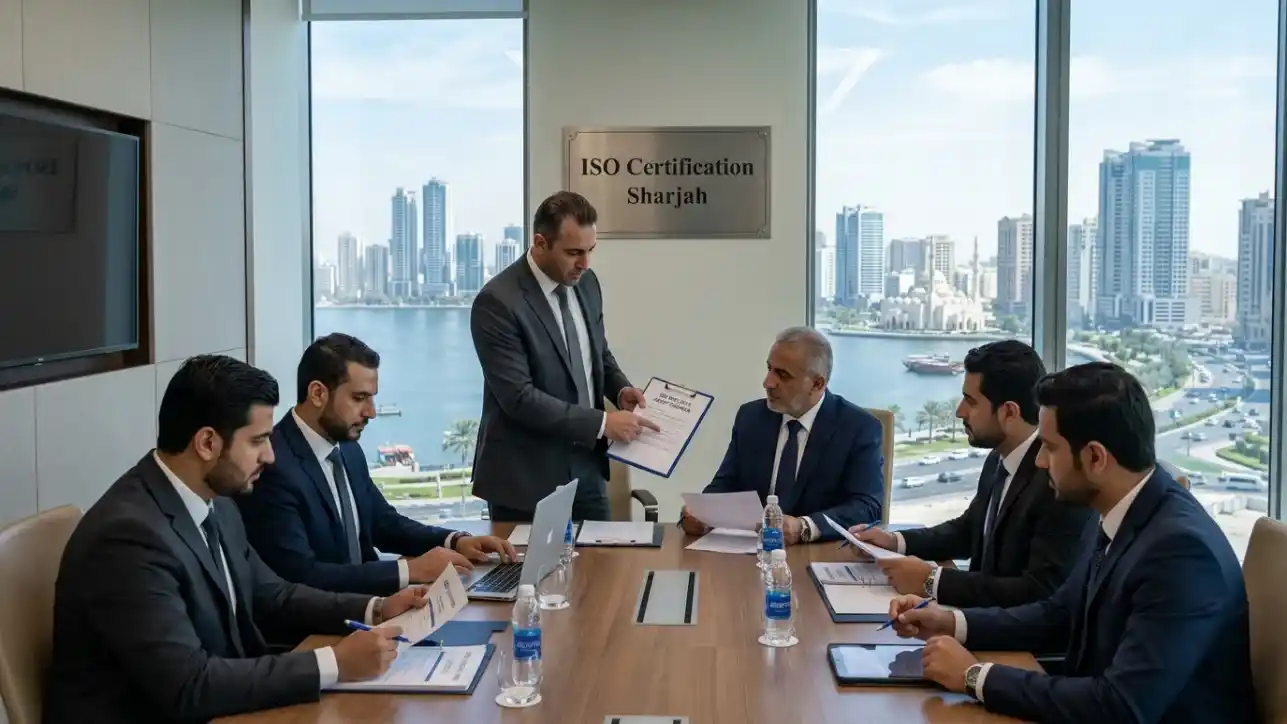
Getting certified is not complicated when you know what to expect at each stage. This guide walks through the full ISO certification process in Sharjah so your business can prepare properly and move through without surprises.
Step 1 — Initial Enquiry and Scope Review
You start by contacting Global ISO Certificates and sharing your business details. This includes your trade licence, business activities, number of sites, and your target standard. The team reviews your scope and confirms the right approach for your sector and size.
This step costs you nothing and sets the entire project on the right track.
Step 2 — Gap Analysis
A gap analysis compares your current business systems against the requirements of the chosen ISO standard. You learn exactly what already meets the standard and what needs to be built or improved.
This is the most important early step. It prevents wasted effort and shows you a clear, realistic path to certification.
Step 3 — Documentation Development
Your documents are built around how your business actually works — not generic templates. Policies, process controls, and forms are created to reflect your real daily operations.
This matters because auditors check whether your paperwork matches your practice. Documents that do not reflect reality create findings at audit time.
Step 4 — Staff Training
Your team is trained on their roles within the ISO system, how to maintain records, and what the auditor will look for. Training is not a tick-box exercise. A team that understands the system is a team that can sustain it.
Global ISO Certificates runs training sessions matched to your sector and team structure.
Step 5 — Internal Audit
Before the external audit, your business runs an internal audit to check the system from the inside. Any gaps found here are fixed before the certification auditor arrives. This step significantly reduces the risk of major findings during Stage 2.
Step 6 — Stage 1 Audit (Document Review)
The certification body auditor reviews your documentation and assesses whether your system is ready for the next stage. They check that your policies, scope, and records meet the standard’s requirements on paper.
If there are issues at this stage, you address them before Stage 2. It is a readiness check, not the final assessment.
Step 7 — Stage 2 Audit (On-Site Assessment)
The Stage 2 audit is the full certification assessment. The auditor visits your site, interviews staff, reviews live records, and checks that your system works in practice — not just on paper.
This is where the real gap between documentation and daily operations becomes visible. Businesses with well-prepared teams pass cleanly.
Step 8 — Certificate Issued
Once any audit findings are closed, the certification body issues your ISO certificate. It is valid for three years with annual surveillance audits to maintain status.
For Sharjah businesses targeting ISO certification for government tenders, free zone approvals, or GCC export, the certificate is ready to use immediately upon issue.
How Long Does the Process Take?
Most Sharjah businesses complete the process in 4 to 16 weeks. A small office with clean records can move faster. A larger multi-site operation or a complex standard like ISO 27001 takes longer.
Staff availability is often the biggest variable. The faster your team can engage with training, records, and audit scheduling, the faster the process moves.
Start the Process Today
Global ISO Certificates guides Sharjah businesses through every step — from free gap review through to certificate issue. No split vendors, no hidden steps, no surprises on cost.
Begin with a free review at globalisocertificates.com/iso-certification-sharjah.