
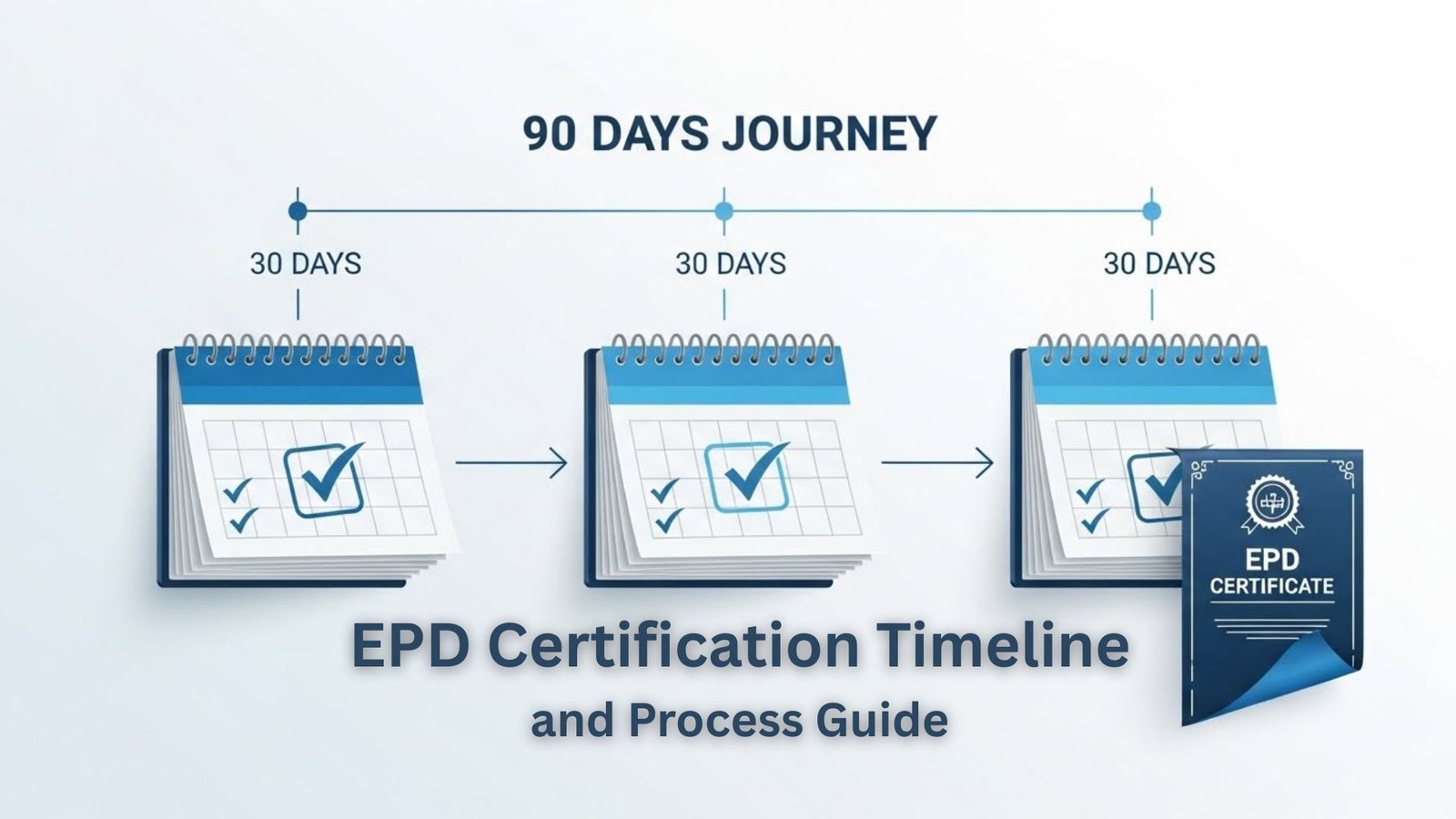
Getting an Environmental Product Declaration doesn’t have to take forever. With proper planning and the right approach, manufacturers can complete the entire EPD process in approximately 90 days. This roadmap breaks down each phase into manageable steps, showing you exactly what happens when and how to keep your certification on track.
Days 1-7: Planning and Preparation Phase
The first week sets the foundation for your entire EPD journey. Start by identifying which product you want to certify. Choose products that serve important markets or generate significant sales. Understanding the importance of Environmental Product Declarations helps you pick the right starting point for maximum business impact.
During this phase, gather your team. You’ll need people who know your manufacturing process, understand your supply chain, and can access production data. Assign clear roles so everyone knows their responsibilities. If you’re working with consultants, this is when you bring them on board and share initial product information.
Select your EPD program operator based on your target markets. Different programs serve different regions and industries. For manufacturers targeting Gulf markets, understanding how to get an Environmental Product Declaration in the UAE includes choosing programs recognized by local green building authorities.
Days 8-21: Data Collection Phase
The next two weeks focus on gathering information about your product. This is often the most time-intensive part of the process. You’ll need detailed data about raw materials, energy use, water consumption, waste generation, and transportation.
Start with your manufacturing facility. Collect actual production data rather than estimates whenever possible. Look at utility bills, production records, and maintenance logs. The more accurate your data, the more credible your final EPD will be.
Contact your suppliers for information about materials you purchase. Many suppliers already have environmental data they can share. For materials without available data, you may need to use industry average information from databases. Creating a complete EPD strategy for businesses includes building supplier relationships that support ongoing data collection.
Don’t forget about transportation and end-of-life phases. Document how materials reach your facility, how finished products ship to customers, and what typically happens to products after their useful life ends.
Days 22-45: Lifecycle Assessment Phase
With data in hand, the lifecycle assessment begins. This three-week period involves analyzing your product’s environmental impacts from cradle to grave. The assessment looks at energy use, water consumption, emissions to air and water, and waste generation across all lifecycle stages.
The difference between EPD and LCA matters here. The lifecycle assessment provides the detailed environmental analysis that feeds into your EPD. Think of the LCA as the research study and the EPD as the published report of findings.
During this phase, you’ll work closely with your LCA practitioner to ensure all data gets properly modeled. They’ll use specialized software to calculate environmental impacts following standardized methods. You may need to provide additional information or clarify details about your processes.
This is also when you’ll see which parts of your product lifecycle have the biggest environmental impacts. Many manufacturers discover surprising insights that lead to process improvements. These discoveries often deliver cost savings that help offset EPD development costs.
Days 46-60: EPD Document Preparation
Once the lifecycle assessment is complete, it’s time to create your actual EPD document. This two-week period transforms technical LCA results into the standardized format required by your chosen program operator.
EPD documents follow specific templates that ensure consistency and comparability. The document will include product description, manufacturing details, declared lifecycle stages, environmental impact results, and additional product information. Everything gets presented in standardized units that allow fair comparisons between products.
For products like flooring requiring EPD certification, you’ll also need to address product category rules specific to your industry. These rules ensure that all flooring EPDs report information consistently, making them useful for specifiers comparing different flooring options.
Review the draft EPD carefully with your team. Make sure product descriptions are accurate, technical specifications are correct, and all required information is included. Errors caught now are much easier to fix than corrections needed after verification begins.
Days 61-75: Third-Party Verification
The verification phase ensures your EPD meets quality standards. An independent verifier reviews your lifecycle assessment, checks calculations, examines data sources, and confirms that everything follows applicable standards and product category rules.
The process of EPD development and verification includes responding to verifier questions and providing supporting documentation. The verifier may ask for additional details about data sources, request clarification on methodological choices, or identify areas needing revision.
Stay responsive during this phase. Quick answers to verifier questions keep the process moving. Most verification issues involve minor corrections or clarifications rather than major problems. The verifier is working with you to ensure your EPD is accurate and credible, not trying to find reasons to reject it.
Once the verifier approves your EPD, they’ll issue a verification statement confirming that your EPD complies with relevant standards. This independent verification is what gives EPDs their credibility in the marketplace.
Days 76-85: Program Operator Review
After verification, your EPD goes to the program operator for final review and registration. This typically takes one to two weeks. The program operator checks that all required elements are present, verification was conducted properly, and the EPD meets their publication standards.
Different programs have different review processes. Understanding requirements for EPD in UAE green building standards or Environmental Product Declaration in Saudi Arabia helps you work with the right program operators for your target markets.
The program operator may request minor formatting changes or additional documentation. These final adjustments are usually quick to address. Once everything meets their standards, they assign your EPD a registration number and prepare it for publication.
Days 86-90: Publication and Launch
The final week brings your EPD to market. The program operator publishes your EPD in their online registry, making it publicly accessible. You’ll receive the final EPD document with registration number and validity dates.
Now comes the important part that many manufacturers overlook. Don’t just file your EPD away. Put it to work. Add it to your website, include it in product literature, train your sales team to discuss it, and submit it to green building product databases.
Understanding what EPD means for the GCC market helps you position your certified product effectively. Promote your EPD through press releases, social media, and direct outreach to architects and specifiers who value environmental transparency.
The connection between Environmental Product Declarations and LEED certification makes your EPD valuable for projects pursuing green building credits. Make sure project teams know your product now offers the documentation they need.
Staying On Schedule: Success Factors
Meeting a 90-day timeline requires attention to several key factors. First, have your data organized before you start. Manufacturers who struggle with timelines usually face delays during data collection because they didn’t prepare adequately.
Second, maintain clear communication with everyone involved. Regular check-ins with consultants, suppliers, verifiers, and internal teams keep everyone aligned and prevent misunderstandings that cause delays.
Third, respond quickly to requests for information or clarification. Every day you delay responding adds a day to your overall timeline. Treat EPD development as a priority project with dedicated resources rather than something people work on when they have spare time.
Fourth, work with experienced professionals who understand the process. Consultants who regularly develop EPDs move faster and avoid common pitfalls that slow down first-time efforts.
What Can Extend Your Timeline
Several factors can push your EPD certification beyond 90 days. Complex products with many components or materials take longer to assess than simple products. Poor data availability requires more time for research and may necessitate additional testing.
If your product requires custom product category rules because standard rules don’t exist for your product type, add several weeks to your timeline. Multiple rounds of verification because of data quality issues or methodological questions also extend the process.
Manufacturing in multiple locations that need to be averaged together complicates lifecycle assessment and takes additional time. Significant process changes during EPD development may require restarting portions of the assessment with updated information.
Planning for Future Updates
Remember that EPDs need periodic updates, typically every five years. Your 90-day investment in the initial EPD makes updates much faster and easier. You’ll already have systems for data collection, relationships with suppliers, and understanding of the process.
Keep good records of your EPD development process. Document data sources, assumptions made, and contacts used. This documentation makes future updates straightforward and ensures consistency between versions of your EPD.
Frequently Asked Questions
Can EPD certification really be completed in 90 days?
Yes, 90 days is achievable when you have good data availability and dedicated resources. Many manufacturers complete EPDs in this timeframe. However, your first EPD typically takes longer than subsequent ones as you learn the process. Complex products or limited data availability may extend timelines to four or five months. Working with experienced consultants significantly increases your chances of meeting a 90-day target.
What happens if I miss data for some materials?
Missing data doesn’t stop your EPD development. You can use industry average data from established lifecycle databases for materials where supplier-specific information isn’t available. While product-specific data is preferred, using quality database information is acceptable and common. Focus on getting detailed data for your main materials and manufacturing processes where your product differs most from competitors.
How much time do I personally need to dedicate to the EPD process?
Expect to invest significant time during the first two weeks for planning and data gathering. After that, you’ll need several hours weekly to answer questions, review documents, and coordinate with your team. Total time commitment varies by company size and data availability but plan for at least 40 to 60 hours spread across the 90-day period for key personnel.
Can we speed up the process by skipping verification?
No, third-party verification is required for credible EPDs. Unverified environmental declarations lack the credibility that makes EPDs valuable. Buyers, green building certification programs, and procurement policies specifically require verified EPDs. Skipping verification saves time but eliminates most of the business value that justified developing the EPD in the first place.
What if our manufacturing process changes during EPD development?
Minor process adjustments usually don’t require starting over. Significant changes like new equipment, different materials, or relocated production may require updating your assessment. Communicate changes to your consultant immediately so they can advise whether modifications affect your EPD. In some cases, you might complete the current EPD based on existing processes and plan an update to reflect changes once they’re fully implemented.
Conclusion
A 90-day timeline from application to approved EPD is realistic with proper planning and execution. The key is treating EPD development as a focused project with clear milestones, dedicated resources, and consistent progress monitoring. Each phase builds on the previous one, so keeping early stages on track ensures the entire process stays on schedule.
Your first EPD represents the steepest learning curve. Subsequent EPDs for additional products go faster because you understand requirements, have established data collection processes, and know what to expect. The 90-day roadmap provides a clear path forward, transforming EPD certification from an overwhelming prospect into a manageable project with predictable outcomes and valuable business results.