
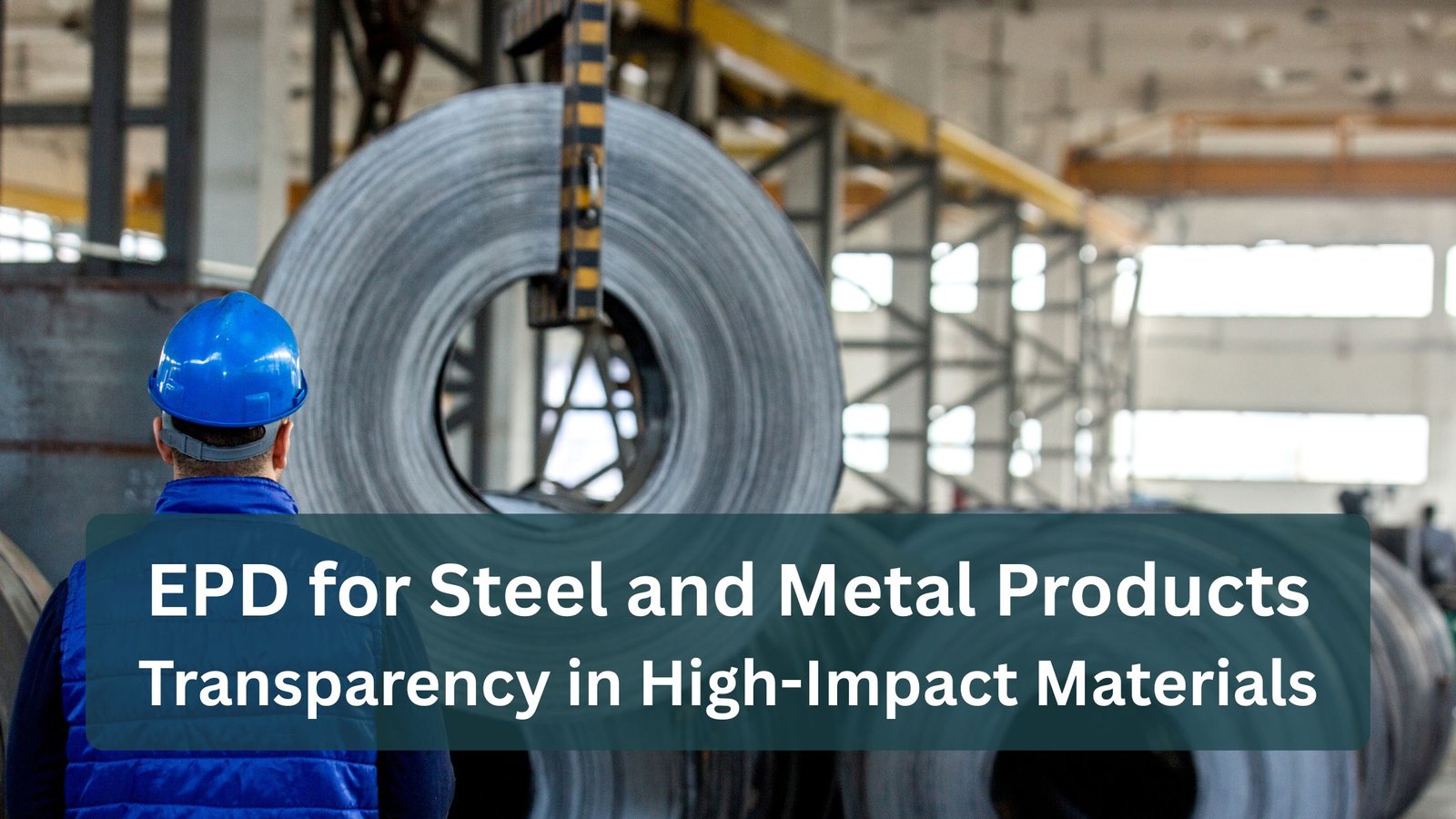
Steel is the backbone of every modern structure — from skyscrapers to smart cities. Yet, it’s also one of the most carbon-intensive materials used today. As sustainability becomes a key driver in construction and manufacturing, the need for transparency in high-impact materials like steel and metals is no longer optional — it’s essential.
This is where Environmental Product Declarations (EPDs) come in. For steel and metal manufacturers across the UAE, Saudi Arabia, and the GCC, EPDs are transforming how sustainability data is measured, verified, and communicated — aligning perfectly with LEED, BREEAM, and Net Zero 2050 goals.
So, how do EPDs make your steel more competitive, compliant, and credible in today’s global green market? Let’s explore.
Table of Contents
- Why Steel and Metal Products Need EPDs
- Key EPD Standards for Steel and Metals
- How EPDs Support LEED, BREEAM, and Other Certifications
- Life Cycle Assessment (LCA) – The Foundation of Steel EPDs
- Benefits of Steel and Metal EPDs for Manufacturers
- Regional Case Studies: Steel EPDs in the GCC
- Steps to Obtain a Verified EPD for Steel Products
- The Future of Green Steel and Digital EPDs
- Conclusion
- FAQs
Why Steel and Metal Products Need EPDs
Steel production accounts for nearly 8% of global CO₂ emissions, making it one of the most environmentally intensive materials in the world. In the UAE and GCC, where construction drives material demand, this footprint is even more significant.
EPDs play a critical role by quantifying a product’s environmental impact across its life cycle. For steel and metal products, this includes extraction, energy use, manufacturing emissions, transportation, and recyclability.
By publishing an EPD, manufacturers can:
- Show transparent sustainability data verified by third-party auditors.
- Differentiate between primary and secondary steel or recycled content.
- Demonstrate commitment to ESG reporting and green building standards.
- Improve eligibility for government or green infrastructure tenders.
🔗 Learn more about how EPDs strengthen your project sustainability: Environmental Product Declarations and Green Building Certification
Key EPD Standards for Steel and Metals
EPDs are governed by globally recognized frameworks ensuring consistency, transparency, and comparability.
Here are the key standards steel manufacturers should follow:
- ISO 14025 – Defines the EPD framework under Type III environmental declarations.
- EN 15804 / ISO 21930 – Core standards for construction product sustainability reporting.
- Product Category Rules (PCRs) for steel define the functional unit (usually 1 tonne) and environmental impact categories.
Regional and international PCR references include:
- WorldSteel Association PCR for hot-rolled and cold-rolled products.
- EPD International for products targeting European markets.
- GORD (Gulf Organisation for Research & Development) for GCC-based certifications like GSAS.
🔗 Check out related insights: LEED EPD Certification for Builders in UAE & Saudi Arabia
How EPDs Support LEED, BREEAM, and Other Certifications
Sustainability rating systems increasingly reward transparent materials. EPDs directly contribute to LEED, BREEAM, and GSAS credits.
In LEED v4.1:
- MR Credit: Building Product Disclosure and Optimization (EPDs)
- +1 point for products with verified EPDs.
- +2 points if 50+ qualifying products represent 20+ manufacturers.
In BREEAM Mat 01:
- Recognizes EPDs as Tier 1 evidence for environmental impact reduction.
In Estidama & GSAS (GCC frameworks):
- Encourage verified EPDs for all major building materials.
In short, verified EPDs are your ticket to LEED credits, tender compliance, and international project qualification.
🔗 See how Envirolink supports EPD documentation: BREEAM, LEED, and GSAS EPD Support
Life Cycle Assessment (LCA) – The Foundation of Steel EPDs
Every EPD begins with a Life Cycle Assessment (LCA) — a scientific process that evaluates a product’s environmental footprint from raw material to end-of-life.
The LCA stages typically include:
- A1–A3: Raw material extraction, manufacturing, and energy use.
- A4–A5: Transportation and installation.
- B1–B7: Product use phase.
- C1–C4: End-of-life (dismantling, waste, recycling).
- D: Benefits beyond system boundary, like recycled material credits.
Popular tools: SimaPro, GaBi, OpenLCA, One Click LCA.
By quantifying embodied carbon, LCAs help set carbon reduction goals aligned with national sustainability visions like UAE Net Zero 2050 and Saudi Vision 2030.
🔗 Explore related certification solutions: Carbon Footprint Certification
Benefits of Steel and Metal EPDs for Manufacturers
An EPD is more than just a compliance document — it’s a market advantage.
Here’s what it brings to manufacturers:
✅ Brand credibility: EPDs prove sustainability performance with data, not claims.
✅ Tender advantage: Many green projects now demand EPD-backed materials.
✅ Export readiness: Comply with EU/UK environmental product transparency standards.
✅ ESG alignment: Support your company’s sustainability reporting goals.
✅ Operational improvement: Identifies inefficiencies in energy and waste.
✅ Customer trust: Developers prefer manufacturers with verified sustainability credentials.
Pro Tip:
Think of your EPD as your material’s passport — it opens the door to global sustainable markets.
Regional Case Studies: Steel EPDs in the GCC
1. Emirates Steel Arkan (UAE)
Published EPDs verified under EPD International for rebar and wire rod, helping secure key LEED-certified project bids.
2. Hadeed (Saudi Arabia)
Aligned with ISO 21930, focusing on life cycle carbon intensity and regional data improvement.
3. Qatar Steel (Qatar)
Developed EPDs using GORD PCR and GSAS alignment for national green building requirements.
These case studies demonstrate that EPDs aren’t a trend — they’re becoming a market standard across the GCC for infrastructure and building materials.
Steps to Obtain a Verified EPD for Steel Products
If you’re planning to publish your first EPD, here’s the roadmap:
- Conduct a Life Cycle Assessment (LCA):
Gather process data — inputs, energy, emissions, waste. - Develop the EPD Report:
Use steel-specific PCRs to define scope (cradle-to-gate or cradle-to-grave). - Get Third-Party Verification:
Independent verification ensures credibility and compliance with ISO 14025. - Register the EPD:
Publish under recognized programs like EPD International or EnvironDec. - Promote Your EPD:
Include EPD data in LEED documentation, ESG reports, and product datasheets.
The Future of Green Steel and Digital EPDs
The future of steel is low-carbon and data-driven.
Emerging trends:
- Hydrogen-based steel is replacing fossil fuels in production.
- Carbon Capture & Storage (CCUS) reduces CO₂ at the source.
- Digital EPDs integrate directly into BIM systems, improving transparency for architects and contractors.
- GCC countries are moving toward mandatory EPDs in public tenders.
By 2030, EPDs will act as digital carbon passports, proving a product’s sustainability credentials in real time.
Conclusion
In a market driven by sustainability, EPDs for steel and metal products are more than a certification — they’re a strategic advantage.
They unlock LEED and BREEAM credits, support Net Zero commitments, and enhance trust among developers and regulators.
If you’re a steel or metal manufacturer in the UAE or GCC, now is the time to take the leap. Partner with Envirolink to prepare, verify, and publish your EPD — and lead your industry toward a transparent, carbon-smart future.
FAQs
- What is an EPD for steel products?
An Environmental Product Declaration (EPD) details the environmental impact of steel across its lifecycle, verified by a third party. - How does an EPD help in LEED projects?
EPDs contribute to LEED MR credits under the “Building Product Disclosure and Optimization” category. - Are EPDs mandatory in the UAE?
Not mandatory yet, but increasingly required in government and green-certified projects. - What is the difference between recycled and virgin steel in EPDs?
EPDs quantify the environmental savings of recycled steel compared to virgin production. - Can small manufacturers publish EPDs?
Yes, through sector EPDs or collective EPD programs verified by recognized bodies. - How long is an EPD valid?
Typically 5 years, after which data must be updated for verification. - How do EPDs support ESG goals?
They provide transparent metrics for Scope 3 emissions, material efficiency, and sustainability KPIs.