Introduction
I’ll never forget the panic in a production manager’s voice when he called me three days before a scheduled IECEx surveillance audit. His team had been operating under ExQA certification for two years, but they’d let documentation slip. Component traceability records were incomplete. Quality procedures existed on paper but actual practices had drifted. Training records showed gaps. The audit was going to be brutal.
We spent 72 hours in emergency preparation mode—organizing documents, interviewing personnel, conducting mock inspections, and identifying the most critical gaps. The audit still produced findings, but we avoided the worst outcome: certificate suspension. That experience taught me a crucial lesson—audit preparation isn’t something you start three days before. It’s continuous discipline built into daily operations.
Documentation Requirements
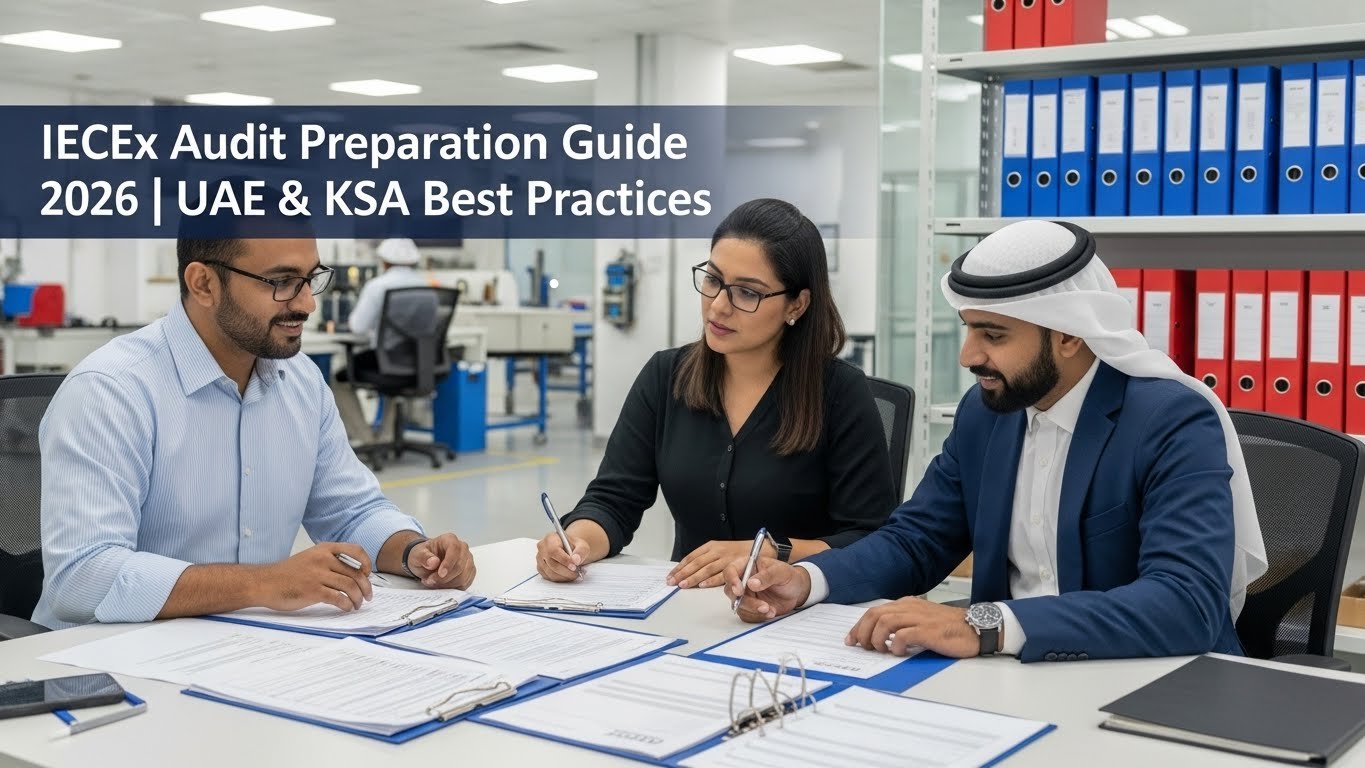
IECEx audits revolve around documentation verification. Auditors need objective evidence that your organization operates according to certified procedures and maintains quality consistently. Missing or inadequate documentation creates findings regardless of actual performance quality.
Essential Documentation Categories:
- IECEx certificates (current and valid, not expired)
- Technical files for all certified equipment
- Quality manual and documented procedures
- Manufacturing work instructions and process controls
- Component specifications and supplier qualification records
- Inspection and test records for production batches
- Personnel training records and competence verification
- Internal audit reports and corrective action records
- Management review meeting minutes
- Non-conformance reports and root cause analysis
For equipment manufacturers with ExQA certification, your quality documentation must demonstrate control over the complete manufacturing process. This includes incoming material inspection, in-process quality checks, final testing protocols, and traceability systems linking finished equipment back to certified designs. Understanding the complete IECEx certification process helps establish appropriate documentation systems from the start.
Document Control Requirements:
Auditors verify that documents are controlled, current, and accessible to personnel who need them. Version control matters enormously—if work instructions show revision 3 but workers are using revision 1, that’s an immediate finding. Documents must show approval signatures, revision dates, and distribution records proving relevant personnel received updates.
Electronic document management systems help significantly with audit preparation. They provide automatic version control, distribution tracking, and retrieval capabilities that paper systems can’t match. However, auditors will verify that your electronic system includes backup provisions and access controls preventing unauthorized modifications.
Traceability Documentation:
Component traceability represents a critical documentation area that trips up many manufacturers. Every component in certified equipment needs documented proof of conformance to specifications. This means material certificates for metals, data sheets for electrical components, and test reports for critical items. When auditors select random production units and request traceability back to incoming materials, you need to produce complete documentation chains within minutes, not days.
Common Non-Compliance Issues
Certain non-conformities appear repeatedly across IECEx audits. Understanding these patterns helps focus preparation efforts on highest-risk areas.
Component Substitutions:
The most common finding? Unauthorized component substitutions. A manufacturer runs out of their approved relay supplier’s stock and substitutes a “similar” relay from alternate supplier without notification to certification body. Auditors catch this by comparing production units to technical files, and it creates immediate non-conformance because installed components don’t match certified design.
Prevention requires strict component control procedures. Approved component lists must be maintained and enforced. Procurement can’t substitute without engineering evaluation and certification body notification. This discipline feels bureaucratic until you face audit findings and potential certificate suspension. Training through programs like IECEx certification courses helps teams understand why component control matters critically.
Procedure vs. Practice Gaps:
Documented procedures say one thing; actual practices do something different. This gap creates findings immediately when auditors observe operations or interview personnel. Maybe your procedure requires 100% incoming inspection, but workers only spot-check high-value components. Maybe welding procedures specify pre-heat temperatures that operators ignore under production pressure.
Auditors discover these gaps through direct observation and asking workers to explain processes. If worker descriptions don’t match documented procedures, the auditor investigates further. Often they find procedures written for certification that nobody actually follows because they’re impractical or outdated.
Calibration Lapses:
- Test equipment with expired calibration dates
- Missing calibration records for critical measurement tools
- Calibration intervals that don’t match procedure requirements
- Lack of traceability to national or international standards
Calibration systems require disciplined tracking because equipment calibration dates don’t announce themselves. A torque wrench used daily might have calibration that expired three months ago, and nobody notices until an audit. Implementing automatic reminders 30 days before calibration due dates prevents these lapses.
Training Record Gaps:
Personnel performing critical operations need documented training proving they’re competent for assigned tasks. Auditors verify that workers have received procedure training, understand quality requirements, and maintain current skills. Missing training records for employees working in sensitive areas create findings—even if those employees are highly experienced and competent.
The solution involves systematic training documentation including initial orientation, procedure-specific training, refresher training at defined intervals, and competence assessments verifying knowledge retention. Regional requirements vary, so understanding specifics through resources like IECEx certification in UAE helps tailor training programs appropriately.
Internal Pre-Audit Checklist
Conducting internal pre-audits using the same criteria external auditors apply identifies gaps before official audits occur, allowing correction without formal findings.
Certificate Status Verification:
- Confirm all IECEx certificates are current and not expired
- Verify certificate scope covers all products currently manufactured
- Check that product markings match certificate requirements exactly
- Ensure any certificate conditions (X or U suffixes) are understood and met
Production Sample Examination:
Select random production units and trace them through your quality system. Can you produce complete documentation showing: incoming material inspection, in-process quality checks, final testing results, and component traceability? If documentation gaps appear during internal checks, they’ll definitely appear during external audits.
Personnel Interviews:
Ask workers to explain their processes without referring to procedures. Do their explanations match documented procedures? Do they understand quality requirements and why they matter? Can they identify non-conforming conditions and know how to report them? These interview-style checks reveal procedure-practice gaps before auditors find them.
Facility Walkthrough:
Tour your facility looking for obvious audit red flags: test equipment with expired calibration stickers, work instructions showing outdated revision numbers, component storage without proper identification, production areas lacking required documentation access. These visual issues jump out during audits and create negative first impressions.
Document Availability Test:
- Ask personnel to retrieve specific procedures within 5 minutes
- Request component specifications for random materials
- Pull training records for several employees
- Review non-conformance reports from past 6 months
If internal teams struggle to locate documentation quickly, auditors will face the same delays—creating frustration and raising suspicions about your document control effectiveness. Resources comparing IECEx vs ATEX requirements help ensure documentation covers all applicable standards.
UAE/KSA Case Studies
Real examples from recent audits in Middle Eastern facilities illustrate common challenges and effective solutions.
Case Study 1: Dubai Manufacturing Facility
A Dubai-based control panel manufacturer faced their first surveillance audit 18 months after achieving ExQA certification. The audit revealed significant component control weaknesses. They’d been substituting cable glands from unapproved suppliers when primary suppliers faced delivery delays. None of these substitutions were documented or approved.
The finding resulted in minor non-conformance requiring corrective action within 30 days. The manufacturer implemented a formal component approval process requiring engineering evaluation and certification body notification before any substitutions. They established backup suppliers during initial certification rather than scrambling during production emergencies. Six months later, follow-up audit verified effective implementation.
Case Study 2: Saudi Arabia Service Facility
An explosion-proof equipment service facility in Dammam held IECEx Scheme 03 certification for motor repair and overhaul. Their audit uncovered critical test equipment with lapsed calibration—a torque wrench used for flameproof enclosure assembly hadn’t been calibrated in 14 months.
This created major non-conformance because the equipment affected safety-critical assembly operations. The facility faced potential certificate suspension but avoided it by immediately removing the equipment from service, sending all torque tools for expedited calibration, implementing monthly calibration tracking reports, and conducting full review of all test equipment calibration status. The comprehensive corrective action satisfied auditors that systemic improvements addressed root causes.
Case Study 3: Abu Dhabi EPC Contractor
An EPC contractor operating across multiple UAE projects struggled with personnel competence documentation. They employed subcontractors extensively for hazardous area installations, but training records were incomplete. Some workers held CoPC certificates, others had internal training, and documentation quality varied significantly.
The audit finding required systematic improvement of competence management. The contractor implemented centralized training database tracking all personnel qualifications, established minimum competence requirements for different task categories, and created verification procedures for subcontractor personnel before site deployment. Understanding requirements through certification comparisons across GCC markets helped establish appropriate competence standards.
Key Takeaways
- Documentation drives audit success: Complete, controlled, and current documentation across certificates, procedures, records, and traceability determines audit outcomes—gaps create findings regardless of actual operational quality.
- Component control is the #1 audit finding: Unauthorized substitutions appear in most audits because procurement teams don’t understand certification requirements—strict component approval processes prevent this common failure mode.
- Internal pre-audits identify 80% of issues: Conducting systematic self-assessments using external audit criteria reveals most gaps before official audits, allowing correction without formal findings that could jeopardize certification status.
- Continuous compliance beats crisis preparation: Facilities maintaining daily documentation discipline and procedure adherence sail through audits easily, while those attempting emergency preparation face findings, stress, and potential certificate suspension risks.
Frequently Asked Questions
How often are IECEx audits conducted?
Surveillance audits for ExQA certification typically occur annually, though frequency can vary based on facility size, complexity, and previous audit performance. Facilities with excellent audit histories might extend to 18-month intervals, while those with significant findings face more frequent audits until compliance improves consistently.
Who can conduct the audit?
Only auditors from IECEx Certification Bodies (ExCBs) authorized by IECEx System can conduct official surveillance audits. These auditors undergo specific training and qualification for IECEx auditing. You cannot select your own auditor, but you can choose which certified ExCB performs your certification and surveillance functions.
What happens if we fail an audit?
Audit failures result in non-conformance findings classified as minor or major. Minor findings require corrective action within 30-90 days. Major findings can lead to certificate suspension if not addressed immediately, preventing you from producing certified equipment until compliance is restored and verified through follow-up audit.
Can we postpone scheduled audits?
Audits can be rescheduled with reasonable notice (typically 30+ days) for legitimate business reasons. However, excessive postponements raise concerns about avoidance and may trigger unannounced audits. Surveillance audits must occur within specified windows to maintain certification validity—indefinite postponement isn’t possible without jeopardizing certificate status.
How long do audits typically last?
Surveillance audit duration depends on facility size and scope. Small manufacturers with limited product range might complete in 1-2 days. Large facilities with multiple production lines and extensive product portfolios could require 3-5 days. Initial certification audits generally take longer than surveillance audits because they cover complete system establishment rather than ongoing compliance verification.
Conclusion
Successful IECEx audit preparation isn’t crisis management three days before auditor arrival—it’s continuous discipline built into daily operations through controlled documentation, component management, procedure adherence, and competence verification. Facilities treating audits as compliance verification rather than adversarial inspection pass easily and use audit findings as improvement opportunities. The keys are systematic internal pre-audits identifying gaps early, robust document control providing objective evidence, and organizational culture viewing certification requirements as operational necessities rather than bureaucratic burdens. Resources like comprehensive certification guides help build this preparation discipline systematically for long-term compliance success.