Introduction
You submitted a strong tender. Your pricing was competitive. Your team was ready.
Then came the rejection — “ISO 9001 certification required.”
This happens to hundreds of UAE businesses every year. Not because they lack capability, but because they lack the certificate that proves it.
The good news? ISO 9001 certification in UAE is not complicated. It follows a clear, proven process. With the right guidance, most businesses achieve it faster than they expect.
This guide gives you the full roadmap — step by step, with zero confusion.
👉 Get expert help for ISO 9001 certification in UAE — Speak to our consultants today
What is ISO 9001 Certification?
ISO 9001 is an international standard for a Quality Management System (QMS). It is developed by the International Organization for Standardization (ISO) — a global body recognised in 170+ countries.
A QMS defines how your business plans, delivers, and improves its products or services. It ensures quality is consistent — not dependent on a single person or a good day.
When you earn ISO 9001 certification, an independent accredited body has verified that your QMS meets the international benchmark. That verification is your certificate.
The active version is ISO 9001:2015. It suits every business type and size — from a 10-person consultancy to a 500-person manufacturer.
👉 Learn about our ISO 9001 Certification Service
Why ISO 9001 is Important for UAE Businesses
The UAE business landscape rewards quality. It also punishes the absence of it.
Strict tender prerequisites: Government departments, free zone authorities, and major private entities in UAE require ISO 9001 for supplier registration and tender eligibility. It is not a bonus — it is a gate.
Rising client expectations: International companies entering the UAE market expect local partners to hold ISO 9001. It removes supplier risk from their decision-making. Without it, you start every negotiation from a position of doubt.
National quality goals: ISO 9001 aligns directly with the UAE’s National Quality Infrastructure and its push toward international competitiveness. Certified businesses position themselves inside that national vision — not outside it.
Competitive pressure is real: Your competitors are getting certified. Every uncertified business that delays gives certified competitors a wider advantage in shared markets.
👉 Full overview: ISO Certification in UAE
ISO 9001 Certification Requirements (UAE Context)
Before you can be certified, your business must meet the requirements of ISO 9001:2015. Here is what that means in practical terms for UAE businesses:
- Defined quality policy: A clear, written statement of your organisation’s commitment to quality and its objectives
- Documented processes: Written procedures covering all activities that directly affect product or service quality
- Process standardisation: Your team must follow documented procedures consistently — not just when auditors are present
- Risk-based thinking: A register identifying potential risks to quality and planned actions to mitigate them
- Competency and training records: Evidence that employees have the skills and training to perform their roles to the required standard
- Internal audit programme: A scheduled series of internal audits to check whether the QMS is functioning correctly
- Management review: Formal leadership meetings to evaluate QMS performance and make strategic quality decisions
- Corrective action records: Documentation of issues found, root causes identified, and actions taken to prevent recurrence
Most UAE businesses already have the foundations of several of these in place. A gap analysis maps exactly what exists and what remains to be built.
👉 Read the full ISO 9001 requirements breakdown
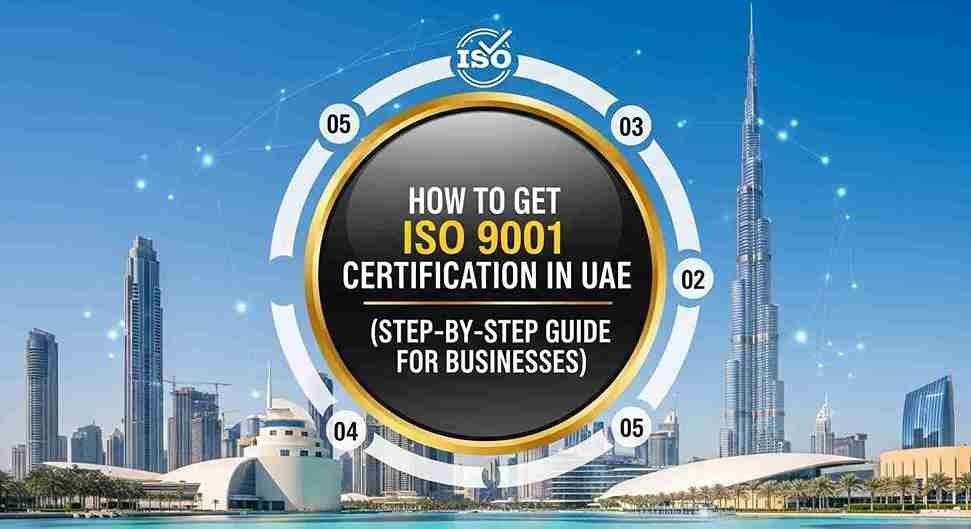
ISO 9001 Certification Process in UAE (Step-by-Step)
This is the section that matters most. Follow these six steps and your business moves from uncertified to ISO 9001 certified in UAE.
Step 1 – Gap Analysis
Every successful certification starts here. A qualified consultant assesses your existing processes, documentation, and practices against ISO 9001:2015 requirements.
The output is a clear report showing what already meets the standard and what needs attention. It removes all guesswork and creates a focused project plan with realistic timelines.
- Takes one to three days depending on business complexity
- Covers all departments within your certification scope
- Identifies quick wins alongside areas needing significant development
Step 2 – Documentation Preparation
Your QMS lives in documents. Auditors cannot verify processes they cannot see — so documentation must be thorough, accurate, and aligned with how your business actually operates.
At this stage you build or update your Quality Manual, standard operating procedures (SOPs), process maps, and all supporting records and templates.
- Quality Manual establishes the scope and structure of your QMS
- SOPs define who does what, how, and to what standard
- Templates are created for audits, risk registers, and corrective actions
Generic templates do not pass UAE audits. Your documentation must reflect your specific business, industry, and operations.
Step 3 – Implementation
Documents on a shelf achieve nothing. Implementation is where your QMS becomes real.
Your team is trained on the new procedures. Process owners take responsibility for their areas. Records start building — creating the evidence trail your auditor will review.
- Staff training tailored to each department’s role in the QMS
- Process owners assigned and accountable
- Compliance records generated from day one of implementation
This stage also delivers the first operational benefits — fewer errors, clearer responsibilities, and improved business efficiency across daily operations.
Step 4 – Internal Audit
Before any external auditor sets foot in your business, you audit yourself. This is the internal audit — and it is one of the most important steps in the entire process.
The internal audit checks whether your QMS is operating as documented. It finds gaps, inconsistencies, and nonconformities while you still have time to fix them.
- Covers the full scope of your QMS across all relevant departments
- Nonconformities are logged and corrective actions assigned
- Followed immediately by a formal management review meeting
Think of it as a dress rehearsal. Businesses that skip it almost always face avoidable findings in the official audit.
Step 5 – Certification Audit
Now the accredited certification body conducts the official audit. This is a two-stage process:
Stage 1 — Document Review: The auditor examines your Quality Manual and key QMS documentation. They confirm your system is designed correctly and that the scope is appropriate. This is usually conducted remotely or offsite.
Stage 2 — On-Site Audit: The auditor visits your premises, interviews staff at different levels, observes operations, and checks that your documented system is functioning in practice. This is where preparation matters most.
- Stage 1 and Stage 2 are typically separated by two to six weeks
- Major nonconformities must be resolved before certification is granted
- Minor nonconformities are addressed through a corrective action plan submitted post-audit
Step 6 – Final Certification
Once all nonconformities are closed and the certification body is satisfied, your ISO 9001 certificate is issued. It is valid for three years.
Annual surveillance audits in years one and two verify ongoing compliance. A full recertification audit takes place at the end of year three.
- Certificate includes your company name, scope, and certification date
- Immediately usable in tenders, proposals, and marketing materials
- Ongoing annual audits keep your certification active and your QMS improving
👉 Full detail: ISO 9001 Certification Process Step-by-Step
👉 Start your ISO 9001 certification in UAE today — Book a free consultation
How Long Does ISO 9001 Certification Take in UAE?
Timeline varies based on business size and readiness. Here is an honest, realistic guide:
- Small businesses (under 50 staff): 4 to 8 weeks from gap analysis to certificate
- Medium businesses (50–250 staff): 2 to 4 months
- Large organisations (250+ staff): 4 to 6 months
Businesses with existing documented processes sit at the shorter end. Those building from scratch take longer.
One factor accelerates every timeline: an experienced UAE ISO consultant. They eliminate delays, anticipate audit requirements, and keep the project moving efficiently from day one.
ISO 9001 Certification Cost in UAE (Factors Explained)
There is no fixed price. Cost is shaped by your specific business circumstances. Key factors include:
- Business size: More employees means more processes, more documentation, and longer audit duration
- Certification scope: Single-site businesses cost less than multi-site organisations seeking a unified certificate
- Documentation readiness: Businesses with existing procedures in place invest less consultant time than those starting from zero
- Industry type: Complex or regulated industries — such as construction, oil and gas, or healthcare — require more detailed documentation and controls
- Consultant quality: Senior consultants with UAE market experience carry higher fees but dramatically reduce the risk of audit failure and rework
- Chosen certification body: Accredited bodies vary in their audit fees — a consultant with established relationships can help you choose the most cost-effective option
The real cost to calculate is not what certification costs — it is what remaining uncertified costs you in lost tenders, missed contracts, and lost market position.
👉 Detailed guide: ISO 9001 Certification Cost in UAE
Common Challenges Businesses Face
Knowing where businesses struggle helps you avoid the same mistakes. These are the most frequent issues UAE businesses encounter:
Documentation gaps: Processes exist in practice but nowhere on paper. Auditors cannot verify what is not documented. Building accurate, comprehensive documentation is the single most critical preparation task.
Inconsistent implementation: The QMS looks strong on paper but is not followed in daily operations. Auditors speak to staff at every level. If your team cannot describe your processes, nonconformities follow.
Weak internal audits: Businesses that treat the internal audit as a formality miss the point entirely. It exists to find problems before the external auditor does. Use it seriously.
Leadership disengagement: ISO 9001 requires top management commitment — not just sign-off. When leadership is visibly involved, the entire organisation takes the QMS seriously. When they are not, teams disengage and audit findings multiply.
Wrong consultant choice: Consultants without UAE experience use generic approaches that miss local requirements. Always verify regional experience, industry knowledge, and a track record of successful UAE certifications.
How to Choose the Right ISO Consultant in UAE
Your consultant determines how smooth, fast, and successful your certification will be. Choose carefully.
Here is what to evaluate before committing:
- Verified UAE experience: They must understand local tender requirements, free zone compliance expectations, and UAE-based certification body processes
- Your industry knowledge: A consultant who has certified businesses in your sector understands your specific risks, processes, and documentation needs
- Certification body access: Established consultants have working relationships with accredited bodies — this smooths the audit process and can reduce lead times
- End-to-end service: The best consultants handle everything from gap analysis through to certificate issuance — not just documentation delivery
- References and track record: Ask for examples of recent UAE certifications. A reputable consultant will share client outcomes readily
The right consultant is not the cheapest option. They are the one who gets your business certified correctly, on time, and with a QMS that continues to deliver value long after the certificate is issued.
How ISO 9001 Helps UAE Businesses Grow
The certificate is the entry point. The real value comes from what follows.
More contracts won: ISO 9001 opens tender categories and supplier lists that are closed to uncertified businesses. In UAE’s contract-driven economy, this is direct, measurable revenue impact.
Operational savings: Standardised processes eliminate waste, reduce errors, and cut the cost of poor quality. Most businesses see measurable efficiency gains within the first three months of implementation.
International credibility: UAE businesses targeting export markets or attracting foreign clients use ISO 9001 as a trust-builder. It signals compliance standards that international buyers recognise and respect.
Compounding competitive advantage: Each year of certified operation builds a stronger process foundation. Businesses that certify early pull further ahead of those that delay.
Fast Track ISO 9001 Certification in UAE
Global ISO Certificates provides dedicated ISO 9001 certification support for UAE businesses across all industries and sizes.
Our approach is built for speed without shortcuts. We use UAE-specific documentation frameworks, structured implementation plans, and established certification body relationships to deliver results efficiently.
From the first consultation to your final certificate, we manage the entire process — so you stay focused on running your business while we handle the certification.
- One dedicated consultant managing your full project
- UAE-tailored QMS templates built for your industry
- Internal audit support to eliminate certification risks
- Full coordination with your chosen accredited certification body
- Post-certificate support for annual surveillance audits
👉 View our ISO 9001 Certification Service
👉 Start your ISO 9001 certification in UAE today — Get your free consultation now
Conclusion
ISO 9001 certification in UAE follows a clear path. Six steps, the right consultant, and the right preparation are all it takes.
The businesses winning government contracts, qualifying for enterprise supplier lists, and growing faster in the UAE market made this decision. They chose to get certified — and that choice continues to pay dividends every year.
Your competitors are not waiting. The tenders you are missing today are being won by certified businesses right now.
Take the step. The process is clear. The value is proven. The time is now.
👉 Start your ISO 9001 certification in UAE today — Contact our experts for a free consultation
Frequently Asked Questions (FAQ)
How do I get ISO 9001 certification in UAE?
Complete six steps: gap analysis, documentation, implementation, internal audit, certification audit, and final certification. An experienced UAE ISO consultant guides and manages the entire process for you.
How long does ISO certification take in UAE?
Small businesses typically certify in 4 to 8 weeks. Medium companies take 2 to 4 months. Timeline depends on business size and how prepared your existing processes already are.
What are the ISO 9001 requirements?
Core requirements include a quality policy, documented processes, risk management records, internal audits, management reviews, and corrective action procedures — all defined within ISO 9001:2015 Clauses 4 to 10.
Is ISO certification mandatory in UAE?
Not legally for all businesses — but effectively mandatory for government tender eligibility, free zone vendor registration, and supplier qualification with major UAE corporations and international partners.
How much does ISO 9001 cost in UAE?
Cost depends on company size, industry, scope, and documentation readiness. No fixed price applies — a tailored assessment from a UAE ISO consultant gives you the most accurate figure for your business.
Can small companies get ISO 9001 certified in UAE?
Yes. ISO 9001 applies to any business size. Small UAE companies often benefit most — gaining credibility and tender eligibility that lets them compete alongside much larger, established businesses.
Who provides ISO 9001 certification in UAE?
Accredited certification bodies issue the certificate after a formal audit. ISO consultants like Global ISO Certificates prepare your business, manage the documentation, and support you through the entire audit process to ensure successful certification.