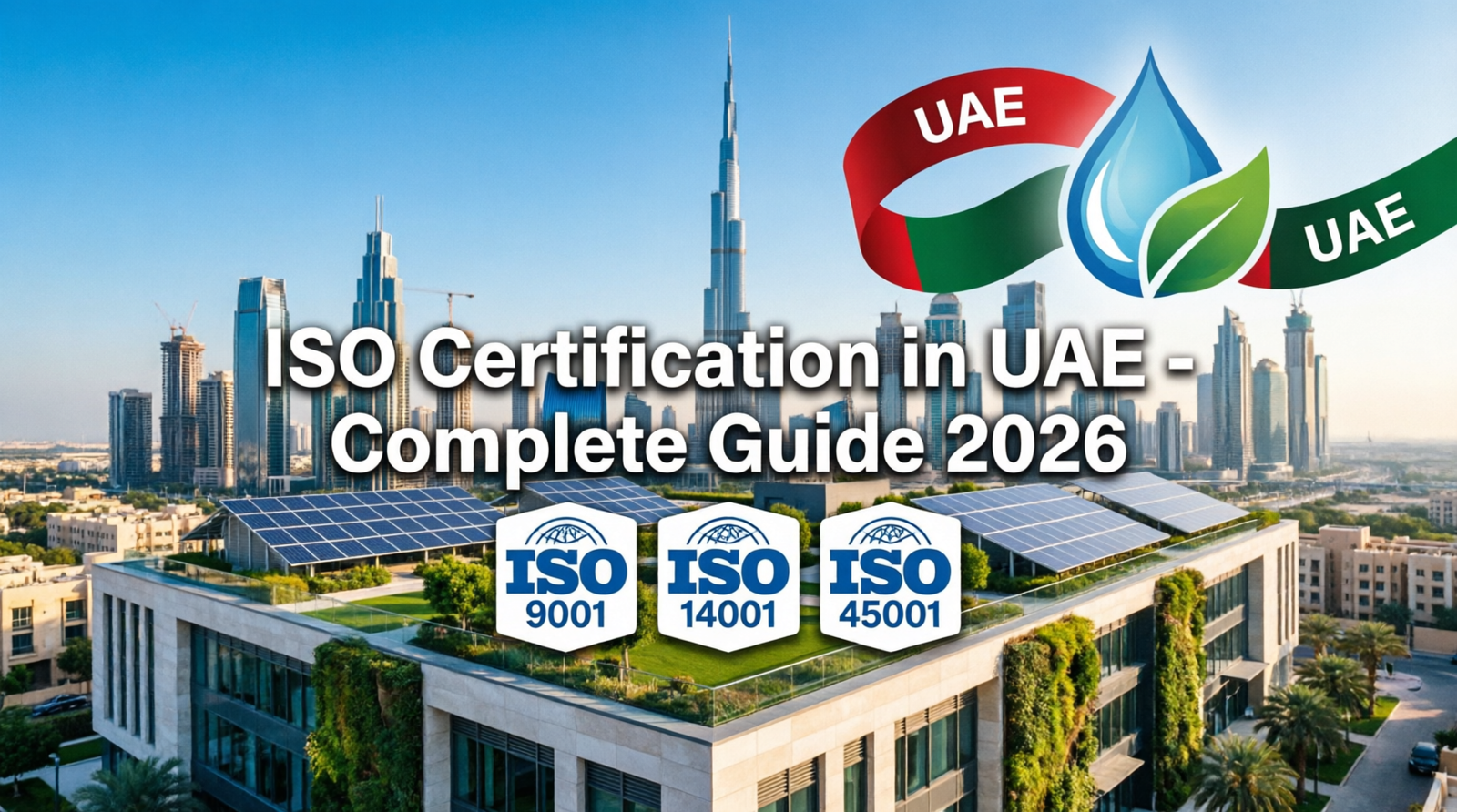
ISO certification in UAE proves your business meets international standards for quality, safety, or management. It helps you win contracts, build trust, and expand into new markets. Most companies complete the process in 4 to 8 weeks with the right consultant.
If you run a business in Dubai, Abu Dhabi, or any other emirate, ISO certification is no longer optional. Government tenders ask for it. Big clients expect it. Even small suppliers need it to stay competitive.
This guide walks you through everything: what ISO certification means, which standard fits your business, how the process works, what it costs, and how to choose the right partner.
What Is ISO Certification?
ISO stands for the International Organization for Standardization. It sets global standards for quality, safety, and efficiency.
ISO certification means an independent body checked your business processes. They confirmed you meet a specific standard’s requirements.
Think of it as a stamp of approval. It tells clients: “This company does things the right way, every time.”
Key Benefits of ISO Certification for UAE Businesses
ISO certification delivers measurable benefits across operations, sales, and reputation. Here’s what businesses gain.
Access to More Tenders and Contracts
Many government and private tenders in the UAE list ISO certification as a requirement. Without it, you’re excluded before the bidding even starts.
Improved Internal Processes
ISO standards force you to document how things should work. This reduces confusion, errors, and wasted time across departments.
Stronger Customer Trust
Clients see ISO certification as proof of reliability. It reassures them that your business follows consistent quality and safety practices.
Better Risk Management
Standards like ISO 45001 and ISO 27001 help you identify risks early. This means fewer accidents, breaches, or compliance issues.
Competitive Advantage
When two suppliers offer similar pricing, certification often becomes the deciding factor. It sets you apart from competitors who skip this step.
Easier Market Expansion
International clients and partners recognize ISO standards. Certification makes it easier to enter new markets across the GCC and beyond.
Cost Savings Over Time
Better processes mean less rework, fewer customer complaints, and lower waste. These savings add up over the three-year certification cycle.
Why Businesses in UAE Need ISO Certification
The UAE market is competitive. Buyers want proof, not promises.
Here’s why ISO certification matters for UAE companies:
- Government tenders often require it
- Large corporations prefer certified vendors
- It reduces operational errors and waste
- It builds trust with international clients
- It supports your Dubai or Abu Dhabi business license renewal in some sectors
A construction company in Sharjah, for example, recently lost a major tender. The reason? They lacked ISO 9001 certification. Their competitor had it. That single document made the difference.
Which ISO Standard Does Your Business Need?
Different industries need different standards. Here’s a quick breakdown.
ISO 9001 – Quality Management
This is the most common certification. It applies to almost any business. It focuses on consistent quality, customer satisfaction, and process improvement.
ISO 14001 – Environmental Management
This standard fits companies that want to reduce environmental impact. Construction, manufacturing, and oil and gas firms often need this. See our ISO certification for oil and gas industry guide for sector details.
ISO 45001 – Occupational Health and Safety
If your business has physical risks, like factories or construction sites, this standard protects workers and reduces accidents. Construction firms can check our ISO certification for construction company page.
ISO 27001 – Information Security
IT companies, financial firms, and any business handling sensitive data need this. It protects against data breaches and cyber threats. Cloud service providers may also benefit from ISO 27018 certification, which focuses on protecting personal data in the cloud.
ISO 22000 – Food Safety Management
Restaurants, food manufacturers, and hospitality businesses use this standard. Check our guide on ISO certification for hotels and restaurants for sector-specific details.
Industry-Specific Standards
Some sectors need specialized certifications. For example, ISO 13485 certification applies to medical devices manufacturers, and our ISO certification for medical devices page covers this in detail. ISO 50001 certification helps companies manage energy use. If you’re in transport or logistics, look at ISO certification for transport and logistics requirements. Electrical and electronics businesses should review ISO certification for electrical and electronics industries. Automotive companies can check ISO certification for the automotive industry, and chemical manufacturers should see ISO certification for the chemical industry. Schools and training centers can review ISO certification for the education sector. Companies working on infrastructure or BIM projects may also need ISO 19650 certification, while businesses focused on sustainability can explore ISO 54001 certification.
How to Get ISO Certification in UAE: Step-by-Step Process
Getting certified isn’t complicated if you follow the right steps. Here’s how it works.
Step 1: Choose the Right Standard
Pick the ISO standard that matches your industry and goals. A consultant can help you decide if you’re unsure.
Step 2: Gap Analysis
A consultant reviews your current processes. They compare them against ISO requirements. This shows you what needs to change.
Step 3: Documentation
You’ll need policies, procedures, and records that match the standard’s requirements. This includes quality manuals, work instructions, and forms.
Step 4: Implementation
Train your team. Put the new processes into practice. This stage usually takes 2 to 4 weeks.
Step 5: Internal Audit
Before the official audit, run an internal check. This catches problems early and saves time.
Step 6: Certification Audit
An accredited certification body audits your business. They check documents, interview staff, and observe operations.
Step 7: Certificate Issuance
If you pass, you receive your ISO certificate. It’s valid for three years, with annual surveillance audits.
How Long Does ISO Certification Take in UAE?
Most small to medium businesses complete the process in 4 to 8 weeks. Larger companies with multiple departments may need 2 to 3 months.
The timeline depends on:
- How ready your current processes are
- How fast your team adopts new procedures
- The certification body’s audit schedule
What Does ISO Certification Cost in UAE?
Costs vary based on company size, standard chosen, and certification body. Smaller businesses typically pay less than large enterprises with multiple sites.
Factors that affect cost:
- Number of employees
- Number of business locations
- Complexity of operations
- Standard selected (ISO 27001 often costs more due to technical scope)
Always request a detailed quote before committing. Avoid providers who give vague pricing.
Common Mistakes Businesses Make During Certification
Many businesses rush the process or pick the wrong consultant. Here are mistakes to avoid.
Mistake 1: Treating It as a One-Time Task
ISO certification isn’t a certificate you get and forget. It requires ongoing compliance and annual audits.
Mistake 2: Copying Generic Templates
Generic policy documents don’t reflect your actual operations. Auditors notice this immediately. Your documentation should match how your business really works.
Mistake 3: Skipping Staff Training
Your certificate means nothing if employees don’t follow the new procedures. Training is not optional.
Mistake 4: Choosing Unaccredited Certification Bodies
Always verify that your certification body is accredited. An unaccredited certificate has no value for tenders or international recognition.
Real Example: How ISO Certification Helped a Dubai Trading Company
A trading company in Dubai struggled to win government contracts. They had good products but no ISO 9001 certificate.
After getting certified, they documented their procurement, storage, and delivery processes properly. Within six months, they qualified for three government tenders they couldn’t access before.
Their internal errors also dropped. Staff followed clear procedures instead of relying on memory.
ISO Certification by Emirate
Requirements can vary slightly depending on local authority regulations. If you’re based in a specific emirate, check our dedicated guides:
- ISO certification in Dubai
- ISO certification in Abu Dhabi
- ISO certification in Sharjah
- ISO certification in Ajman
- ISO certification in Ras Al Khaimah
For broader regional needs, see our countries we serve page.
Why Choose Global Certification Services
Picking the right certification partner matters as much as picking the right standard. Here’s what sets Global Certification Services apart.
Industry Experience Across Sectors
From construction and oil and gas to healthcare and education, Global Certification Services has worked with businesses across the UAE’s major industries. Browse our industries page to see sectors we support.
Practical, No-Nonsense Approach
Rather than handing over generic templates, the team builds documentation that reflects how your business actually operates. This makes audits smoother and certification more meaningful.
Coverage Across the UAE
Whether you’re based in Dubai, Abu Dhabi, Sharjah, Ajman, or Ras Al Khaimah, support is available wherever you operate. Local knowledge means fewer surprises during audits.
End-to-End Support
From gap analysis to documentation, training, internal audits, and certification body coordination, the entire process is handled under one roof. You won’t need to juggle multiple vendors.
Post-Certification Support
Certification doesn’t end at the audit. Ongoing support helps you maintain compliance, prepare for surveillance audits, and keep your systems running smoothly year after year.
Transparent Pricing
No hidden fees or vague quotes. You get a clear breakdown of costs before you commit, based on your company size and chosen standard.
Frequently Asked Questions
Is ISO certification mandatory in UAE?
It’s not legally mandatory for all businesses. However, many tenders, clients, and industries require it as a condition for doing business.
How long is an ISO certificate valid?
ISO certificates are valid for three years. You’ll need surveillance audits each year to maintain certification.
Can a small business get ISO certified?
Yes. ISO standards apply to businesses of all sizes. Many small businesses in UAE hold ISO 9001 certification.
What happens if I fail the certification audit?
You’ll receive a list of non-conformities to fix. Once corrected, the certification body schedules a follow-up audit.
Do I need a consultant for ISO certification?
It’s not required, but a consultant speeds up the process. They help avoid documentation errors and prepare your team for audits.
Choosing the Right ISO Certification Partner in UAE
Not all certification bodies offer the same value. Look for:
- Accreditation from recognized bodies
- Experience with your specific industry
- Clear pricing with no hidden costs
- Support after certification, not just during
A good partner doesn’t just hand you a certificate. They help you build systems that actually improve your business.
Final Thoughts
ISO certification in UAE gives your business credibility, better processes, and access to bigger opportunities. The investment pays off through fewer errors, stronger client trust, and access to tenders that require certification.
Start by identifying which standard fits your business. Then work with an accredited partner who understands UAE market requirements.
Visit Global Certification Services to discuss your certification needs and get a tailored quote.