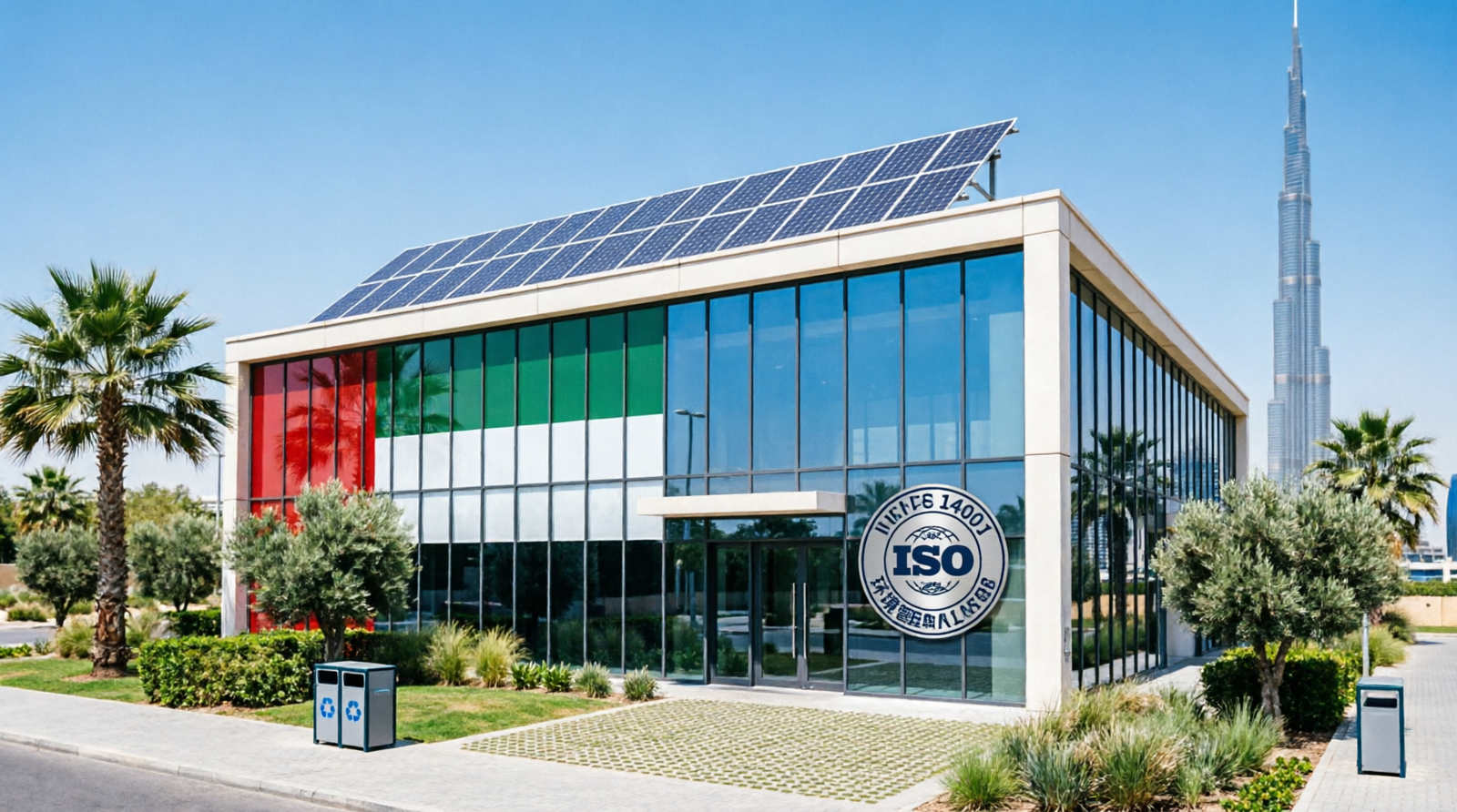
ISO 14001 certification in UAE helps businesses manage their environmental impact through a structured system. It’s the global standard for environmental management systems. Companies in manufacturing, construction, and oil and gas need this certification most.
If you’re searching for ISO 14001 certification cost in UAE or wondering how it fits your industry, this guide covers everything step by step.
UAE authorities and major clients increasingly expect proof of environmental responsibility. ISO 14001 gives you that proof through an internationally recognized framework.
What Is ISO 14001 Certification?
ISO 14001 is the international standard for environmental management systems. It helps businesses identify, control, and reduce their environmental footprint.
The standard helps companies:
- Identify environmental risks linked to their operations
- Reduce waste, emissions, and resource consumption
- Meet local environmental regulations
- Build a culture of continuous environmental improvement
A certified business shows it actively manages its environmental impact, not just reacts to complaints or inspections.
Why UAE Businesses Need ISO 14001 Certification
The UAE has pushed sustainability goals across all emirates, from waste reduction targets to green building requirements. ISO 14001 helps businesses align with these priorities.
Regulatory Alignment
Local environmental authorities expect businesses to manage waste, emissions, and resource use responsibly. A certified system makes compliance easier to demonstrate.
Tender and Contract Requirements
Many large contractors, especially in construction and industrial sectors, require ISO 14001 certified suppliers as part of their vendor approval process.
Reduced Operating Costs
Better waste management and energy use often lower utility bills and disposal costs. Environmental efficiency frequently saves money.
Brand Reputation
Clients and partners increasingly favor businesses with visible environmental commitments. Certification signals this commitment clearly.
Easier Integration with Other Standards
ISO 14001 pairs naturally with ISO 45001 for safety and ISO 9001 for quality, allowing businesses to run combined audits and reduce overall certification costs.
ISO 14001 Certification Process in UAE
The certification process follows a clear path. Here’s how it works.
Step 1: Initial Environmental Review
A consultant reviews your current operations. They identify environmental aspects like waste streams, energy use, water consumption, and emissions.
Step 2: Gap Analysis
Your current practices get compared against ISO 14001 requirements. This shows exactly what needs to change.
Step 3: Documentation Development
You’ll create an environmental policy, procedures for waste handling, emergency response plans for spills or leaks, and monitoring records. These must reflect your actual site operations.
Step 4: Staff Training
Employees learn new procedures for waste segregation, resource use, and reporting environmental incidents.
Step 5: Implementation Period
Run the new system for a few weeks. This generates records that prove the system works in daily operations.
Step 6: Internal Audit
Before the external audit, your team checks compliance internally. This catches gaps early and saves time later.
Step 7: Certification Audit
An accredited certification body audits your site. They review documents, inspect waste handling areas, and interview staff about environmental procedures.
Step 8: Certificate Issuance
Once you pass, you receive your ISO 14001 certificate, valid for three years with annual surveillance audits.
ISO 14001 Certification Cost in UAE
Cost depends on several factors specific to your operations.
Key cost factors include:
- Number of sites and complexity of operations
- Industry type (manufacturing and construction often require more documentation)
- Current state of waste management practices
- Whether external consultants are needed
- Certification body audit fees
Businesses with multiple environmental aspects, like factories producing waste, emissions, and wastewater, typically need more preparation time than office-based businesses. Always request a detailed quote separating consultant fees from certification body charges.
Industries That Benefit Most from ISO 14001 in UAE
While any business can pursue certification, some sectors see faster returns due to their environmental footprint.
Construction Companies
Construction generates significant waste, dust, and resource consumption. ISO 14001 helps manage these impacts systematically. See our ISO certification for construction company guide for sector details.
Oil and Gas Operators
This sector faces strict environmental scrutiny due to emissions and spill risks. Certification is often expected by major operators and regulators. Check ISO certification for oil and gas industry for more.
Manufacturing and Industrial Facilities
Factories with significant energy use, raw material consumption, or waste output benefit from structured environmental management. Combining ISO 14001 with ISO 45001 occupational health and safety creates a strong integrated system.
Chemical Industry
Chemical handling carries spill, emission, and disposal risks. Review ISO certification for chemical industry for industry-specific guidance.
Transport and Logistics
Fuel consumption, vehicle emissions, and warehouse waste all fall under environmental management. See ISO certification for transport and logistics for relevant standards.
Hotels and Restaurants
Energy use, water consumption, and food waste are major environmental aspects in hospitality. Check ISO certification for hotels and restaurants for sector-specific guidance.
ISO 14001 vs Related Standards: Quick Comparison
Many UAE businesses pursue more than one standard together. Here’s how ISO 14001 fits.
| Standard | Focus Area | Common Pairing |
|---|---|---|
| ISO 14001 | Environmental management | Manufacturing, construction |
| ISO 45001 | Occupational health and safety | Construction, oil and gas |
| ISO 9001 | Quality management | Almost any business |
| ISO 50001 | Energy management | Energy-intensive operations |
Businesses with high energy consumption often pair ISO 14001 with ISO 50001 certification for a complete environmental and energy management approach. For a full breakdown of available standards, see our ISO certification in UAE overview.
Common Mistakes Businesses Make with ISO 14001
Avoid these pitfalls to keep your certification process smooth.
Mistake 1: Focusing Only on Obvious Waste
Environmental aspects go beyond visible trash. Water use, energy consumption, packaging, and supplier practices all count.
Mistake 2: Writing Policies Without Site Input
Procedures written without input from site staff often miss practical realities, like where waste actually accumulates or how spills typically happen.
Mistake 3: Ignoring Legal Register Requirements
ISO 14001 requires businesses to track relevant environmental laws and regulations. Skipping this step is a common audit failure point.
Mistake 4: Treating Certification as a One-Time Project
Environmental management requires ongoing monitoring. Surveillance audits check whether your system continues operating after the initial certificate.
Mistake 5: Choosing an Unaccredited Certification Body
Always confirm accreditation. Corporate clients and tenders across the UAE may reject certificates from unaccredited bodies.
Real Example: A UAE Manufacturing Facility
A manufacturing facility in the UAE struggled with inconsistent waste segregation and rising disposal costs. They had informal practices but no documented system.
After implementing ISO 14001, they introduced clear waste segregation stations, tracked recyclable materials separately, and set up a monitoring log for energy use. Within several months, disposal costs dropped, and recyclable material sales generated a small additional revenue stream.
Their team also reported fewer compliance concerns during local environmental inspections, since records were now organized and readily available.
ISO 14001 Across the UAE
ISO 14001 requirements apply consistently across the UAE, though local environmental authorities in each emirate may have specific reporting or permit requirements. If your operations span multiple locations, check our emirate-specific guides for broader context:
- ISO certification in Dubai
- ISO certification in Sharjah
- ISO certification in Ajman
- ISO certification in Ras Al Khaimah
For a complete overview of ISO standards and the certification process across the country, visit our main ISO certification in UAE guide.
Frequently Asked Questions
How long does ISO 14001 certification take in UAE?
Most businesses complete certification in 6 to 10 weeks, depending on the complexity of operations and number of sites.
Is ISO 14001 mandatory for UAE businesses?
It’s not a blanket legal requirement. However, many tenders, especially in construction, manufacturing, and oil and gas, require certified suppliers.
Can ISO 14001 be combined with other certifications?
Yes. Many businesses combine ISO 14001 with ISO 9001 and ISO 45001 through an integrated management system, reducing audit costs and time.
What environmental aspects does ISO 14001 cover?
It covers waste generation, energy use, water consumption, emissions, and the environmental impact of products and services across their lifecycle.
Do small businesses need ISO 14001?
Smaller businesses with minimal environmental impact may not need it urgently. However, any business using significant resources or generating waste benefits from the structure it provides.
Choosing an ISO 14001 Consultant in UAE
Look for these qualities when selecting a consultant for environmental certification.
- Experience with your specific industry’s environmental aspects
- Knowledge of UAE environmental regulations and reporting requirements
- Clear, written pricing without hidden costs
- Support for integrating ISO 14001 with other standards
- Ongoing assistance for surveillance audits and legal compliance tracking
A strong consultant builds a system your team can maintain daily, not just a file of documents for audit day.
Final Thoughts
ISO 14001 certification in UAE reduces environmental risk, lowers operating costs, and opens doors to contracts that require certified suppliers. The process takes weeks, not months, and works best when environmental practices become part of daily operations, not just a compliance exercise.
For a broader view of ISO standards available across the country, explore our complete ISO certification in UAE guide.
Visit Global Certification Services to discuss your certification needs and get a tailored quote.